December 13, 0902

The Battle of the Holme took place between the forces of the Anglo-Saxon kingdoms of Wessex and East Anglia against the Danelaw Vikings. The battle was part of the ongoing conflicts between the Anglo-Saxons and the Vikings during this period.


Holme, England | Anglo-Saxon Kingdoms
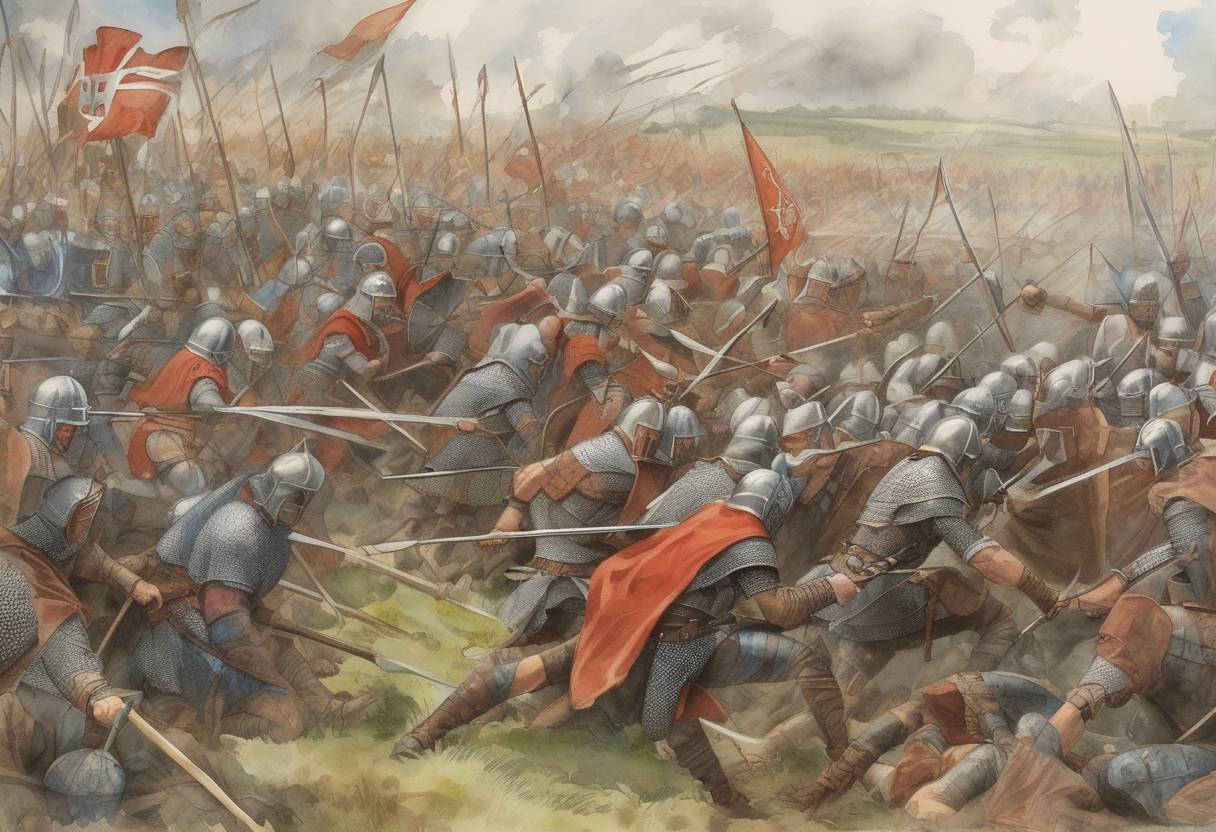
Watercolor painting based depiction of The Battle of the Holme took place between the forces of the Anglo-Saxon kingdoms of Wessex and East Anglia against the Danelaw Vikings. The battle was part of the ongoing conflicts between the Anglo-Saxons and the Vikings during this period. (902)

The Battle of the Holme (902)

The Battle of the Holme, fought on December 13, 902, was a significant conflict between the Anglo-Saxon forces of Wessex and East Anglia and the Vikings of the Danelaw. This battle was part of the broader series of confrontations between the Anglo-Saxons and Viking invaders during the late 9th and early 10th centuries.

Historical Context

The late 9th century was marked by frequent Viking incursions into the British Isles. The Danelaw, a region of England under Viking control, was established following the Treaty of Wedmore in 878, which concluded the campaigns of the Viking leader Guthrum against King Alfred the Great of Wessex. Despite this treaty, tensions and skirmishes continued as both sides sought to expand their influence.

Key Events Leading to the Battle

  • Alfred the Great’s Reign (871-899): Alfred successfully defended Wessex against Viking invasions and laid the groundwork for a unified English kingdom. His death in 899 led to a period of instability.
  • Edward the Elder’s Ascension: Alfred’s son, Edward the Elder, succeeded him. His reign was immediately challenged by Æthelwold, a rival claimant to the throne.
  • Æthelwold’s Rebellion: Æthelwold sought support from the Vikings of the Danelaw, leading to increased hostilities. His alliance with the Vikings posed a significant threat to Edward’s rule.

The Battle

The Battle of the Holme was a culmination of these tensions. The exact location of the battle remains uncertain, but it is believed to have taken place in the eastern part of England, possibly in present-day Cambridgeshire or Suffolk.

  • Forces Involved: The battle saw the combined Anglo-Saxon forces of Wessex and East Anglia clashing with the Viking army, bolstered by Æthelwold’s supporters.
  • Outcome: The battle was fiercely contested, and while the Vikings managed to hold their ground, Æthelwold was killed during the fighting. This was a significant blow to the Viking cause and Æthelwold’s rebellion.

Aftermath and Significance

  • Consolidation of Edward’s Rule: The death of Æthelwold effectively ended the immediate threat to Edward the Elder’s claim to the throne, allowing him to consolidate his power.
  • Continued Conflicts: Although the battle did not decisively end Viking influence in England, it marked a turning point in the struggle for control over the region.
  • Legacy: The battle is part of the larger narrative of the eventual unification of England under Anglo-Saxon rule, which continued under Edward and his successors.

The Battle of the Holme exemplifies the complex interplay of power, loyalty, and conflict during this turbulent period in English history, highlighting the ongoing struggle between the Anglo-Saxons and the Vikings for dominance in the British Isles.