Vasco da Gama Passes the Great Fish River - December 16, 1497
1497 · Great Fish River, South Africa
Vasco da Gama passes the Great Fish River, where Bartolomeu Dias had previously turned back to Portugal.
February 3, 1488
Bartolomeu Dias lands in Mossel Bay after rounding the Cape of Good Hope, becoming the first European known to have done so.
Mossel Bay, South Africa
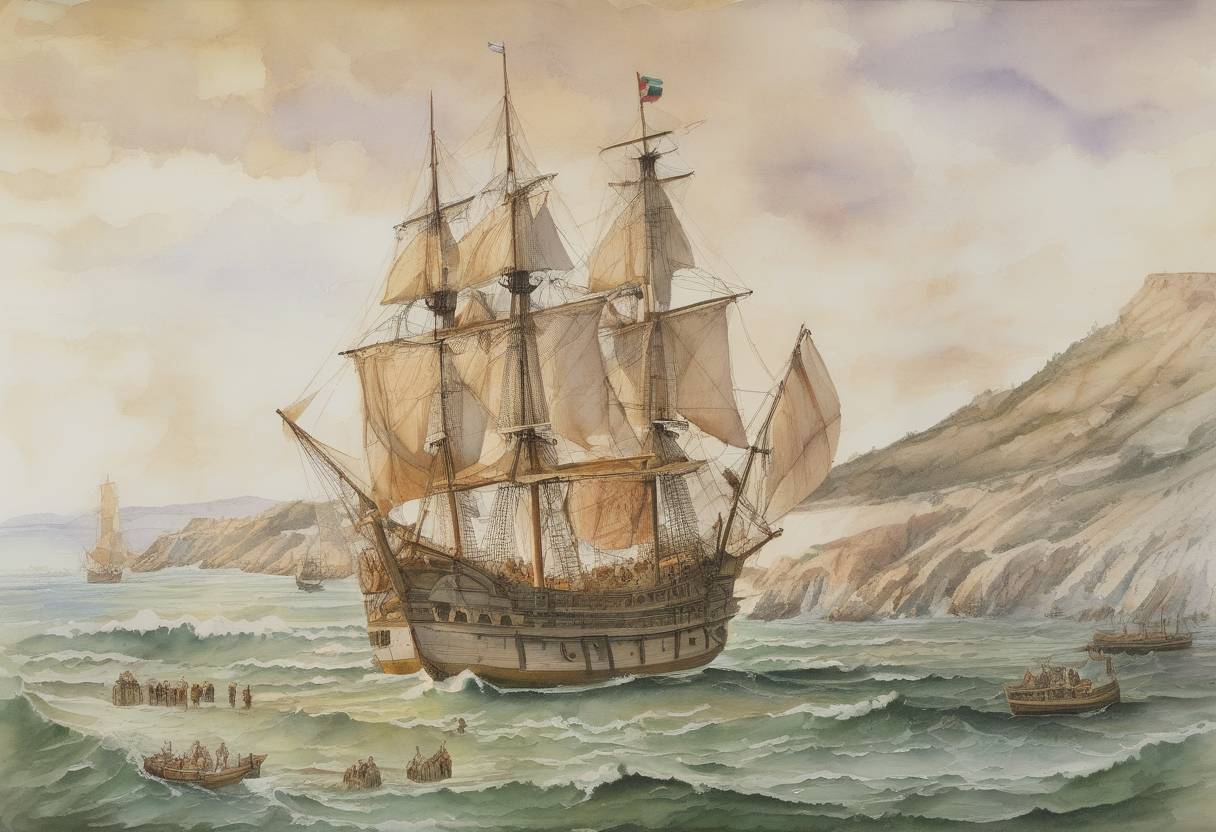
On February 3, 1488, the Portuguese explorer Bartolomeu Dias made a significant milestone in the Age of Exploration by landing in Mossel Bay, South Africa, after successfully rounding the Cape of Good Hope. This event marked the first known European expedition to achieve this feat, paving the way for future sea routes to Asia.
Portuguese Exploration: During the late 15th century, Portugal was at the forefront of maritime exploration. Under the patronage of Prince Henry the Navigator, Portuguese explorers sought new trade routes to Asia, aiming to bypass the overland routes dominated by Middle Eastern and Venetian traders.
Dias’ Expedition: In 1487, King John II of Portugal commissioned Bartolomeu Dias to find a sea route to India. Dias set sail with two caravels and a supply ship, navigating along the west coast of Africa.
Rounding the Cape: Dias and his crew faced treacherous seas and strong winds as they sailed southward. In January 1488, they unknowingly rounded the southern tip of Africa due to a storm that pushed them eastward.
Discovery of the Cape: After the storm subsided, Dias sailed north along the eastern coast of Africa, realizing they had passed the southernmost point of the continent. He named it the “Cape of Storms,” which was later renamed the “Cape of Good Hope” by King John II, symbolizing the promise of a sea route to India.
Return Voyage: Dias continued sailing along the coast to the Great Fish River before deciding to return to Portugal due to dwindling supplies and crew exhaustion. The return journey confirmed the feasibility of a sea route around Africa.
Impact on Exploration: Dias’ successful rounding of the Cape of Good Hope was a pivotal moment in the Age of Exploration. It opened the way for future expeditions, including Vasco da Gama’s successful voyage to India in 1498, which established a direct maritime trade route between Europe and Asia.
Legacy: Bartolomeu Dias’ journey demonstrated the potential for European expansion and trade, significantly impacting global commerce and interactions between continents.
In summary, Bartolomeu Dias’ landing at Mossel Bay after rounding the Cape of Good Hope was a landmark achievement in maritime history, setting the stage for the era of global exploration and trade that followed.
Source: en.wikipedia.org