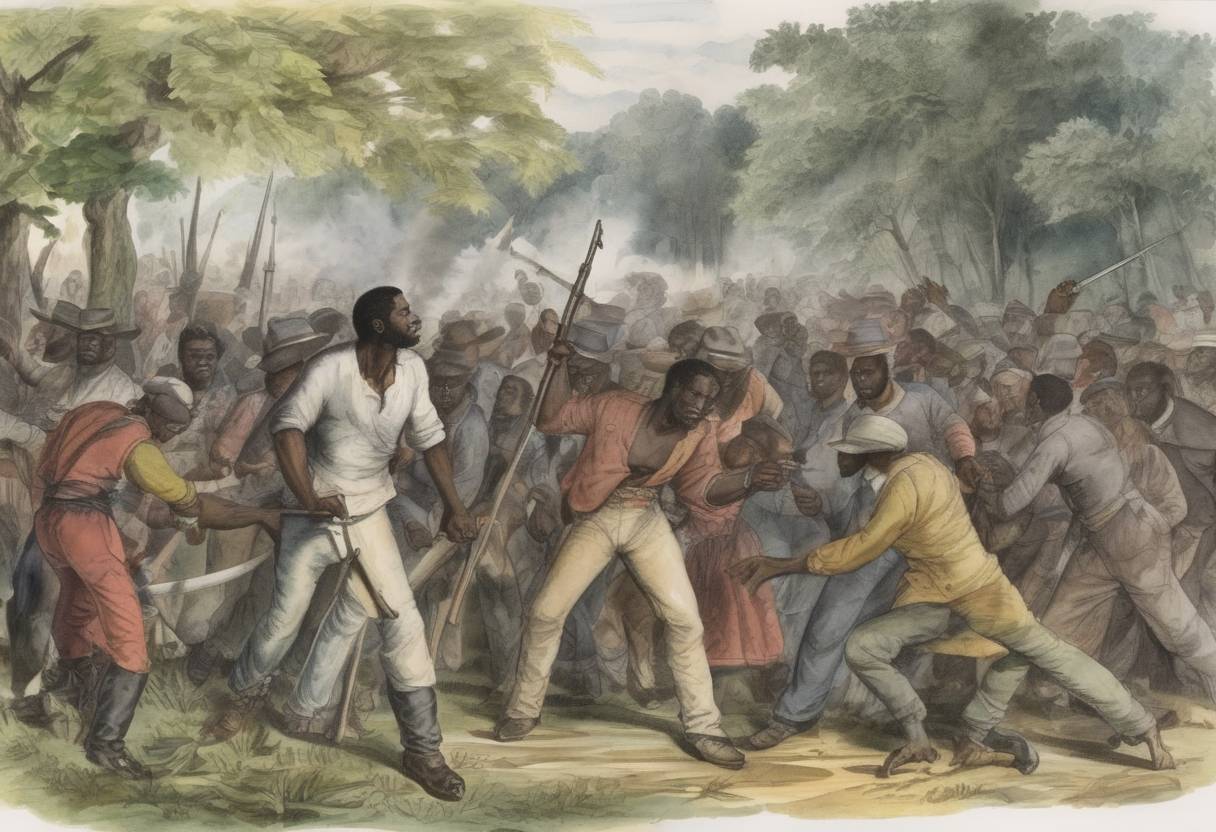
Nat Turner’s Slave Rebellion
Overview
On August 21, 1831, Nat Turner’s slave rebellion began in Southampton County, Virginia. This significant and violent uprising was one of the largest slave revolts in American history. It resulted in the deaths of approximately 60 white people and led to the execution of about 55 black people, including Turner himself.
Background
Nat Turner was an enslaved African American preacher who believed he was chosen by God to lead his people out of bondage. Born on October 2, 1800, in Southampton County, Turner was known for his intelligence and religious fervor. He claimed to have visions and signs from God, which he interpreted as a call to action against the institution of slavery.
The Rebellion
The rebellion commenced in the early hours of August 21, 1831. Turner and a small group of followers began their revolt by attacking the household of Joseph Travis, Turner’s enslaver. They killed Travis and his family while they slept, seizing weapons and horses to continue their campaign.
As Turner and his group moved from plantation to plantation, their numbers grew to around 70 enslaved and free black people. They traveled through Southampton County, killing white inhabitants and recruiting more followers. The rebellion lasted for about 48 hours before being suppressed by local militias and armed civilians.
Aftermath
The rebellion instilled widespread fear among the white population in the South, leading to a harsh crackdown on enslaved and free black people. In the immediate aftermath, approximately 55 black people were executed, and many more were subjected to extrajudicial killings and violence by angry mobs.
Nat Turner evaded capture for several weeks but was eventually apprehended on October 30, 1831. He was tried and convicted of insurrection and hanged on November 11, 1831.
Consequences
The rebellion had significant repercussions:
Legislative Response: In response to the uprising, Virginia and other Southern states enacted stricter slave codes, limiting the movement, assembly, and education of enslaved people to prevent future revolts.
Impact on Abolitionism: The rebellion intensified the national debate over slavery. While it fueled fear and repression in the South, it also galvanized abolitionist sentiment in the North, highlighting the brutal realities of slavery.
Cultural Legacy: Nat Turner’s rebellion remains a powerful symbol of resistance against oppression. It has been the subject of numerous historical studies, literature, and films, reflecting on the complexities of slavery and the struggle for freedom.
Conclusion
Nat Turner’s rebellion was a pivotal moment in American history, illustrating the desperate resistance of enslaved people against the brutal system of slavery. It underscored the deep divisions within the United States over the issue of slavery, divisions that would continue to grow in the decades leading to the Civil War.