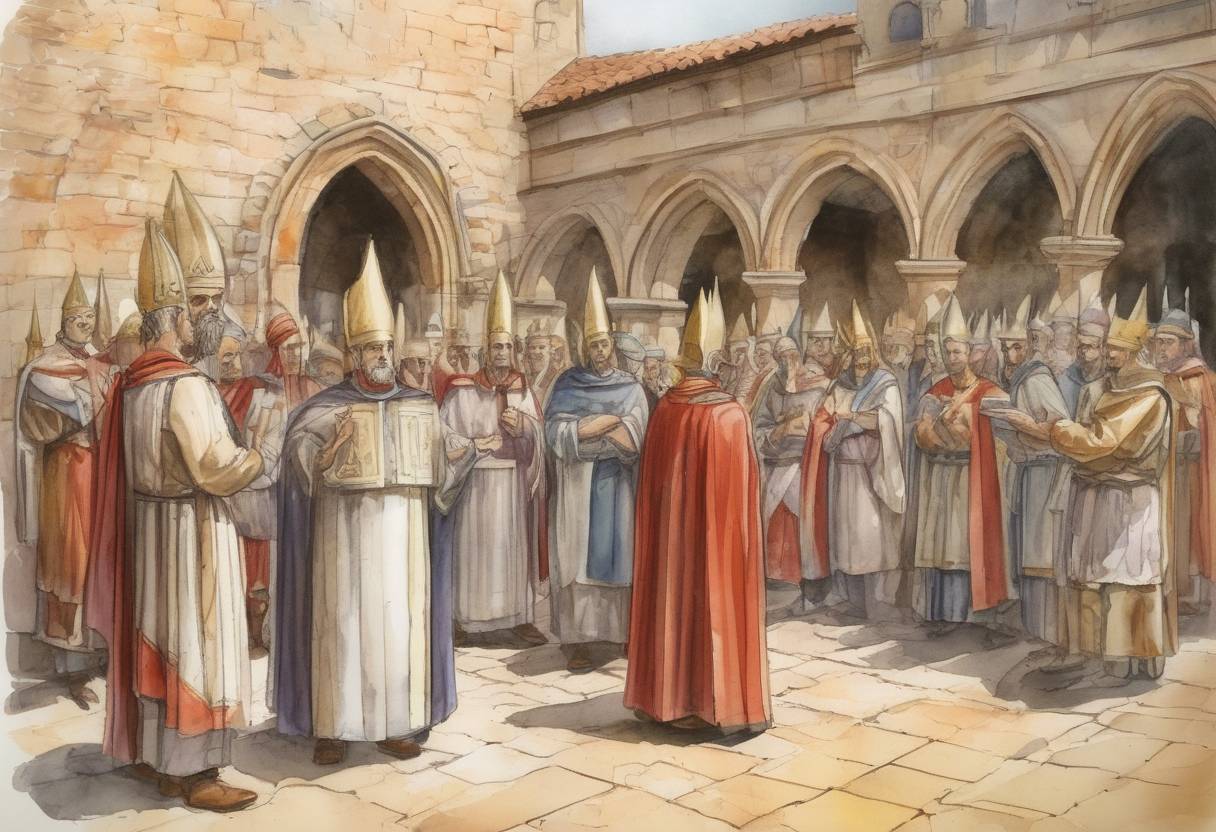
The Council of Agde: February 2, 506
The Council of Agde was a significant ecclesiastical synod held on February 2, 506, in the Visigothic Kingdom of Toulouse. This council was convened by Caesarius of Arles, a prominent bishop known for his influence in the early Christian church and his efforts to reform ecclesiastical practices.
Historical Context
The early 6th century was a period marked by the transition from Roman to barbarian rule in Western Europe. The Visigoths, a Germanic tribe, had established their kingdom in what is now modern-day France and Spain. During this time, the Christian church was striving to maintain its influence and authority amidst the shifting political landscape.
Key Objectives
The Council of Agde was primarily focused on addressing various ecclesiastical issues, particularly those related to church discipline and the conduct of clergy. The synod aimed to:
- Strengthen Church Discipline: Establish clear guidelines and rules to ensure the moral and ethical behavior of clergy members.
- Regulate Clerical Conduct: Address issues of clerical misconduct and set standards for the personal and professional lives of church officials.
- Unify Church Practices: Promote uniformity in liturgical practices and ecclesiastical governance across the Visigothic territories.
Major Decisions and Canons
The council resulted in the formulation of several canons, which were decrees intended to guide the church’s operations and the behavior of its clergy. Some of the notable canons included:
- Clerical Celibacy: Reinforcement of the expectation that clergy should remain celibate, reflecting the church’s emphasis on spiritual purity.
- Prohibition of Simony: A ban on the buying or selling of ecclesiastical offices, aiming to curb corruption within the church hierarchy.
- Regulation of Monastic Life: Guidelines for the conduct and organization of monastic communities, ensuring they adhered to the church’s spiritual and disciplinary standards.
Aftermath and Significance
The Council of Agde played a crucial role in shaping the early medieval church’s structure and discipline. By addressing issues of clerical conduct and church governance, the council helped to solidify the church’s authority during a time of political instability. The canons established at Agde influenced subsequent church councils and contributed to the development of canon law in the Western Christian tradition.
In summary, the Council of Agde was a pivotal moment in the history of the early Christian church, reflecting its efforts to maintain order and discipline amidst the challenges of a changing world. Its decisions had lasting impacts on the governance and moral framework of the church in the centuries that followed.