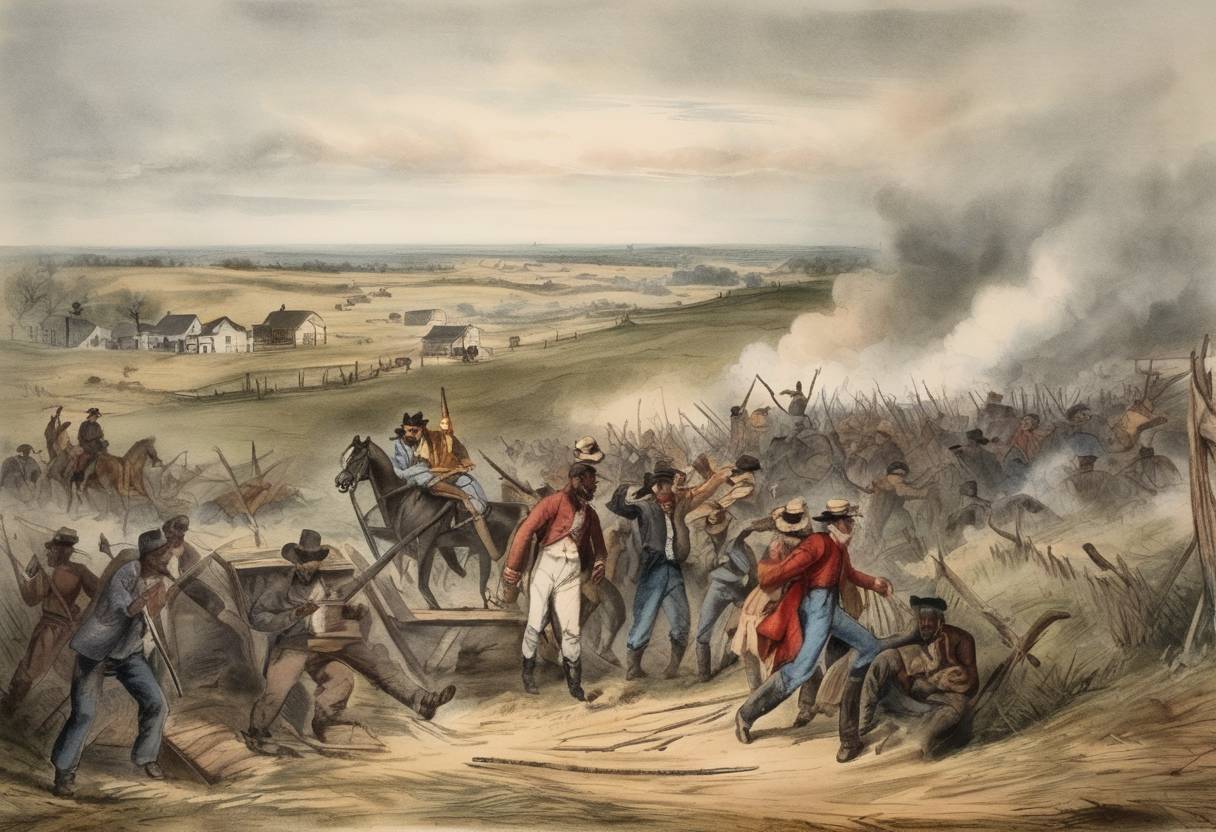
The Sacking of Lawrence, Kansas - May 21, 1856
On May 21, 1856, Lawrence, Kansas, a stronghold for abolitionist settlers, was sacked by pro-slavery forces, an event that significantly escalated tensions during the period known as “Bleeding Kansas.” This violent confrontation exemplified the deep divisions and escalating hostility between pro-slavery and anti-slavery factions in the United States during the 1850s.
Background
The Kansas-Nebraska Act of 1854, which established the territories of Kansas and Nebraska, allowed settlers in these territories to determine if they would allow slavery through “popular sovereignty.” This led to intense conflict as both pro-slavery and anti-slavery supporters flooded into Kansas to influence the vote. Lawrence was founded by anti-slavery settlers from Massachusetts who sought to establish a free state. It quickly became a target for pro-slavery factions who saw its existence as a threat to their cause.
Events of May 21, 1856
On the morning of May 21, 1856, a large group of pro-slavery men, estimated to be around 800, led by Sheriff Samuel J. Jones, a staunch pro-slavery advocate, entered Lawrence. The force included both local Missouri residents and other pro-slavery settlers from the surrounding territories. They carried out their actions under the pretense of executing warrants issued by a pro-slavery territorial judge.
Key Incidents
The Burning of the Free State Hotel: The pro-slavery mob set fire to the Free State Hotel, the most prominent building in Lawrence, which was initially fortified as a defensive position by the abolitionists. The mob used cannon and other artillery to destroy the structure, which they considered a symbol of anti-slavery resistance.
Destruction of Printing Presses: Two abolitionist newspaper printing presses, the “Herald of Freedom” and the “Kansas Free State,” were dismantled and thrown into the nearby river. This act was aimed at suppressing the anti-slavery voices in the region.
Looting and Further Destruction: Following the initial attacks, the mob looted homes and stores, adding to the devastation throughout Lawrence. Though buildings were damaged and property destroyed, there were no reports of fatalities resulting directly from the raid.
Aftermath and Significance
The sacking of Lawrence was a direct catalyst for further violence and significant in the escalation towards the American Civil War. It provoked outrage among abolitionists and increased support for their cause. In retaliation, abolitionist John Brown carried out the Pottawatomie Massacre days later, contributing to the ongoing cycle of violence known as “Bleeding Kansas.”
The events at Lawrence demonstrated the failures of popular sovereignty and highlighted the severe animosities and deep-seated conflicts between pro-slavery and anti-slavery factions. It was a pivotal moment in the prelude to the Civil War, underscoring the nation’s struggle over the issue of slavery.