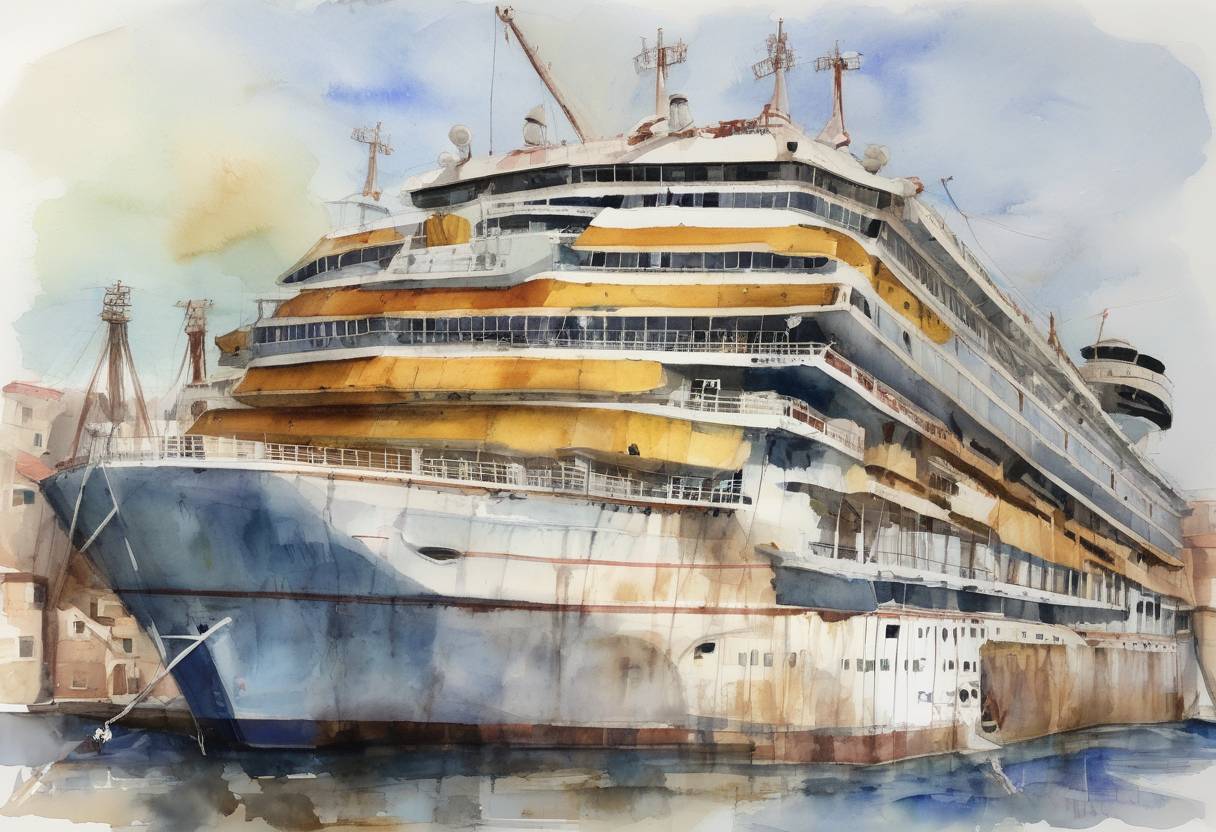
The Righting of the Costa Concordia: September 13, 2013
On September 13, 2013, a significant milestone was reached in maritime salvage history with the successful righting of the Costa Concordia cruise ship. This operation was a crucial step in the aftermath of the tragic capsizing that occurred on January 13, 2012, off the coast of the Italian island of Giglio. The disaster resulted in the deaths of 32 people and left a lasting impact on maritime safety regulations and procedures.
Background
The Costa Concordia, a luxury cruise ship operated by Costa Crociere, struck a rock formation near Giglio Island, leading to a partial capsizing. The incident was attributed to human error, as the ship deviated from its planned course. The disaster prompted widespread criticism of the ship’s captain and crew, as well as the cruise line’s emergency response protocols.
The Salvage Operation
The operation to right the Costa Concordia was one of the most complex and expensive maritime salvage efforts ever undertaken. The process, known as “parbuckling,” involved rotating the ship to an upright position. This task was led by the American salvage company Titan Salvage and the Italian marine contractor Micoperi.
Key Steps in the Salvage Process:
Stabilization: Before the parbuckling, the ship was stabilized to prevent further slipping or sinking. This involved securing the vessel with cables and attaching large underwater platforms to support the hull.
Parbuckling: The parbuckling operation itself took 19 hours and involved a series of synchronized winches and cables. These were used to slowly rotate the ship upright, relying on gravity and buoyancy.
Environmental Considerations: Throughout the operation, significant efforts were made to minimize environmental impact, as the shipwreck posed a risk of pollution to the surrounding marine ecosystem.
Aftermath and Significance
The successful righting of the Costa Concordia was a pivotal moment in the salvage operation, allowing for the eventual towing of the ship to a port for dismantling. This event marked a significant achievement in engineering and coordination, showcasing advancements in maritime salvage technology.
The disaster and subsequent salvage operation led to increased scrutiny and reforms in cruise ship safety standards. It highlighted the importance of emergency preparedness and the need for stringent adherence to navigational protocols.
Conclusion
The righting of the Costa Concordia on September 13, 2013, stands as a testament to human ingenuity and resilience in the face of disaster. It serves as a reminder of the critical importance of safety and responsibility in maritime operations, ensuring that such tragedies are prevented in the future.