Richard Nixon's Resignation: August 9, 1974
1974 · Washington, D.C., United States
Richard Nixon became the first U.S. president to resign from office, following the Watergate scandal.
July 30, 1974
The House Judiciary Committee votes to impeach U.S. President Richard Nixon for obstruction of justice.
Washington, D.C., United States | U.S. House Judiciary Committee
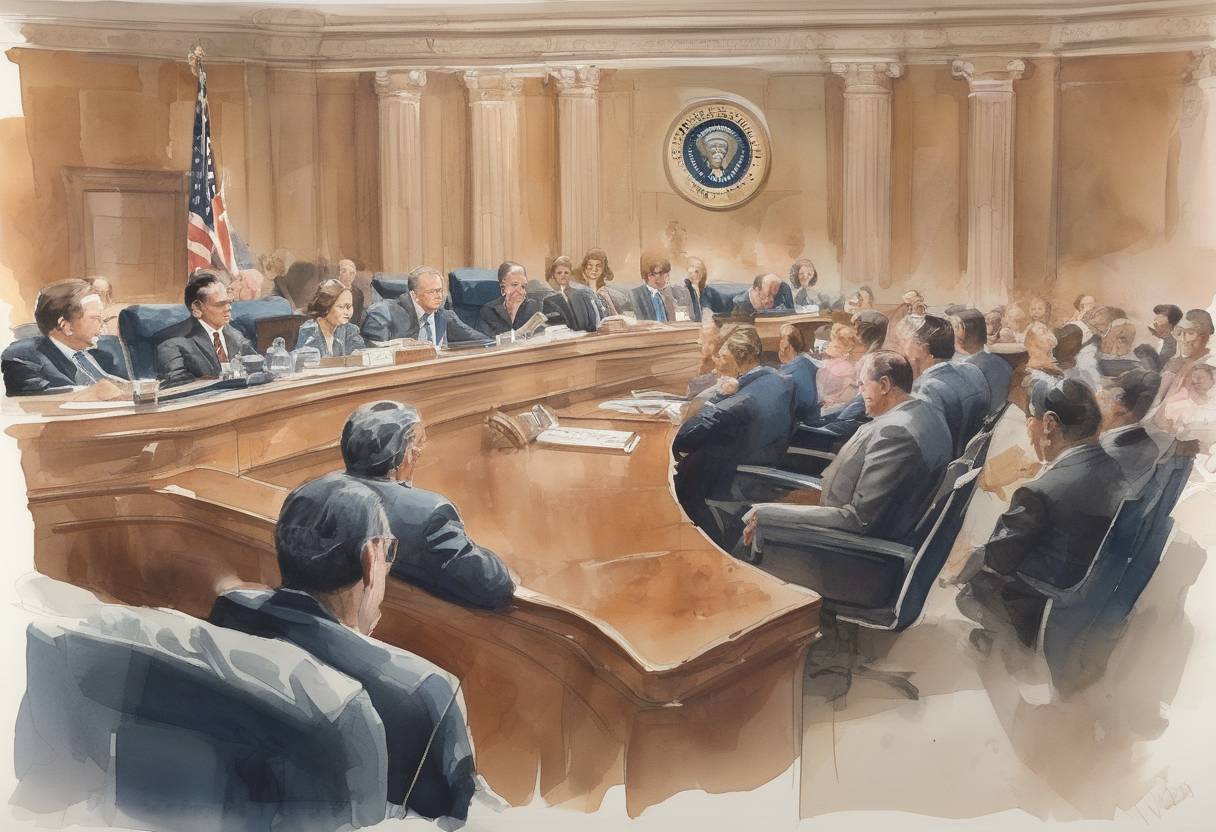
On July 30, 1974, a pivotal moment in American political history unfolded as the House Judiciary Committee voted to impeach President Richard Nixon for obstruction of justice. This decision was a significant development in the Watergate scandal, a complex political scandal that had gripped the nation and tested the limits of executive power and accountability.
The Watergate scandal began with a break-in at the Democratic National Committee headquarters at the Watergate office complex in Washington, D.C., on June 17, 1972. The subsequent investigation revealed a web of political espionage, sabotage, and cover-ups orchestrated by members of Nixon’s administration and campaign committee. As the scandal unfolded, it became clear that there was an attempt to obstruct the investigation and misuse government agencies to conceal the truth.
The Investigation: The scandal was initially investigated by the FBI, and later by a special prosecutor, Archibald Cox. The investigation uncovered a series of abuses of power by the Nixon administration, including the use of the Internal Revenue Service (IRS) to harass political opponents and the creation of a secret fund to finance political espionage.
The Tapes: A critical turning point came when it was revealed that Nixon had a secret recording system in the Oval Office. These tapes contained conversations that could potentially implicate him in the cover-up. Nixon’s refusal to release the tapes led to a constitutional crisis.
The Saturday Night Massacre: On October 20, 1973, Nixon ordered the firing of special prosecutor Archibald Cox, leading to the resignations of Attorney General Elliot Richardson and Deputy Attorney General William Ruckelshaus. This event intensified public and political pressure on Nixon.
The Supreme Court Ruling: On July 24, 1974, the U.S. Supreme Court unanimously ruled in United States v. Nixon that the president must release the tapes. This decision was a crucial blow to Nixon’s defense.
On July 27, 1974, the House Judiciary Committee approved the first article of impeachment against Nixon for obstruction of justice. By July 30, the committee had approved additional articles, including abuse of power and contempt of Congress. The vote on July 30 specifically addressed Nixon’s efforts to impede the investigation into the Watergate break-in and subsequent cover-up.
Nixon’s Resignation: Facing almost certain impeachment by the full House and conviction by the Senate, Nixon chose to resign from office on August 8, 1974. He became the first U.S. president to resign.
Gerald Ford’s Presidency: Vice President Gerald Ford assumed the presidency upon Nixon’s resignation. One of Ford’s first and most controversial acts was to pardon Nixon for any crimes he might have committed while in office, a decision that sparked significant public debate.
Impact on American Politics: The Watergate scandal and Nixon’s resignation had a lasting impact on American politics, leading to increased skepticism of government officials and reforms aimed at increasing transparency and accountability in government.
The events surrounding the impeachment vote against Nixon underscored the importance of the rule of law and the checks and balances inherent in the U.S. political system. It remains a defining moment in the history of American governance.
Source: en.wikipedia.org