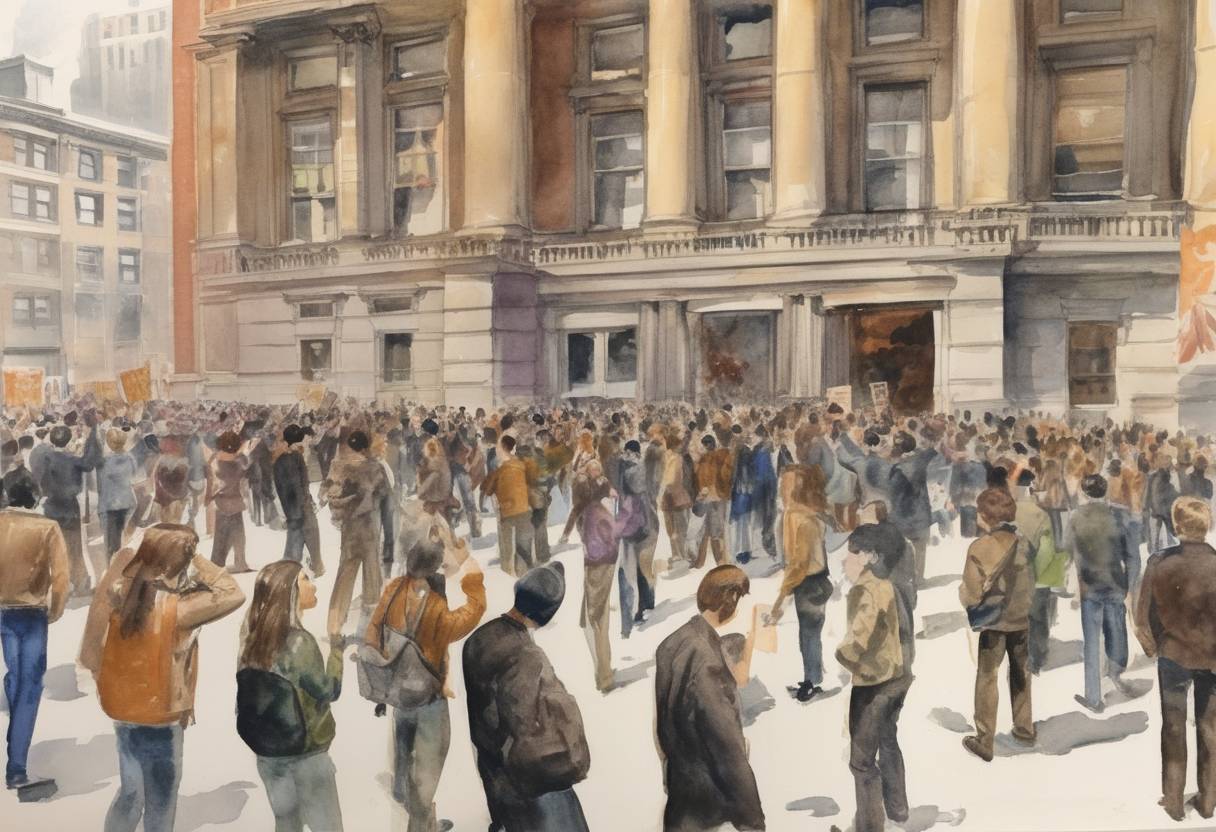
Columbia University Protests - April 23, 1968
On April 23, 1968, a significant event unfolded at Columbia University in New York City, marking a pivotal moment in the 1960s student protest movement. This week-long occupation of university buildings was driven by opposition to the Vietnam War and dissatisfaction with university policies, reflecting broader societal tensions of the era.
Context and Causes
The protests at Columbia were fueled by two primary grievances:
Vietnam War Opposition: Like many universities across the United States, Columbia was a hotbed of anti-Vietnam War sentiment. Students were increasingly vocal against the war, which they viewed as unjust and imperialistic.
University Policies: The immediate catalyst for the protests was Columbia’s plan to construct a gymnasium in Morningside Park, a decision perceived as racially insensitive. The gym’s design included separate entrances for university students and Harlem residents, which many saw as a symbol of segregation and racial inequality. Additionally, students were critical of Columbia’s ties to the Institute for Defense Analyses, a defense contractor involved in military research.
The Occupation
On April 23, 1968, a coalition of student groups, including Students for a Democratic Society (SDS) and the Student Afro-American Society (SAS), initiated the occupation. They seized several key buildings, including:
Hamilton Hall: Initially occupied by both white and black students, it soon became the headquarters for black students after a strategic decision to separate from the white protesters to emphasize their distinct grievances.
Low Library: The administrative heart of the university, symbolizing the institutional authority the students were challenging.
Mathematics Hall, Avery Hall, and Fayerweather Hall: These buildings were also occupied, expanding the protest’s footprint across the campus.
Key Events
Negotiations and Escalation: Throughout the week, university administrators attempted to negotiate with the students, but tensions escalated as demands were not met. The students called for the cessation of the gym’s construction, the severing of ties with the Institute for Defense Analyses, and amnesty for all protesters.
Police Intervention: On April 30, after a week of occupation, the university administration called in the New York City Police Department to remove the protesters forcibly. The police action resulted in violent clashes, with numerous students and faculty members injured and over 700 arrests made.
Aftermath and Significance
The Columbia protests had several lasting impacts:
Increased Activism: The events galvanized student activism nationwide, inspiring similar protests at other universities and contributing to the broader anti-war and civil rights movements.
Policy Changes: Columbia eventually abandoned the gymnasium project and reassessed its policies regarding military research, reflecting the power of student activism to effect change.
Cultural Legacy: The protests became emblematic of the 1960s counterculture and the era’s spirit of rebellion against authority and injustice.
The Columbia University protests of April 1968 remain a significant chapter in the history of student activism, illustrating the intersection of anti-war sentiment, racial justice, and institutional critique during a turbulent period in American history.