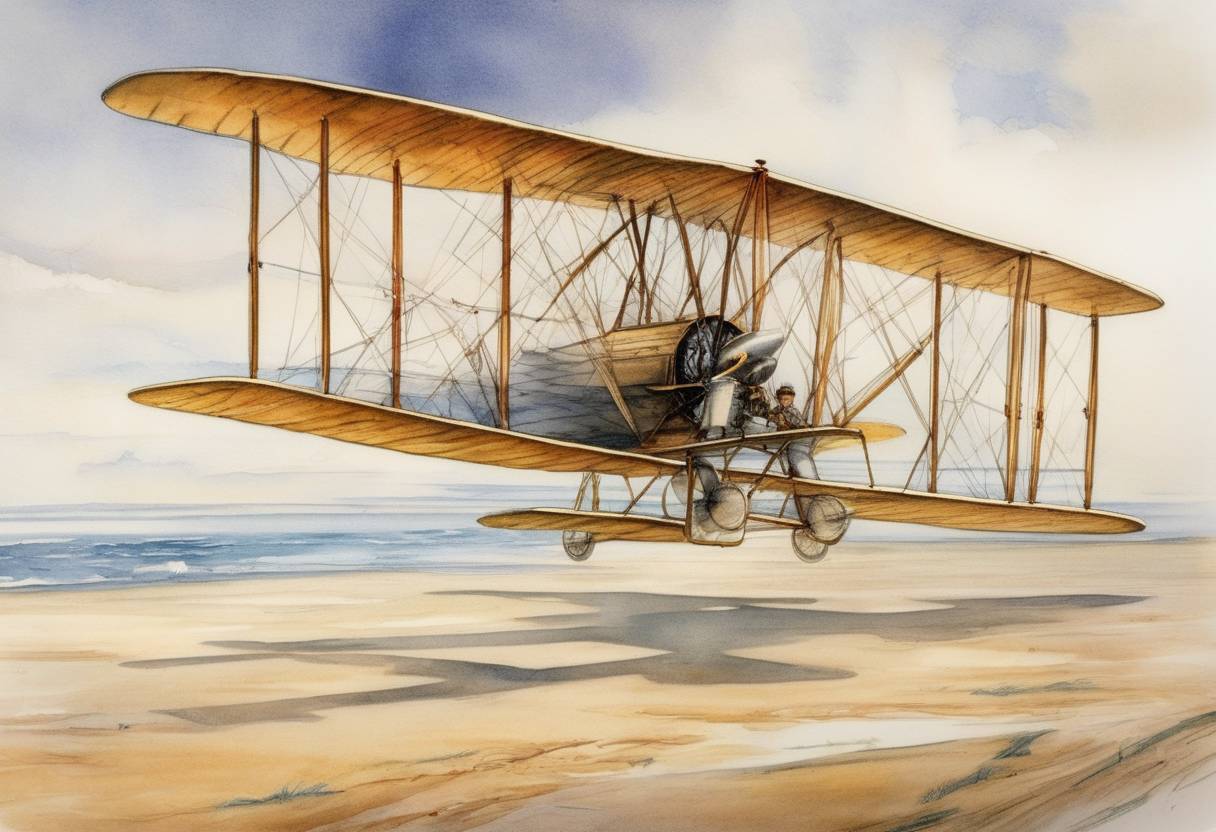
The Wright Brothers’ First Flight: December 17, 1903
On December 17, 1903, Orville and Wilbur Wright achieved a monumental milestone in aviation history by making the first controlled, sustained flight of a powered, heavier-than-air aircraft. This historic event took place at Kill Devil Hills, near Kitty Hawk, North Carolina.
Background
The Wright brothers, originally from Dayton, Ohio, were bicycle manufacturers with a keen interest in flight. Their fascination with aviation was inspired by the works of earlier pioneers such as Otto Lilienthal and Samuel Langley. The brothers dedicated years to studying aerodynamics and developing their own theories on flight control.
Key Developments Leading to the Flight
Wind Tunnel Experiments: The Wrights constructed a wind tunnel in 1901 to test various wing shapes and improve their understanding of lift and drag.
Three-Axis Control System: They innovated a three-axis control system, which allowed the pilot to steer the aircraft effectively and maintain its equilibrium. This system is still used in modern aviation.
Engine and Propeller Design: The brothers designed and built their own lightweight engine and propellers, as existing engines were too heavy for their aircraft.
The Historic Flight
On the morning of December 17, 1903, the Wright brothers made four flights with their aircraft, the Wright Flyer. The conditions were cold and windy, with a 27 mph headwind aiding their takeoff.
- First Flight: Orville piloted the first flight, which lasted 12 seconds and covered 120 feet.
- Subsequent Flights: The brothers took turns piloting, with the fourth and final flight lasting 59 seconds and covering 852 feet.
Significance
The Wright brothers’ successful flights marked the beginning of the modern aviation era. Their achievement demonstrated that powered, controlled flight was possible, paving the way for the development of the aviation industry.
Aftermath and Legacy
- Further Developments: The Wright brothers continued to refine their designs, leading to more advanced aircraft.
- Recognition and Patents: They received patents for their flying machine and control systems, eventually gaining recognition for their contributions to aviation.
- Impact on Transportation and Warfare: The advent of powered flight revolutionized transportation and had significant implications for military strategy and global connectivity.
The Wright brothers’ pioneering work laid the foundation for the rapid advancements in aviation technology that followed, transforming the way people and goods moved around the world. Their legacy is celebrated as a testament to human ingenuity and perseverance.