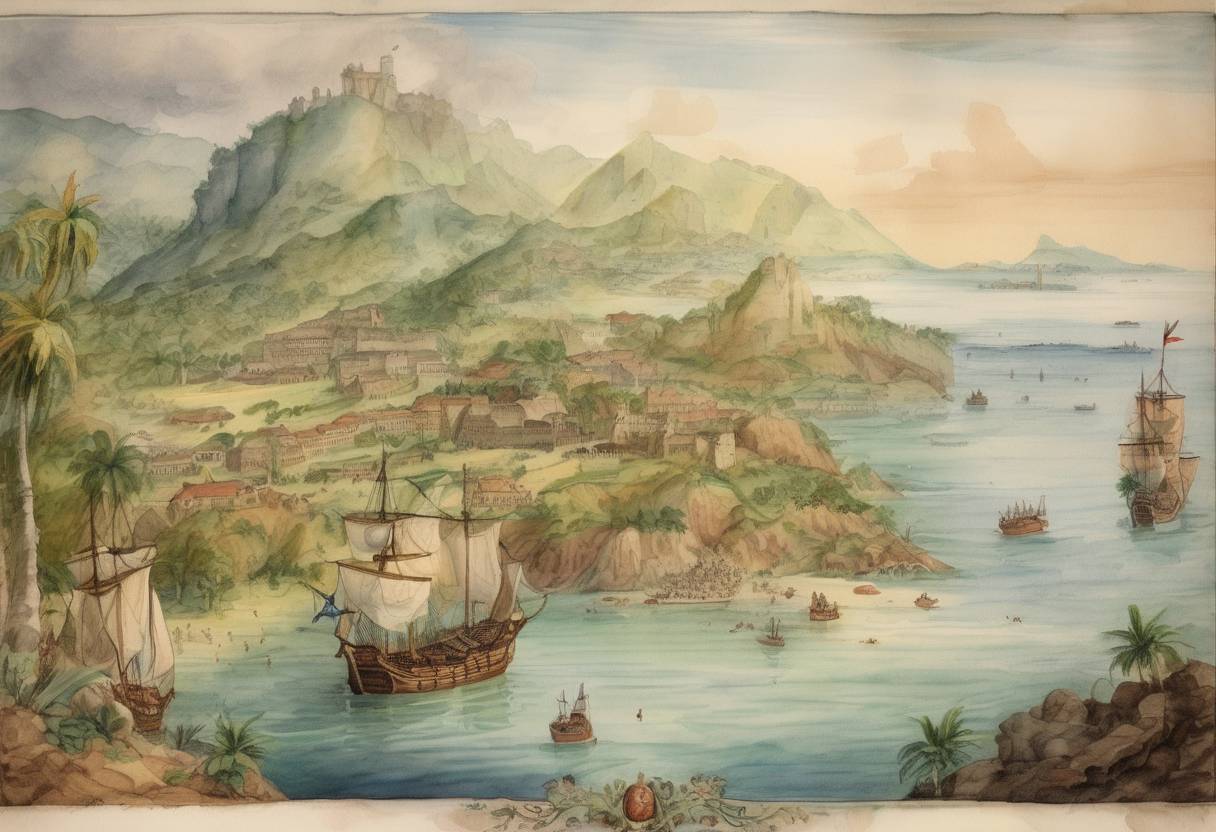
Christopher Columbus Lands on Hispaniola - December 6, 1492
On December 6, 1492, Christopher Columbus made landfall on the island of Hispaniola, an event that marked the first European contact with the island. This significant moment in history was part of Columbus’s first voyage across the Atlantic, which was sponsored by the Catholic Monarchs of Spain, King Ferdinand II and Queen Isabella I.
Context and Background
- The Voyage: Columbus set sail from Spain on August 3, 1492, with three ships: the Santa María, the Pinta, and the Niña. His mission was to find a westward route to Asia, specifically to the lucrative markets of India and China.
- Previous Landfalls: Before reaching Hispaniola, Columbus had already made landfall in the Bahamas on October 12, 1492, on an island he named San Salvador. He then explored parts of the northeastern coast of Cuba.
Arrival at Hispaniola
- Naming the Island: Upon arriving at the island, Columbus named it “La Española,” which translates to “The Spanish Island.” This name would later evolve into “Hispaniola.”
- Geographical Significance: Hispaniola is the second-largest island in the Caribbean, located between Cuba and Puerto Rico. Today, it is divided into two sovereign nations: the Dominican Republic and Haiti.
Interaction with Indigenous Peoples
- Taino Inhabitants: The island was inhabited by the Taino people, who were part of the larger Arawak group. Columbus and his crew encountered these indigenous peoples, who initially welcomed the Europeans.
- Cultural Exchange: The arrival of Columbus marked the beginning of significant cultural exchanges, although these interactions would soon lead to the exploitation and decline of the Taino population due to disease, enslavement, and violence.
Aftermath and Historical Significance
- Colonial Expansion: Columbus’s landing on Hispaniola paved the way for further Spanish exploration and colonization in the New World. The island became a crucial base for Spanish expeditions and the spread of European influence in the Americas.
- Impact on Indigenous Populations: The arrival of Europeans had devastating effects on the indigenous populations due to the introduction of new diseases, forced labor, and cultural disruption.
- Legacy: Columbus’s voyages are often credited with opening the Americas to European exploration and colonization, fundamentally altering the course of world history.
The landing on Hispaniola is a pivotal moment in the Age of Exploration, symbolizing both the beginning of European expansion into the New World and the profound and often tragic changes that would follow for its indigenous peoples.