Execution of Cuauhtémoc: February 28, 1525
1525 · Tenochtitlan, Mexico
The Aztec king Cuauhtémoc was executed by Spanish conquistadors under Hernán Cortés, marking a significant moment in the Spanish conquest of the Aztec Empire.
November 8, 1519
Hernán Cortés entered Tenochtitlán, the capital of the Aztec Empire, where he was welcomed by Emperor Moctezuma II. This marked a significant moment in the Spanish conquest of the Aztec Empire.
Tenochtitlán, Mexico | Spanish Empire
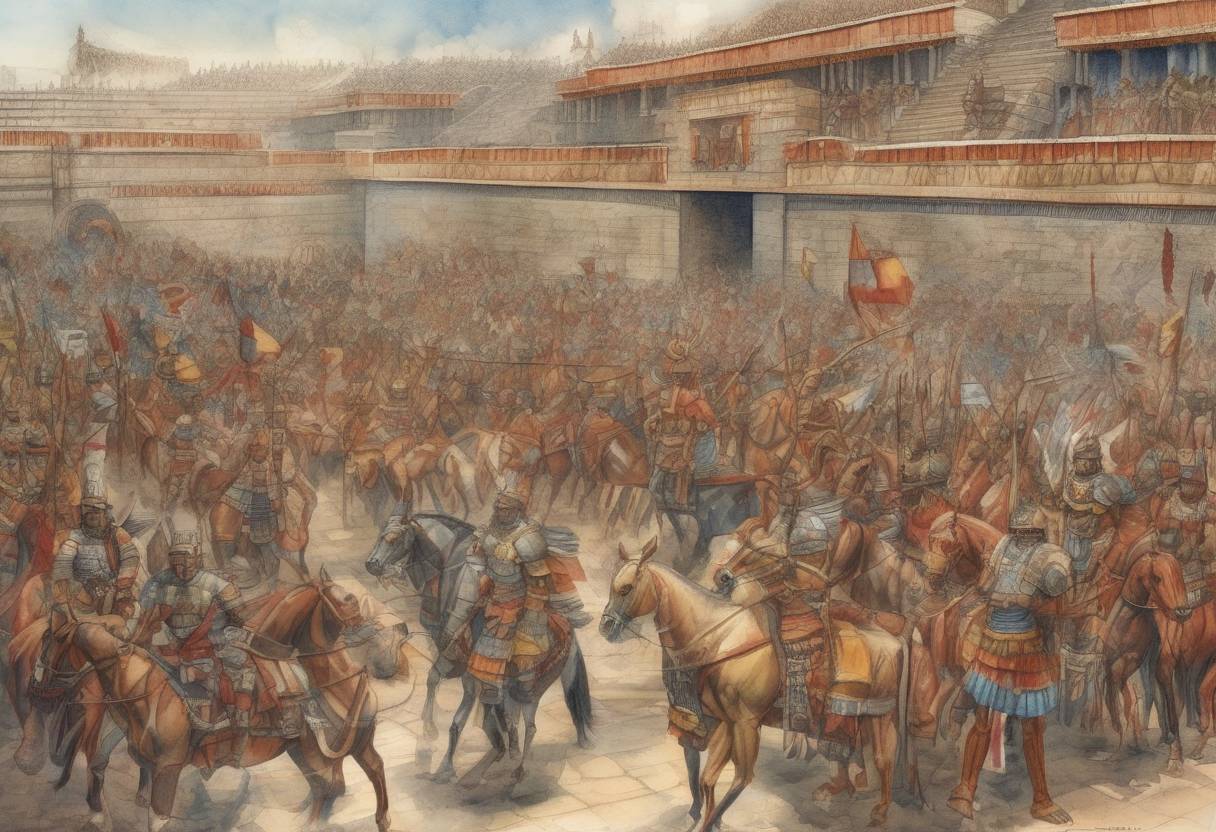
On November 8, 1519, Hernán Cortés, the Spanish conquistador, entered Tenochtitlán, the capital of the Aztec Empire, marking a pivotal moment in the Spanish conquest of the Aztec Empire. This event is significant not only for its immediate impact but also for its long-term consequences on the history of the Americas.
Hernán Cortés: Born in 1485 in Medellín, Spain, Cortés was a Spanish explorer and conquistador who led an expedition that caused the fall of the Aztec Empire. He arrived in the New World in 1504 and quickly rose to prominence in the Spanish colonies.
The Aztec Empire: At the time of Cortés’s arrival, the Aztec Empire was a powerful and sophisticated civilization located in present-day Mexico. Tenochtitlán, its capital, was a large and impressive city built on an island in Lake Texcoco.
Initial Contact: Cortés landed on the Yucatán Peninsula in 1519 and began his expedition inland. He formed alliances with indigenous groups who were hostile to the Aztecs, such as the Tlaxcalans, which proved crucial to his campaign.
Journey to Tenochtitlán: Cortés and his men, accompanied by thousands of indigenous allies, made their way towards the Aztec capital. The journey was fraught with challenges, including difficult terrain and the need to maintain alliances with local tribes.
Diplomatic Relations: Moctezuma II, the Aztec emperor, was aware of the Spaniards’ approach. Reports of their advanced weaponry and horses, which were unknown to the Aztecs, caused both curiosity and concern. Moctezuma sent emissaries with gifts to Cortés, hoping to appease him.
Welcoming by Moctezuma II: On November 8, 1519, Cortés and his entourage were ceremoniously welcomed into Tenochtitlán by Moctezuma II. The emperor treated Cortés with great honor, providing him with luxurious accommodations and gifts.
Cultural Exchange: The meeting between Cortés and Moctezuma was a significant cultural exchange, as the two leaders represented vastly different worlds. Cortés was impressed by the grandeur of Tenochtitlán, while Moctezuma was intrigued and cautious about the Spaniards’ intentions.
Tensions and Conflict: Despite the initial hospitality, tensions soon arose. Cortés took Moctezuma hostage in his own palace, hoping to control the Aztec leadership and prevent any rebellion against the Spanish.
Fall of Tenochtitlán: The relationship between the Spaniards and the Aztecs deteriorated, leading to a series of conflicts. By August 1521, after a prolonged siege and significant loss of life, Tenochtitlán fell to the Spanish, marking the end of the Aztec Empire.
Impact on the Americas: The conquest of the Aztec Empire was a turning point in the history of the Americas. It led to the establishment of Spanish colonial rule in Mexico and the spread of European influence throughout the continent.
The entry of Hernán Cortés into Tenochtitlán is a landmark event that exemplifies the complex interactions between European colonizers and indigenous civilizations. It set the stage for the dramatic changes that would reshape the cultural, political, and social landscapes of the New World. The consequences of this encounter are still felt today, as it marked the beginning of a new era in the history of the Americas.
Source: www.britannica.com