William the Conqueror Crowned King of England
1066 · London, England
William the Conqueror was crowned King of England at Westminster Abbey, marking the beginning of Norman rule in England.
January 5, 1066
Edward the Confessor, King of England, died. His death led to a succession crisis that culminated in the Norman Conquest of England later that year.
London, England | English Monarchy
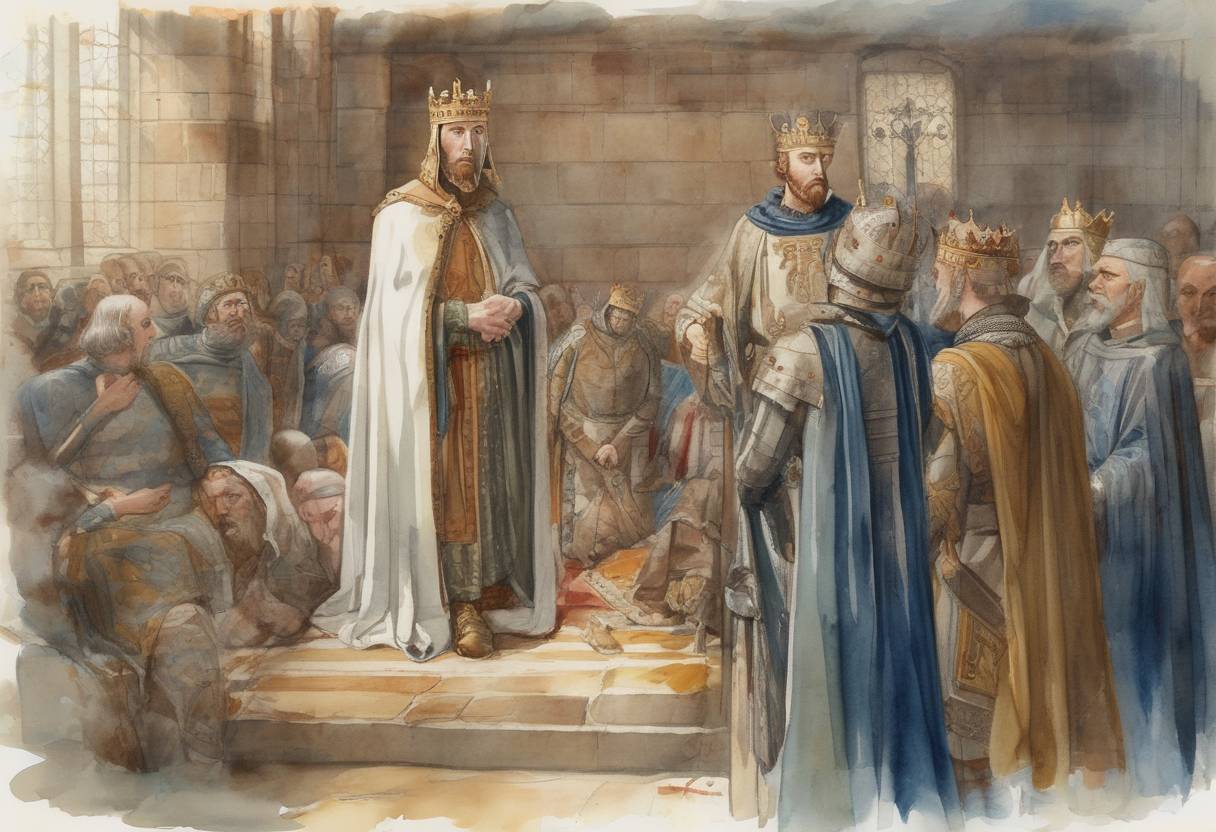
On January 5, 1066, Edward the Confessor, the penultimate Anglo-Saxon king of England, passed away, setting off a chain of events that would dramatically alter the course of English history. His death led to a succession crisis that ultimately culminated in the Norman Conquest of England later that year.
Edward the Confessor was born around 1003 and became King of England in 1042. His reign was marked by relative peace and the strengthening of the monarchy, but also by his failure to produce an heir, which sowed the seeds of future conflict. Edward was known for his piety and was later canonized as a saint, earning him the epithet “the Confessor.”
Edward’s lack of a direct heir created uncertainty about the succession. Several claimants emerged, each with their own supporters and justifications:
Harold Godwinson: The most powerful noble in England and the Earl of Wessex, Harold was Edward’s brother-in-law. On his deathbed, Edward allegedly named Harold as his successor, and Harold was quickly crowned king.
William, Duke of Normandy: William claimed that Edward had promised him the throne years earlier, a claim supposedly reinforced by Harold’s oath of support during a visit to Normandy.
Harald Hardrada: The King of Norway, Harald based his claim on an agreement between his predecessor and a former English king, asserting a right to the English throne.
Edgar the Ætheling: A great-nephew of Edward, Edgar was the closest blood relative but was considered too young and inexperienced to rule.
The contested succession led to a series of conflicts:
Battle of Stamford Bridge: On September 25, 1066, Harold Godwinson defeated Harald Hardrada’s forces in a decisive battle near York, temporarily securing his position.
Battle of Hastings: Just weeks later, on October 14, 1066, Harold faced William of Normandy’s invading forces at Hastings. Harold was killed, and William emerged victorious, leading to his coronation as King of England on December 25, 1066.
The death of Edward the Confessor and the subsequent succession crisis had profound implications:
End of Anglo-Saxon Rule: The Norman Conquest marked the end of Anglo-Saxon dominance in England, ushering in a new era of Norman rule.
Cultural and Political Changes: The conquest brought significant changes to English society, including the introduction of Norman culture, language, and feudal structures.
Legacy: Edward’s reign and the events of 1066 have been immortalized in works like the Bayeux Tapestry and continue to be pivotal moments in English history.
Edward the Confessor’s death and the ensuing turmoil underscore the complexities of medieval succession and the far-reaching consequences of dynastic disputes.
Source: en.wikipedia.org