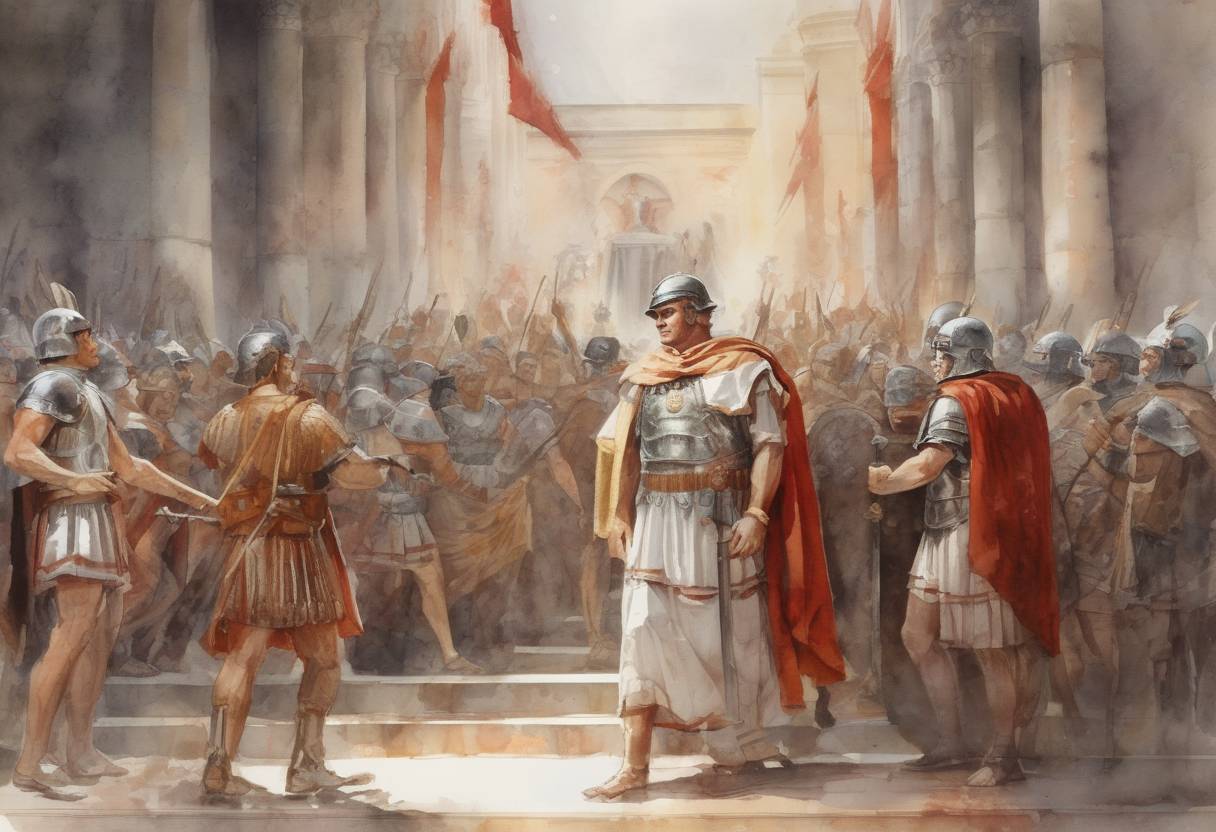
Vitellius Proclaimed Roman Emperor: April 17, 69 AD
On April 17, 69 AD, Aulus Vitellius was proclaimed Roman Emperor by the legions stationed in Germania Superior. This event was a pivotal moment in what is known as the “Year of the Four Emperors,” a chaotic period of civil war and political upheaval in the Roman Empire.
Context and Background
The Year of the Four Emperors followed the death of Emperor Nero in 68 AD, which marked the end of the Julio-Claudian dynasty. The power vacuum led to a rapid succession of emperors, each backed by different factions within the Roman military and political elite. The year began with Galba as emperor, but his unpopular rule and failure to secure loyalty among the legions led to his assassination in January 69 AD. Otho then seized power but faced immediate challenges.
Key Events Leading to Vitellius’s Proclamation
Vitellius’s Appointment: Vitellius was appointed governor of Germania Inferior by Emperor Galba in late 68 AD. His appointment was strategic, as Galba sought to secure loyalty from the legions in the region.
Support from the Legions: Vitellius quickly gained the favor of the legions in both Germania Inferior and Germania Superior. His popularity among the troops was due in part to his generous nature and promises of rewards.
Rebellion Against Otho: After Galba’s assassination, Otho became emperor. However, Vitellius’s supporters in the German legions saw an opportunity to elevate their commander. On January 1, 69 AD, the legions in Germania Inferior declared Vitellius as emperor, and by April 17, the legions in Germania Superior followed suit, solidifying his claim.
Significance of Vitellius’s Proclamation
Civil War: Vitellius’s proclamation intensified the civil war, as his forces marched towards Italy to confront Otho’s troops. The ensuing conflict culminated in the Battle of Bedriacum, where Vitellius’s forces defeated Otho’s army, leading to Otho’s suicide.
Short Reign: Vitellius’s reign was brief and marked by instability. His inability to manage the empire’s finances and his indulgent lifestyle eroded support. By the end of 69 AD, he was challenged by Vespasian, a general in the East, leading to his downfall.
End of the Crisis: The Year of the Four Emperors concluded with Vespasian’s rise to power, establishing the Flavian dynasty and restoring stability to the Roman Empire.
Aftermath
Vitellius’s reign, though short-lived, highlighted the critical role of military support in determining the Roman emperor during this tumultuous period. The events of 69 AD underscored the fragility of imperial power and set the stage for the more stable rule of the Flavian dynasty under Vespasian.
In summary, Vitellius’s proclamation as emperor on April 17, 69 AD, was a significant event in Roman history, illustrating the volatility of the empire during the Year of the Four Emperors and the decisive influence of military allegiance in imperial succession.