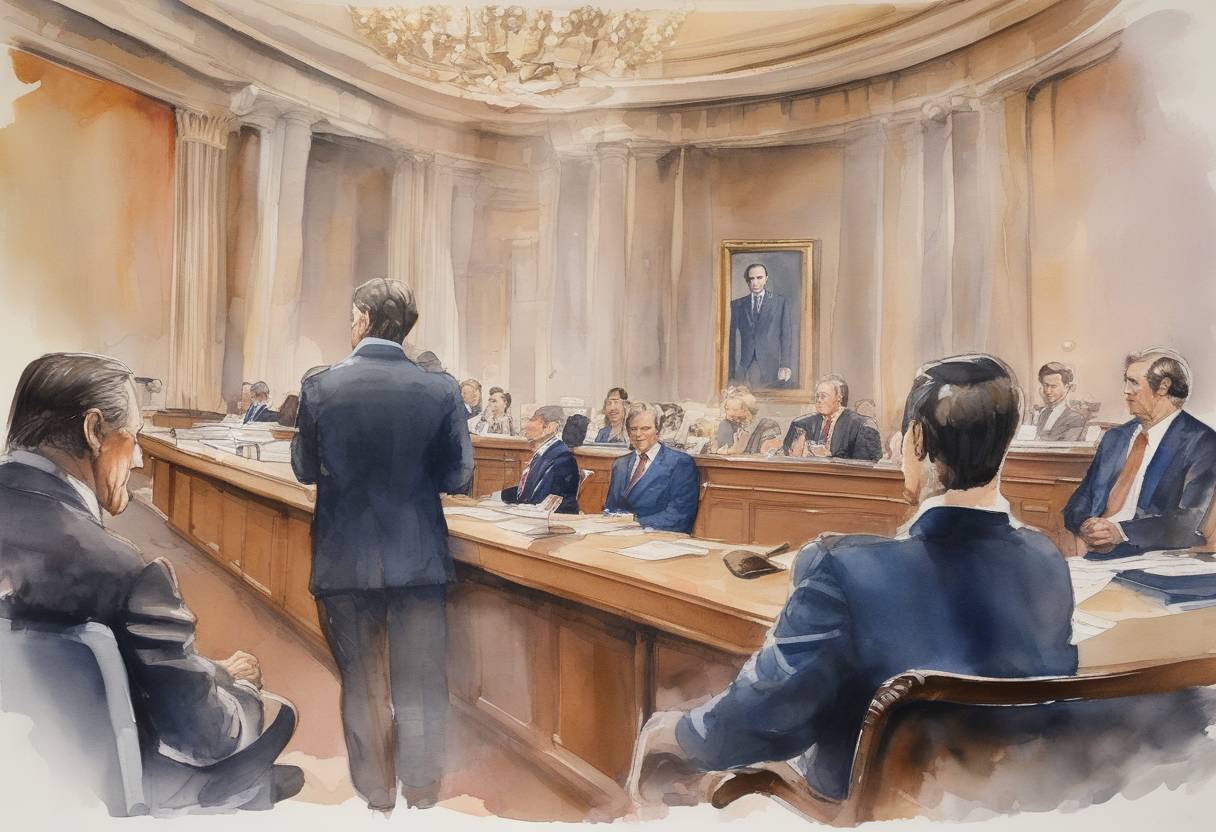
The House Judiciary Committee’s Vote on Nixon’s Impeachment
On July 27, 1974, a pivotal moment in American political history occurred when the House Judiciary Committee voted to recommend the first article of impeachment against President Richard Nixon. This recommendation was primarily for obstruction of justice, a charge stemming from the infamous Watergate scandal.
Background
The Watergate scandal began with a break-in at the Democratic National Committee headquarters at the Watergate office complex in Washington, D.C., on June 17, 1972. The subsequent investigation revealed a series of abuses of power by members of the Nixon administration, including attempts to cover up their involvement in the break-in.
Key Events Leading to the Vote
The Investigation: The scandal was initially investigated by journalists Bob Woodward and Carl Bernstein of The Washington Post. Their reporting, along with investigations by the FBI, Senate Watergate Committee, and a special prosecutor, gradually uncovered a web of political espionage and sabotage.
The Tapes: A major turning point in the investigation was the revelation of the existence of tape recordings of conversations in the Oval Office. These tapes were subpoenaed, and after a protracted legal battle, the Supreme Court ruled that Nixon had to release them.
The Smoking Gun: The tapes provided undeniable evidence of Nixon’s involvement in the cover-up of the Watergate break-in. The so-called “smoking gun” tape from June 23, 1972, revealed Nixon’s approval of plans to obstruct the FBI’s investigation.
The Judiciary Committee’s Deliberations
The House Judiciary Committee, composed of members from both political parties, conducted extensive hearings to determine whether Nixon’s actions warranted impeachment. The committee’s deliberations were marked by intense debate and thorough examination of the evidence.
Obstruction of Justice: The first article of impeachment accused Nixon of obstruction of justice, citing his efforts to impede the investigation into the Watergate break-in and subsequent cover-up.
Bipartisan Support: The vote to recommend impeachment was significant for its bipartisan nature, with several Republicans joining Democrats in supporting the article.
Aftermath and Historical Significance
Resignation: Facing almost certain impeachment by the full House and conviction by the Senate, Nixon chose to resign from the presidency on August 8, 1974, becoming the first U.S. president to do so.
Impact on American Politics: The Watergate scandal and Nixon’s resignation had a profound impact on American politics, leading to increased skepticism of government officials and reforms aimed at increasing transparency and accountability.
Legacy: The events surrounding Nixon’s impeachment process underscored the importance of the rule of law and the checks and balances inherent in the U.S. political system.
The House Judiciary Committee’s vote on July 27, 1974, remains a landmark event in U.S. history, illustrating the power of the legislative branch to hold the executive accountable and the enduring strength of American democratic institutions.