Election of Léopold Sédar Senghor as President of Senegal
1960 · Dakar, Senegal
Poet Léopold Sédar Senghor was elected as the first president of Senegal, after the country's independence from France earlier that year.
August 20, 1960
Senegal breaks from the Mali Federation, declaring independence.
Dakar, Senegal | Senegal Government
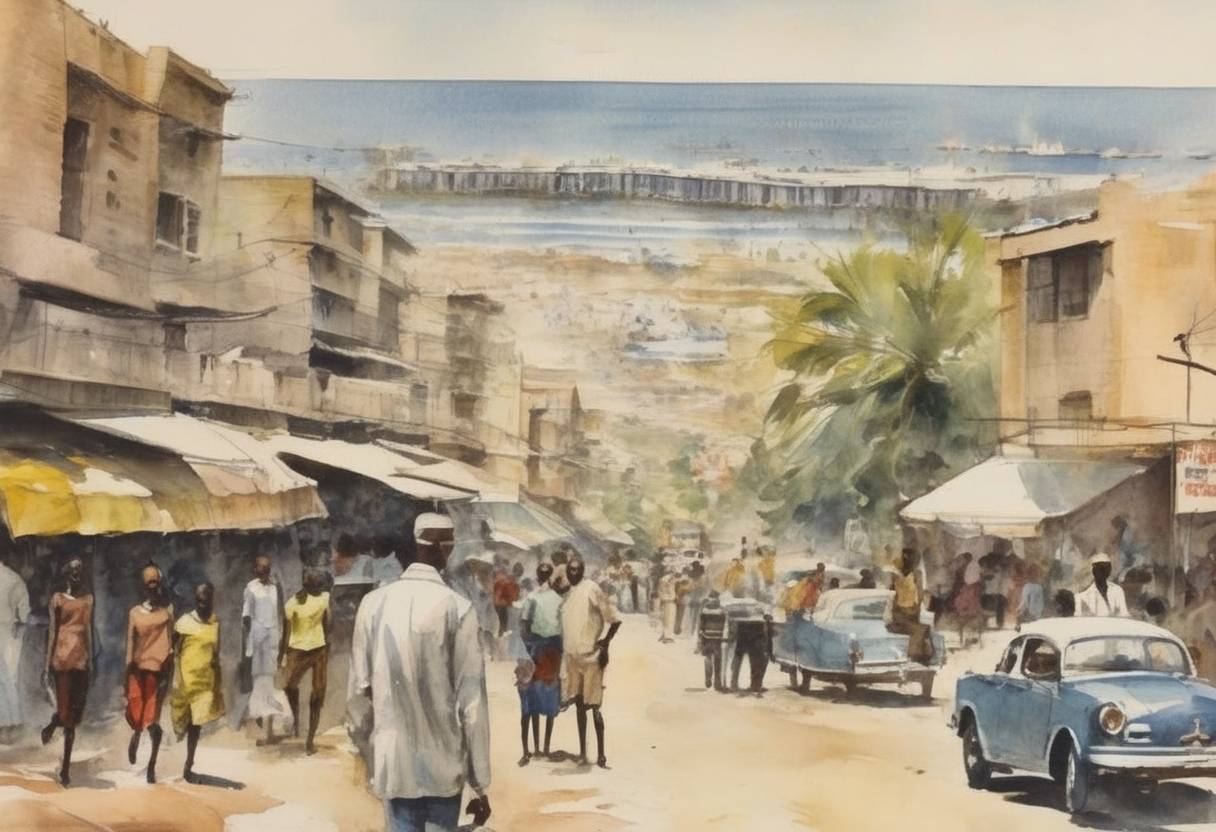
On August 20, 1960, Senegal declared its independence from the Mali Federation, marking a significant moment in the decolonization of Africa. This event was part of a broader wave of independence movements across the continent during the mid-20th century, as African nations sought to free themselves from European colonial rule.
The Mali Federation was a short-lived political union between Senegal and the French Sudan (now Mali), established as part of the decolonization process initiated by France. The federation was formed on April 4, 1959, with the aim of creating a larger, more economically viable state that could better manage the transition from colonial rule to independence.
The federation was part of France’s broader strategy to grant autonomy to its African colonies while maintaining some degree of influence. It was intended to be a model for other African states considering similar unions.
Internal Tensions: Despite the initial optimism, the Mali Federation faced significant internal challenges. Differences in political ideology, economic priorities, and administrative practices between Senegal and the French Sudan created friction. Senegal, under the leadership of Léopold Sédar Senghor, favored a more gradual approach to independence and a closer relationship with France, while the French Sudan, led by Modibo Keïta, pushed for rapid decolonization and greater autonomy.
Dissolution of the Federation: These differences came to a head in August 1960. The inability to reconcile their divergent visions for the federation led to its dissolution. On August 20, 1960, Senegal declared its independence, effectively ending the federation.
International Recognition: Following its declaration of independence, Senegal quickly gained international recognition. The country became a member of the United Nations and the Organization of African Unity, solidifying its status as a sovereign state.
Leadership: Léopold Sédar Senghor became the first President of Senegal, a position he held until 1980. Senghor was a prominent intellectual and poet, known for his advocacy of Negritude, a cultural movement that celebrated African culture and identity.
Stability and Development: Senegal’s post-independence period was marked by relative political stability compared to many other African nations. Senghor’s leadership focused on building a cohesive national identity and fostering economic development.
Legacy: The dissolution of the Mali Federation and Senegal’s subsequent independence highlighted the complexities of post-colonial state-building in Africa. It underscored the challenges of creating political unions in a continent with diverse cultures, languages, and political aspirations.
In conclusion, Senegal’s declaration of independence on August 20, 1960, was a pivotal moment in the country’s history and the broader narrative of African decolonization. It set the stage for Senegal’s development as a stable and influential nation in West Africa.
Source: en.wikipedia.org