William Austin Burt and the Patent of the Typographer
1829 · Detroit, United States
William Austin Burt patents the typographer, a precursor to the typewriter.
May 22, 1849
Future U.S. President Abraham Lincoln was issued a patent for a device to lift boats over shoals and obstructions in a river, making him the only U.S. president to hold a patent.
Washington, D.C., United States | United States Patent Office
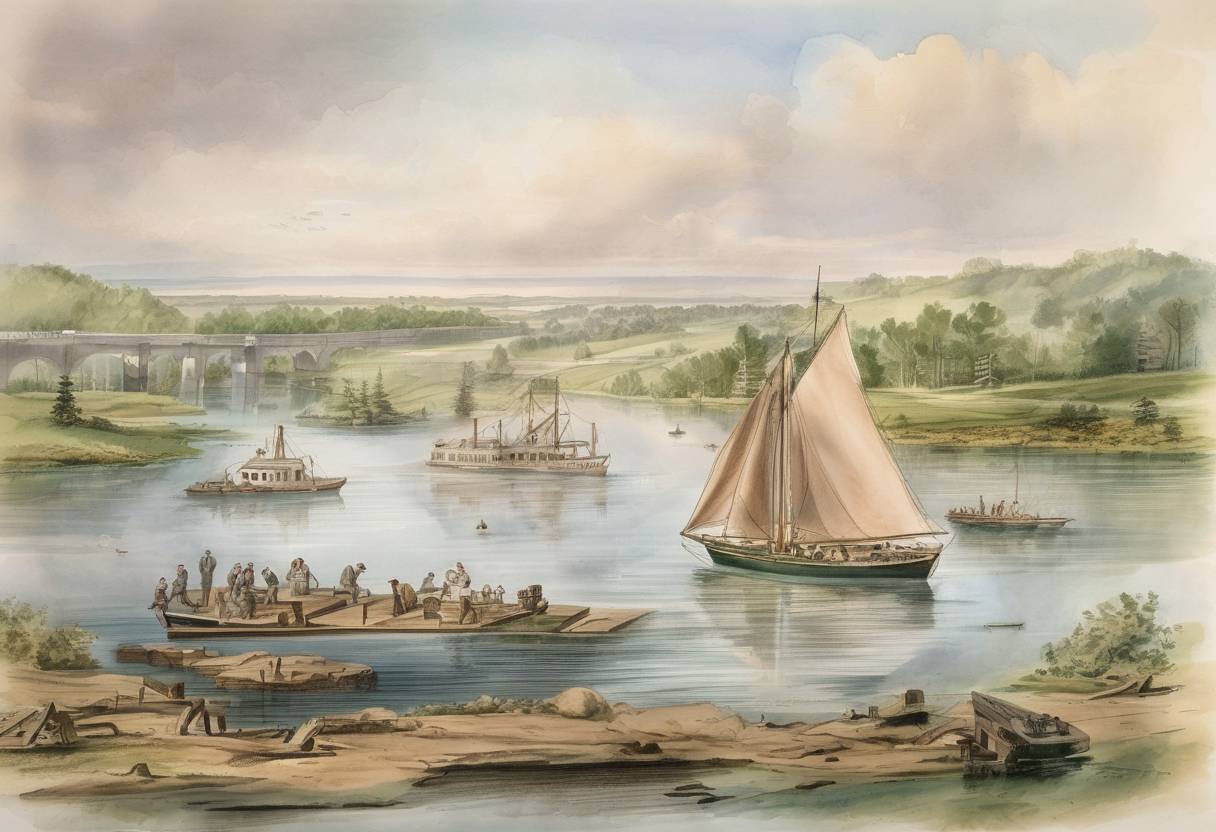
On May 22, 1849, future U.S. President Abraham Lincoln was granted a patent for a device designed to lift boats over shoals and obstructions in a river. This achievement makes Lincoln the only U.S. president to hold a patent, highlighting his inventive spirit and interest in technological innovation.
During the mid-19th century, river navigation was a critical component of transportation and commerce in the United States. However, boats frequently encountered difficulties when navigating shallow waters or obstructions, which could delay travel and increase costs. Lincoln, who had firsthand experience with river navigation from his time working on flatboats, recognized the need for a solution to this problem.
Lincoln’s invention, described in U.S. Patent No. 6,469, was a device that could be attached to the hull of a boat. It consisted of a set of bellows attached to the boat’s sides. When the boat approached a shallow area, the bellows could be inflated with air, increasing the vessel’s buoyancy and allowing it to float over the obstruction. This innovative concept aimed to make river travel more efficient and reliable.
Lincoln’s journey to obtaining the patent began with his submission of a model and application to the United States Patent Office. The model, crafted with the help of a local mechanic, was made of wood and metal and demonstrated the principles of his invention. The patent was officially granted on May 22, 1849, under the title “Buoying Vessels Over Shoals.”
While Lincoln’s invention was never manufactured or used commercially, it remains a testament to his ingenuity and problem-solving skills. The patent reflects Lincoln’s broader interest in science and technology, which he believed were vital to the nation’s progress. His engagement with innovation also underscores his forward-thinking approach, which would later be evident in his leadership during the Civil War and his support for infrastructure projects like the transcontinental railroad.
Lincoln’s patent is preserved at the Smithsonian Institution, serving as a unique historical artifact that connects his legacy as a statesman with his lesser-known role as an inventor. This achievement highlights the diverse talents and interests of one of America’s most revered presidents.
Source: en.wikipedia.org