The Premiere of Giuseppe Verdi's "La Battaglia di Legnano"
1850 · Rome, Italy
The first performance of Giuseppe Verdi's opera "Giuseppe Verdi: La Battaglia di Legnano" took place at Teatro Argentina in Rome.
September 5, 1900
Giacomo Puccini's opera, 'Tosca', set in Rome during the Napoleonic Wars, was performed at the Teatro dell'Opera di Roma. While the opera originally premiered on January 14, 1900, this performance continued Puccini's success and reputation as a major figure in the opera genre.
Rome, Italy | Teatro dell'Opera di Roma
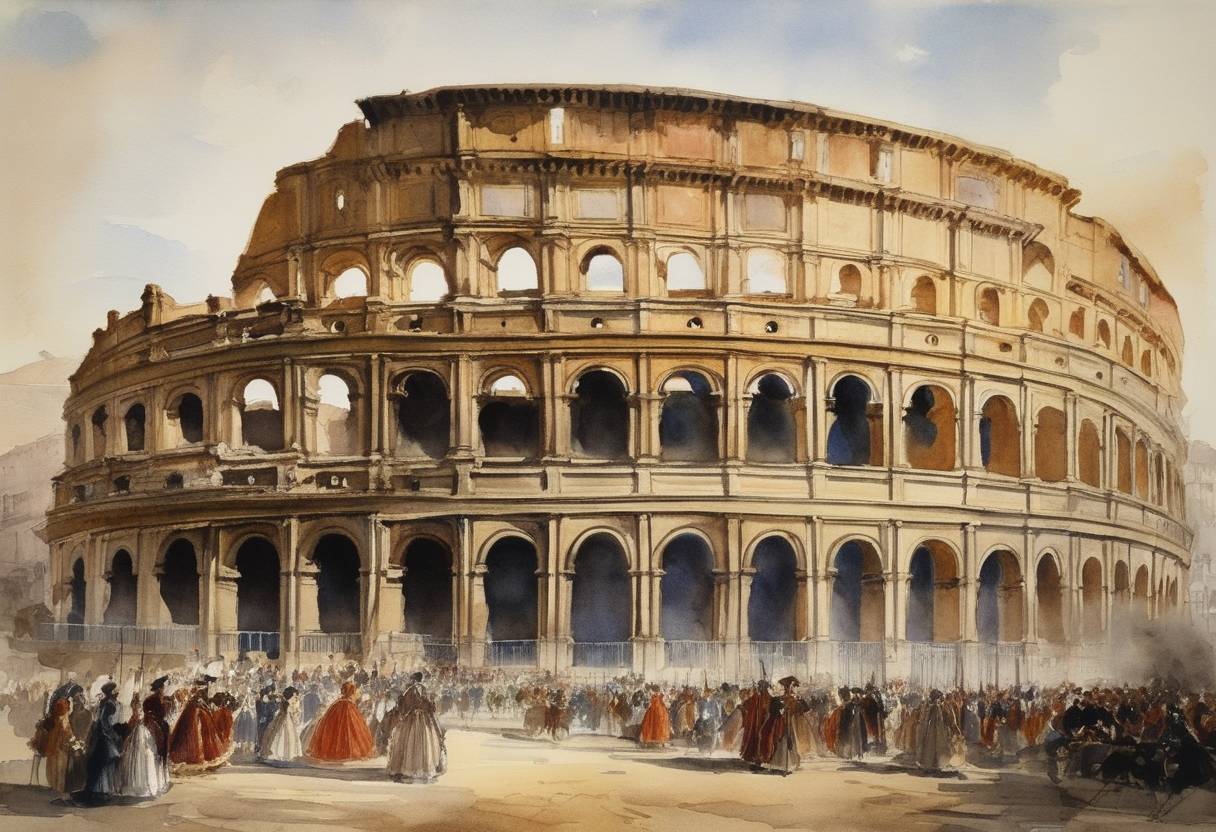
On September 5, 1900, Giacomo Puccini’s renowned opera Tosca was performed at the Teatro Costanzi, now known as the Teatro dell’Opera di Roma, reinforcing Puccini’s esteemed position in the operatic world. Set against the backdrop of the Napoleonic Wars in Rome, Tosca is a dramatic tale that intertwines love, political intrigue, and betrayal.
Tosca first premiered on January 14, 1900, at the same venue, the Teatro Costanzi in Rome. Its libretto, based on Victorien Sardou’s 1887 French-language play “La Tosca,” follows the lives of three central characters: Floria Tosca, a passionate singer; Mario Cavaradossi, her lover and a painter; and Baron Scarpia, the malevolent chief of police. The opera’s intense drama is set in three iconic Rome locations: the church of Sant’Andrea della Valle, the Palazzo Farnese, and the Castel Sant’Angelo.
The performance on September 5, 1900, came at a time when Puccini’s reputation was solidifying globally, as Tosca was increasingly recognized for its captivating music and dramatic intensity. This particular staging continued to exhibit the qualities that made Puccini’s work standout: vibrant orchestration, rich character development, and a seamless blend of expressive melodies with the poignant libretto crafted by Giuseppe Giacosa and Luigi Illica.
Attendees of the performance would have witnessed the opera’s compelling narrative unfold, characterized by Puccini’s meticulous attention to emotional detail and thematic depth. The opera’s dramatic climax, culminating in the tragic ending, has consistently resonated with audiences, contributing to its lasting legacy.
The performance in September 1900 served not only to fortify Puccini’s status in Italy but also signaled the burgeoning international acclaim for his work. Tosca, like his other operas, is renowned for its ability to capture the complexities of human emotion and societal conflict, themes that are universally appreciated and contribute to the opera’s enduring presence in repertoires worldwide.
By this time in 1900, Tosca was already being appreciated beyond Italy, laying the groundwork for later successful productions in major cities throughout Europe and America. Puccini’s influence in the opera genre during the early 20th century cannot be overstated, and this particular performance is a testament to his mastery in creating timeless art.
Source: www.metopera.org