Execution of King Louis XVI of France
1793 · Paris, France
King Louis XVI of France was executed by guillotine in Paris, marking a pivotal moment in the French Revolution.
September 2, 1792
The September Massacres took place during the French Revolution, as a wave of killings swept through Paris and other cities.
Paris, France | French Revolutionary Government
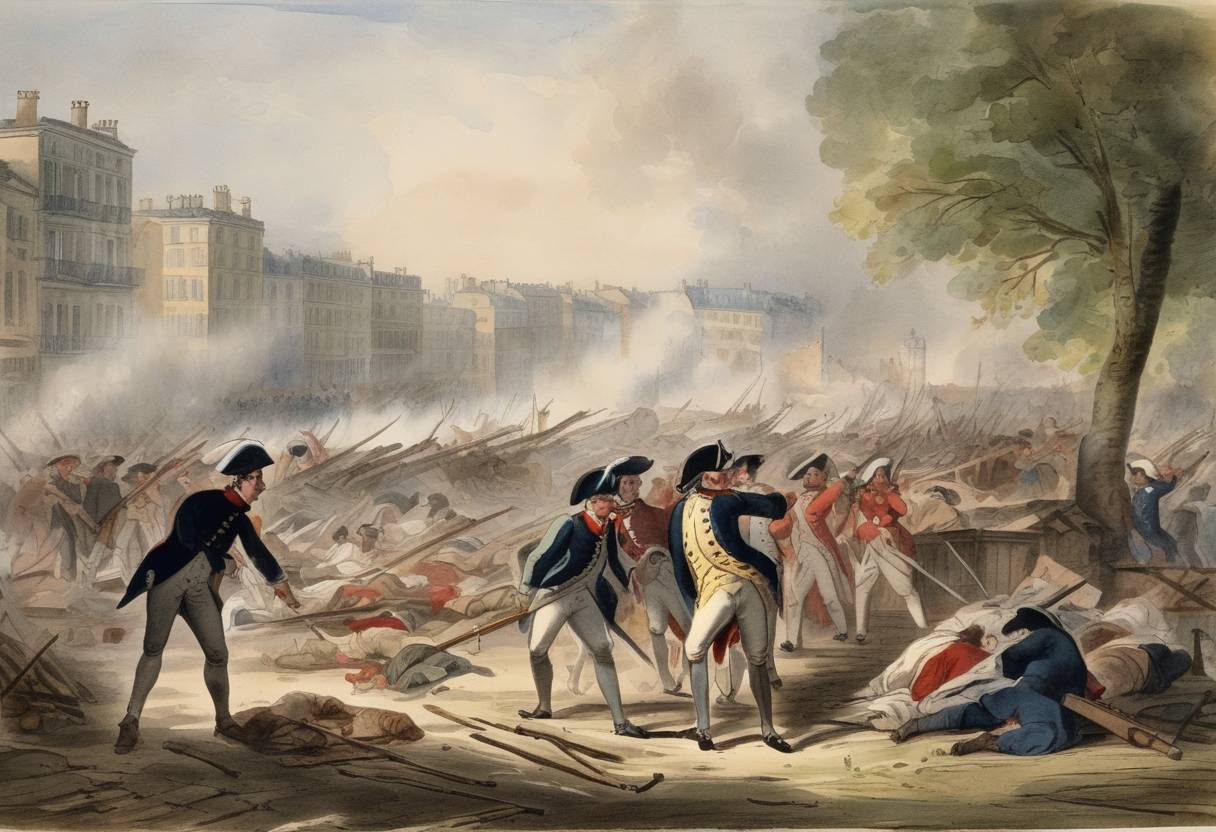
The Paris Massacres of September 1792 were a pivotal episode during the French Revolution marked by large-scale killings. Tensions had been escalating due to several factors: the revolutionary government faced threats from foreign armies and internal insurgencies, particularly the invasion of France by Prussian and Austrian forces. The radicalization shifted after the fall of the monarchy when King Louis XVI was arrested on August 10, 1792. Fear gripped Paris that royalists would conspire and support the advancing foreign troops.
The massacres began on the afternoon of September 2, 1792, when revolutionary fervor spread across Paris. Parisians, mostly from the working-class sans-culottes and fueled by propaganda from radical leaders like Jean-Paul Marat, targeted prisoners incarcerated in various city prisons, whom they suspected of royalist sympathies.
A chosen committee presided over makeshift trials, often issuing sentences of death without substantial evidence. The Abbey Prison was one of the first sites where killings ensued, claiming the lives of many clergy and nobility. Over the next several days, about 1,200 out of 2,600 prisoners in Paris were executed, including nobles, clergy, Swiss Guards, and common criminals.
These acts of violence sparked considerable debate and division within revolutionary France. The September Massacres horrified many within France and abroad, leading to increased hostility towards the revolution and questioning its principles. It fueled the critique that the Revolution was descending into uncontrolled radicalism and chaos, damaging its legitimacy in the eyes of many contemporaries.
The massacres underscored revolutionary France’s precarious situation and the fear-driven environment that consumed its capital. They contributed to the radicalization of the Revolution, paving the way for the Reign of Terror, during which the revolutionary leadership further centralized power and expanded the use of political violence.
Source: en.wikipedia.org