Joseph Goebbels' Sportpalast Speech - February 18, 1943
1943 · Berlin, Germany
Joseph Goebbels delivered the Sportpalast speech at the Berlin Sportpalast calling for a Total War against the Allies.
November 29, 1935
The Senegalese political leader Léopold Sédar Senghor, later the first president of Senegal, was released after being captured by German forces during World War II.
Germany, Germany | German Forces
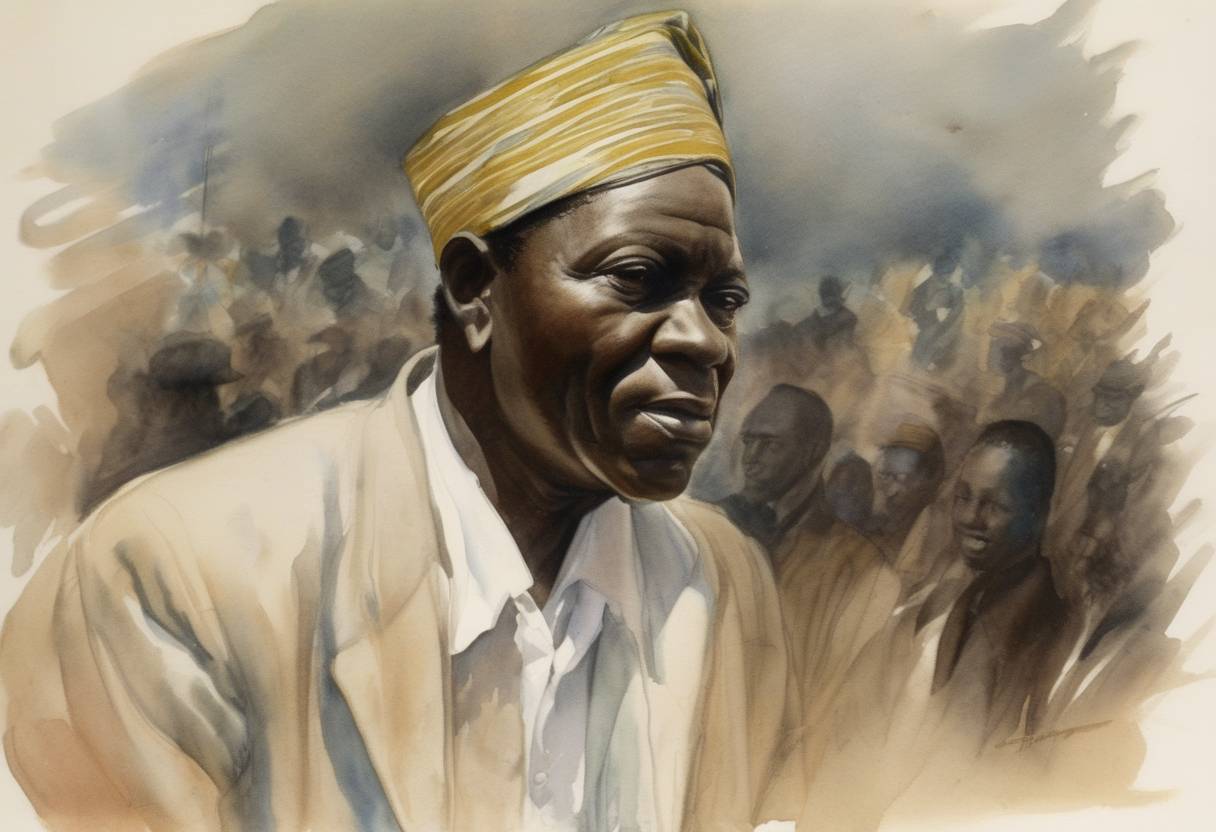
Léopold Sédar Senghor, known for his future role as a prominent African statesman and cultural theorist, was indeed a significant figure of the 20th century. However, there is an inaccuracy in the specified date related to events involving his capture and release.
Senghor was actually captured by German forces during World War II on June 20, 1940, during the Battle of France. His capture was not in 1935, which suggests a chronological disconnect with the actual historical timeline. Post-capture, he was interned in various German prisoner-of-war camps for two years because he was part of the French Colonial army. In 1942, he was released due to health issues and his scholarly reputation, especially as a poet and academic.
Capture: Senghor’s capture underscored the extensive reach of the Nazi invasion and the impact of World War II on African soldiers serving in the French colonial forces. These troops, often referred to as “Tirailleurs Sénégalais,” played a significant role in World War II.
Release: His release was pivotal as it allowed him to return to his academic and poetic pursuits, which significantly influenced Francophone literature. Senghor subsequently became a voice for African pride and the cultural movement known as “Négritude,” which he founded along with other intellectuals.
Later Achievements: After the war, Senghor transitioned into a political career, eventually becoming the first president of Senegal from 1960 to 1980. His experience during the war contributed to his political philosophy of unity and his efforts to foster cross-cultural understanding and African sovereignty.
This historical moment highlights the complexities of colonial experiences during the war and foreshadows Senghor’s substantial contributions to African intellectualism and politics.
Source: www.britannica.com