The Battle of Spotsylvania Court House: Conclusion
1864 · Spotsylvania County, United States
The Battle of Spotsylvania Court House, one of the American Civil War battles, ended.
August 29, 1862
The Second Battle of Bull Run (or Second Manassas) was fought on this day during the American Civil War, marking a significant Confederate victory under General Robert E. Lee's command. The battle was part of Lee's Northern Virginia Campaign and set the stage for the Confederate invasion of the North in the Maryland Campaign.
Prince William County, USA | Confederate States Army
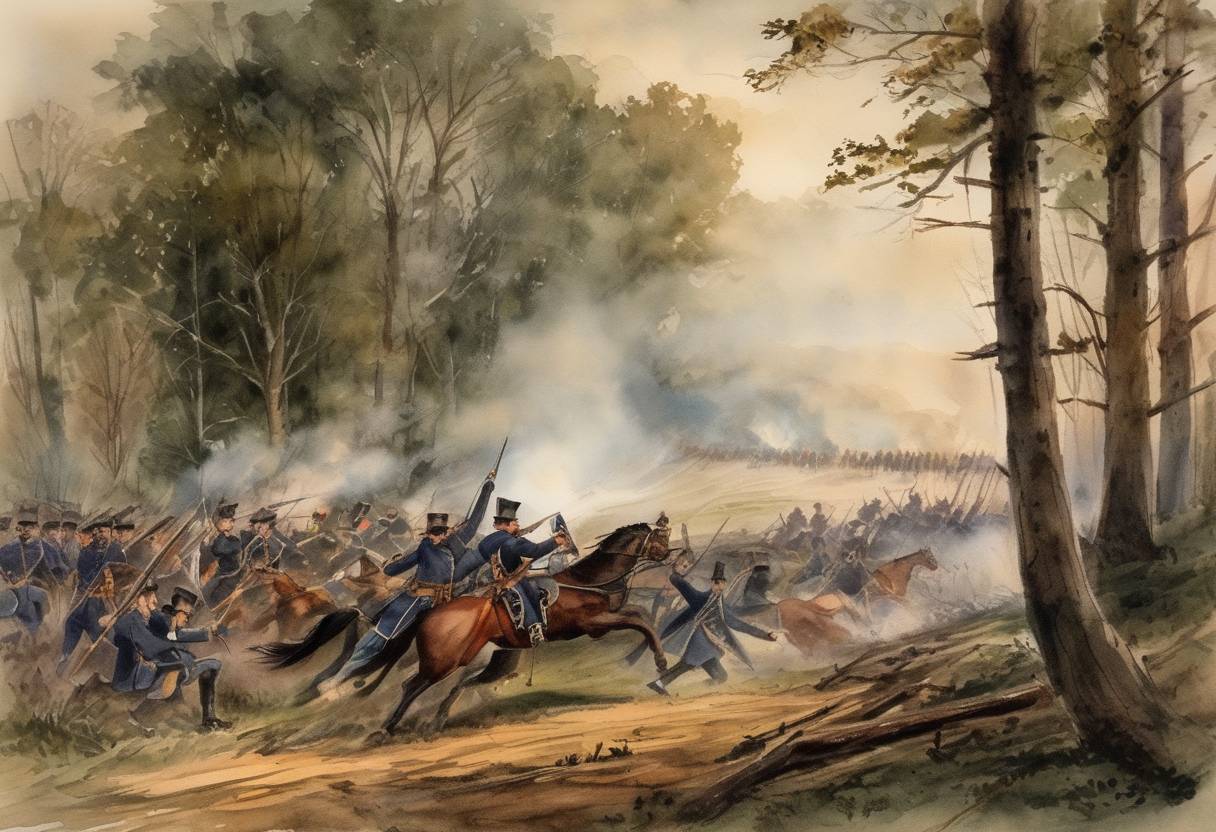
On August 29, 1862, a crucial engagement of the American Civil War took place: the Second Battle of Bull Run, commonly known in the South as the Second Manassas. This battle was a key component of the Northern Virginia Campaign and underscored the tactical brilliance of Confederate General Robert E. Lee, leading to a significant Confederate victory.
Northern Virginia Campaign: The battle was part of Lee’s larger strategy to shift the war’s momentum in favor of the Confederacy following the Seven Days Battles. Lee aimed to isolate and defeat the Union forces under the command of Major General John Pope by engaging them in favorable battles on territory advantageous to the Confederates.
Union and Confederate Forces: General John Pope commanded the Union Army of Virginia, while Lee led the Confederate Army of Northern Virginia. On the Confederate side, key commanders included Major Generals Thomas “Stonewall” Jackson and James Longstreet.
Initial Engagements: The battle on August 29 began with Union forces attacking Jackson’s line. General Pope, mistakenly believing Jackson’s forces to be retreating, ordered assaults against the Confederate left.
Jackson’s Defense: Jackson’s troops, entrenched in defensive positions along a railroad grade, withstood repeated assaults by the Union forces, inflicting heavy casualties and maintaining their ground.
Longstreet’s Arrival: Longstreet’s divisions arrived in the afternoon, strengthening Confederate positions. However, Pope remained largely unaware of Longstreet’s full deployment, failing to anticipate the forthcoming counterattack.
Continuation on August 30: The battle continued the following day, culminating in a large-scale Confederate attack. Longstreet’s corps launched a massive flanking maneuver that overwhelmed the Union left, forcing a retreat.
Significance of the Victory: The Confederate victory at the Second Battle of Bull Run was a turning point in the Civil War. It emboldened Lee to pursue an offensive into the North, leading to the Maryland Campaign and the subsequent Battle of Antietam.
Union Forces: The defeat marked a significant setback for Union forces. It also led to criticism of Pope’s leadership and eventually resulted in the dissolution of the Army of Virginia with its integration into the Army of the Potomac under Major General George B. McClellan.
This victory solidified Robert E. Lee’s reputation as a formidable military leader and reinforced Confederate military morale, further prolonging the Civil War.
Source: www.britannica.com