General George Washington's Farewell Address to the Continental Army
1783 · Rocky Hill, United States
In Rocky Hill, New Jersey, General George Washington gave his farewell address to the Continental Army.
April 19, 1783
George Washington proclaims the end of hostilities with Britain, effectively marking the end of the American Revolutionary War.
Headquarters of the Continental Army, United States | Continental Army
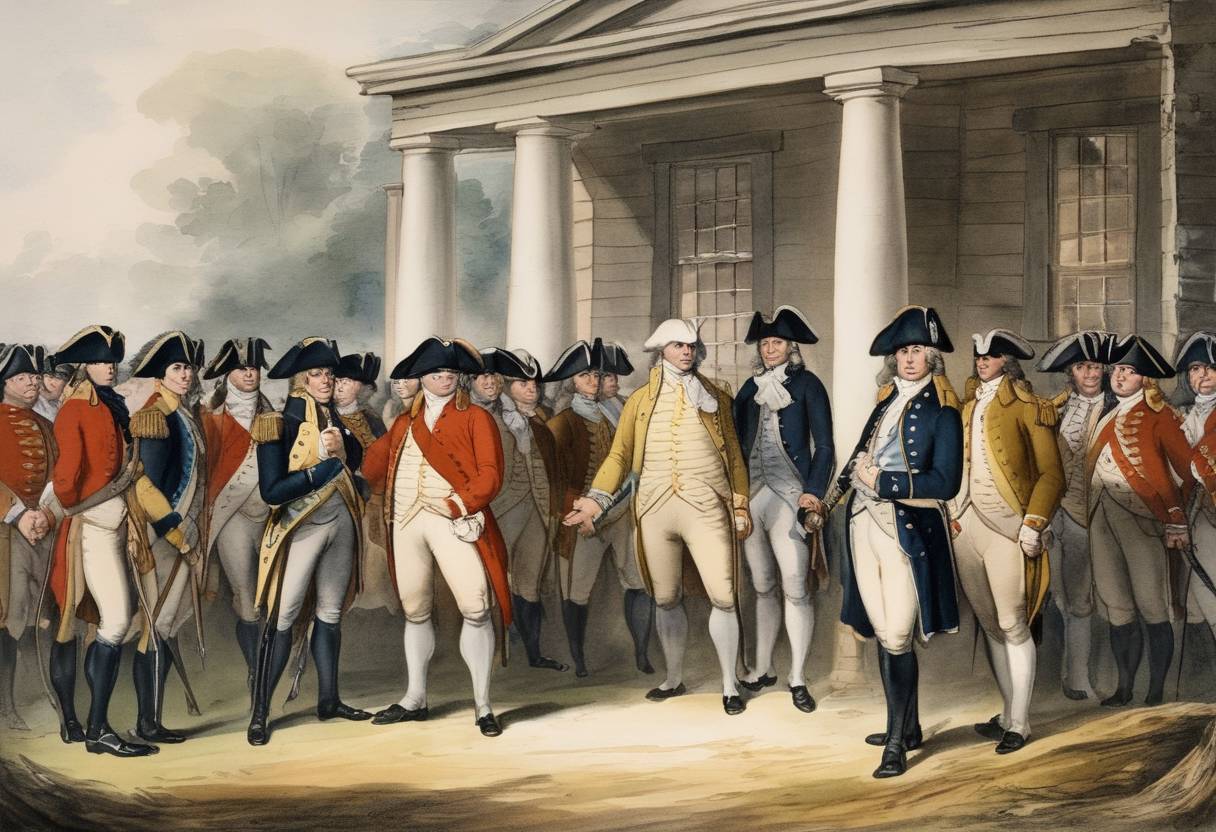
On April 19, 1783, George Washington issued a proclamation from his headquarters in Newburgh, New York, marking the cessation of hostilities with Great Britain and effectively concluding the American Revolutionary War. This marked a significant milestone in the formation of the United States as an independent nation.
Treaty of Paris Negotiations: The preliminary articles of peace were agreed upon on November 30, 1782, in Paris. However, fighting continued as the treaty awaited formal ratification and the conclusion of diplomatic negotiations.
Congressional Resolution: The Continental Congress, informed of the progress in peace talks, had officially ratified the preliminary peace terms on April 11, 1783.
Washington’s Headquarters: George Washington was stationed at his headquarters in Newburgh, New York, where he awaited Congress’s instructions regarding the cessation of military operations.
Formal Announcement: Washington’s proclamation formally communicated to the troops and the general populace that hostilities had ceased, aligning with Congress’s earlier resolution to halt war efforts.
Troop Morale and Discipline: The proclamation served as a vital means to maintain morale and discipline among the Continental Army, which had endured years of hardship and uncertainty.
Alignment with the Treaty of Paris: Though hostilities were ceased, the full peace was not officially ratified until the signing of the Treaty of Paris on September 3, 1783, marking a formal conclusion to the war.
End of Armed Conflict: The announcement marked the official end to armed conflict between the British forces and the American Continental Army, paving the way for legislative and diplomatic steps toward nation-building.
Framework for Peace: Washington’s leadership throughout the war and his prudent management of the end of hostilities laid foundational precedents for civil-military relations in the nascent United States.
Legacy of Independence: The cessation of hostilities symbolized the success of the American quest for independence, setting the stage for subsequent developments in forming a robust, independent government structure with the Constitutional Convention of 1787.
This proclamation was a turning point, ending one series of challenges while beginning another: the establishment and maintenance of peace and a functional independent government.
Source: en.wikipedia.org