The Premiere of Igor Stravinsky's *The Rite of Spring*
1913 · Paris, France
Igor Stravinsky's ballet 'The Rite of Spring' premiered in Paris, causing a riot due to its avant-garde music and choreography.
November 22, 1928
The premier performance of Ravel's 'Boléro' took place at the Paris Opera. The composition is known for its unique orchestration and repetitive melody.
Paris, France | Paris Opera
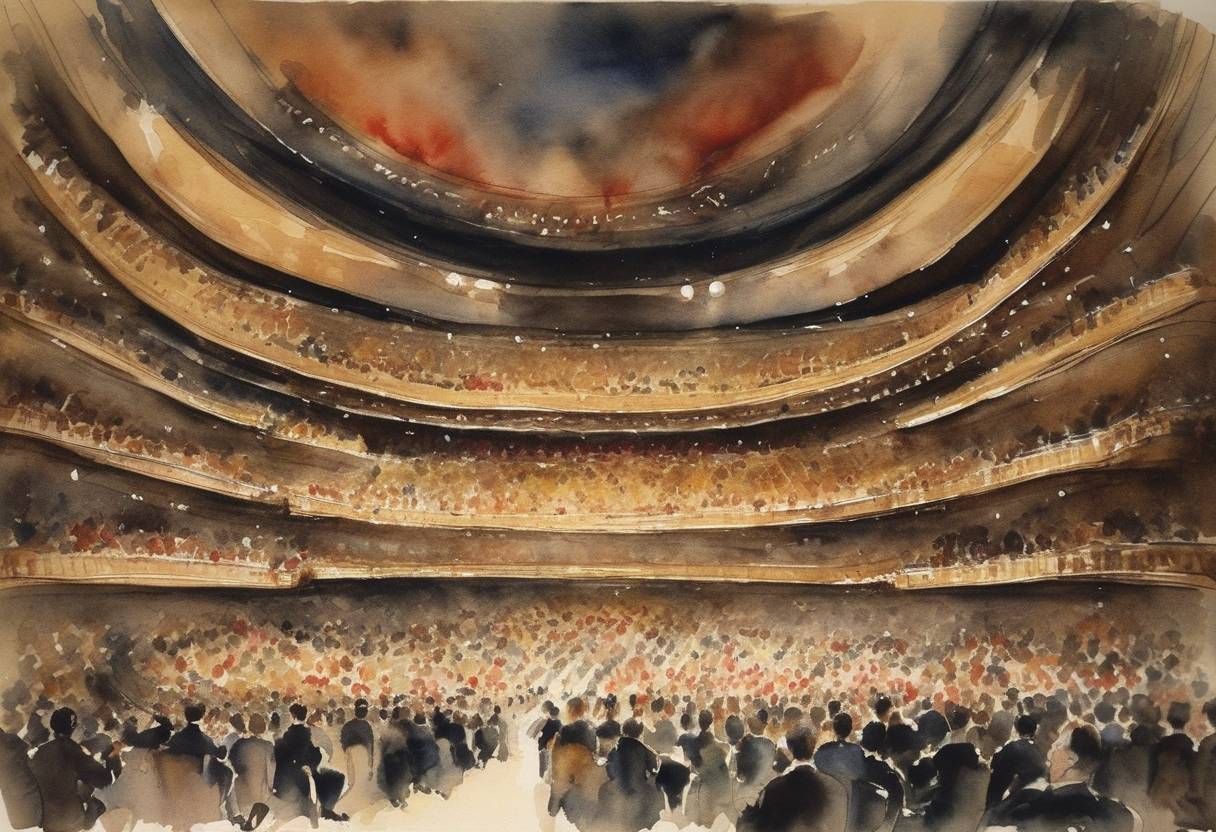
On November 22, 1928, the Paris Opera hosted the premiere of Maurice Ravel’s orchestral masterpiece, Boléro. This composition is renowned for its distinctive structure and orchestration, making it a landmark work in classical music.
Maurice Ravel, a prominent French composer of the early 20th century, composed Boléro in 1928 at the request of Russian actress and dancer Ida Rubinstein. Initially conceived as a ballet, Boléro was an experiment in texture, rhythm, and orchestration.
Boléro is most notable for its repetitive melody and rhythm, which persists throughout the piece without deviation in pitch. Ravel structured the piece as a single, continuous crescendo. A snare drum maintains a consistent, rhythmic pattern while various instruments successively introduce a theme. The orchestration gradually intensifies, culminating in a powerful finale.
The premiere was part of a ballet performance produced by Ida Rubinstein at the Paris Opera. Despite its unconventional structure, the work was met with both enthusiasm and surprise from the audience. Some listeners initially criticized its repetitive nature, while others appreciated the freshness of its concept and the ingenuity in Ravel’s orchestration.
Following its premiere, Boléro rapidly gained popularity and became one of Ravel’s most celebrated compositions. The piece challenged conventional ideas of composition with its innovative use of musical repetition and orchestration. It remains a staple in concert repertoires worldwide and has inspired numerous adaptations across various artistic disciplines.
Boléro showcases Ravel’s mastery in orchestration and has cemented its place in the canon of Western classical music. Its premier performance at the Paris Opera marked a critical moment in the history of musical innovation during the 20th century, influencing generations of composers and musicians.
Ravel’s willingness to experiment challenged traditional musical norms and highlighted the potential for new forms of artistic expression within the classical genre.
Source: en.wikipedia.org