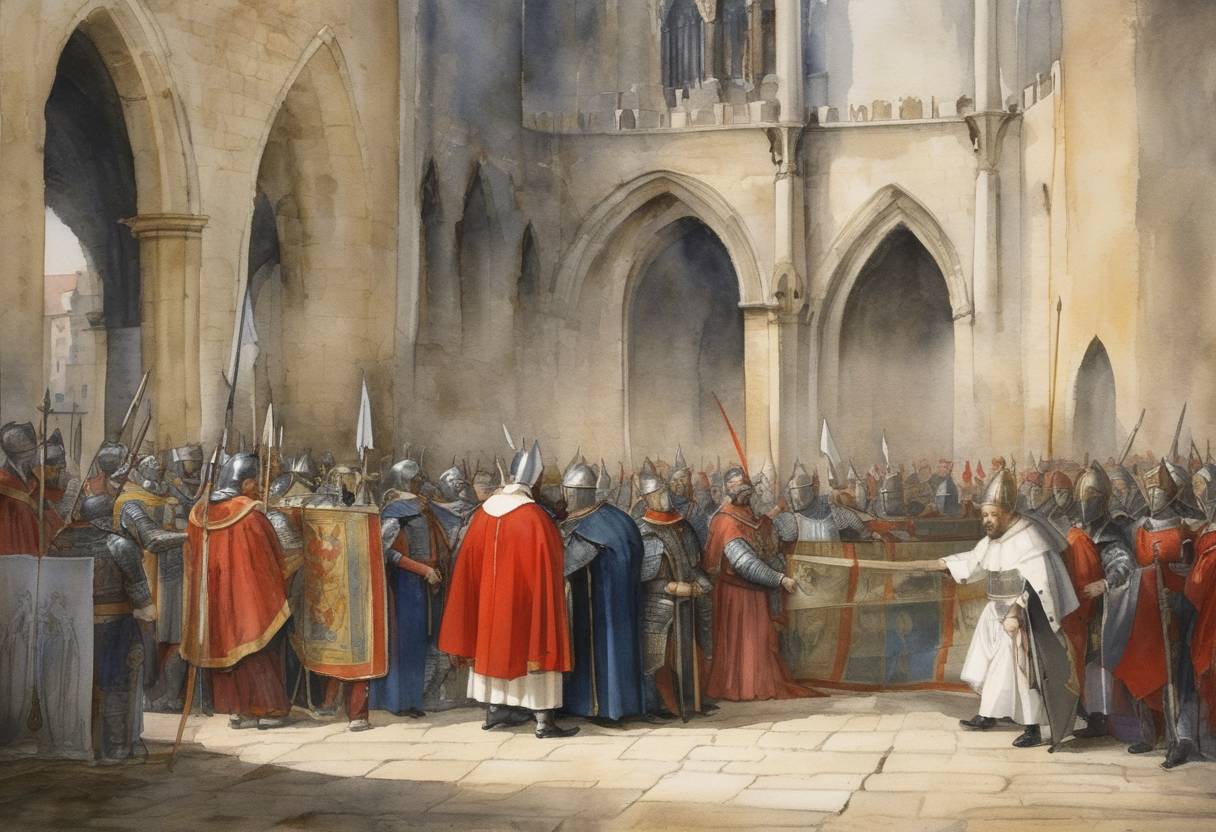
Dissolution of the Knights Templar: Vox in excelso
On May 6, 1312, Pope Clement V issued the Papal bull Vox in excelso, marking the formal dissolution of the Knights Templar. This event was a culmination of a series of complex political and financial motivations, primarily instigated by King Philip IV of France, who desired access to the wealth and resources controlled by the Templars.
Context
- The Knights Templar: Founded around 1119, the Knights Templar was a Catholic military order established to protect Christian pilgrims traveling to the Holy Land. Over nearly two centuries, they amassed significant wealth and land holdings, becoming a powerful economic and military force.
- Financial Strains of France: King Philip IV, embroiled in costly wars with England and struggling with financial instability, viewed the wealth of the Templars as a potential solution to his debts.
Key Events Leading to the Dissolution
- Arrest and Charges: On October 13, 1307, Philip IV orchestrated the mass arrest of Templar members in France under accusations of heresy, blasphemy, and other serious crimes. These charges were largely fabricated, designed to discredit the Templars and justify seizing their assets.
- Papal Intervention: The sudden arrests and subsequent trials placed Pope Clement V in a delicate position. While initially attempting to mediate, he eventually acquiesced to Philip’s pressure to interrogate and disband the order.
- Council of Vienne: The Council of Vienne, convened in 1311, debated the issue extensively. With mounting evidence of coerced confessions and questionable trials, the Pope ultimately chose to dissolve the order, partly to maintain church harmony and avoid conflict with the French crown.
The Papal Bull Vox in excelso
- Decision and Statement: The edict declared the order dissolved, ostensibly on grounds of irreparable scandal and to restore a sense of peace among Christians.
- Impact on the Templars: Although the order was disbanded, many members were absorbed into other religious institutions. The wealth and properties of the Templars, meant to be transferred to other religious orders, were often claimed by secular powers, notably the French monarchy.
Aftermath and Historical Significance
- This dissolution marked the end of one of the most influential military orders of the medieval period.
- The event highlighted the intersection of politics, religion, and economic power in medieval Europe.
- It also demonstrated how influential monarchs could manipulate ecclesiastical institutions for temporal gain.
The suppression of the Knights Templar remains a pivotal chapter in the history of the medieval church and European monarchies. This event is frequently cited as an example of political intrigue involving church and state that shaped the course of medieval Christendom.