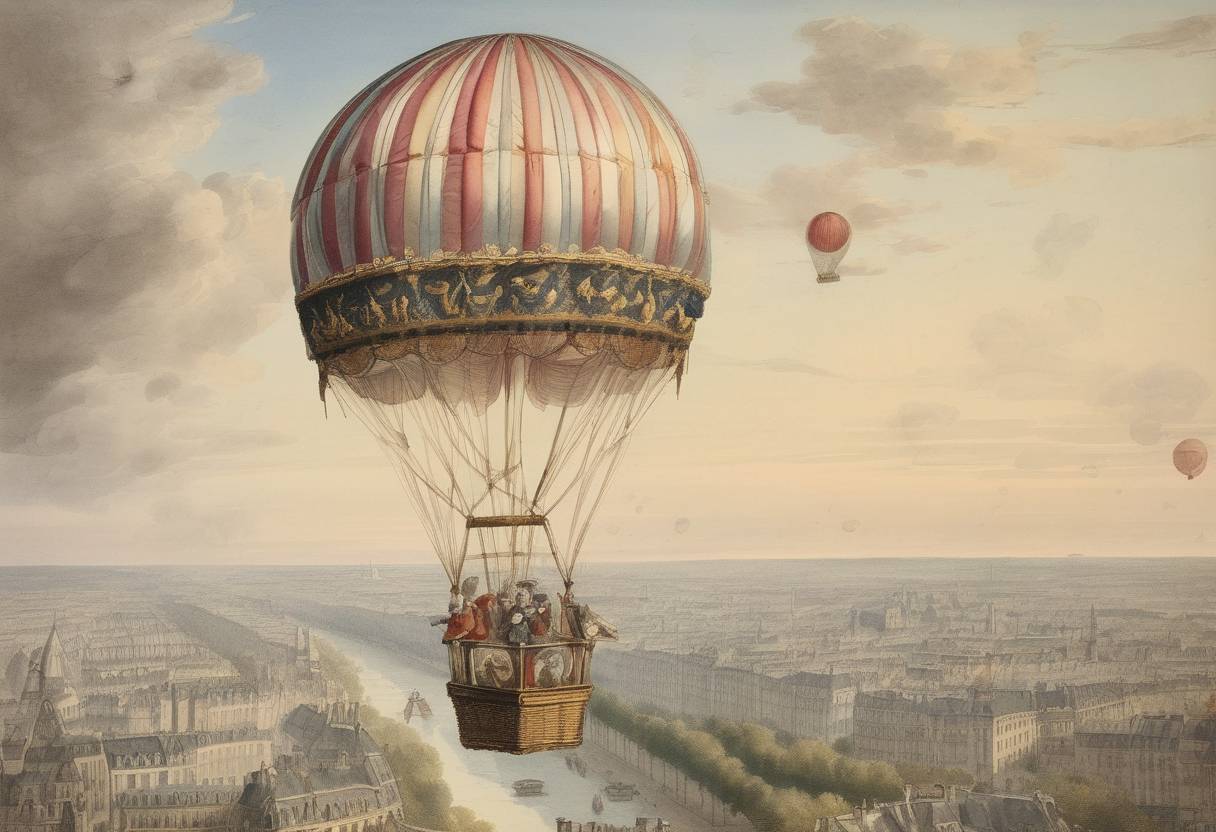
André-Jacques Garnerin’s First Recorded Parachute Jump
On October 22, 1797, André-Jacques Garnerin made history by performing the first recorded parachute jump from a hot air balloon over Paris. This daring feat marked a significant milestone in the development of parachuting and aeronautics.
Background
- André-Jacques Garnerin: Born on January 31, 1769, in Paris, Garnerin was a pioneering French balloonist and inventor. He was deeply interested in flight and the potential for human aerial navigation.
- Hot Air Balloons: By the late 18th century, hot air balloons had become a popular means of aerial exploration, following the Montgolfier brothers’ successful flights in the early 1780s. Garnerin was inspired by these advancements and sought to explore the possibilities of descending safely from great heights.
The Jump
- Location: The jump took place over the Parc Monceau in Paris, a popular public park.
- The Parachute: Garnerin’s parachute was a frameless canopy made of silk, approximately 23 feet in diameter. It was attached to a basket, which served as the gondola for his descent.
- The Ascent: Garnerin ascended to a height of about 3,200 feet (approximately 975 meters) in a hydrogen balloon.
- The Descent: Upon reaching the desired altitude, Garnerin cut the rope connecting the parachute to the balloon. The parachute deployed, and he descended safely to the ground, despite experiencing significant oscillations during the descent.
Significance
- Innovation in Aeronautics: Garnerin’s successful jump demonstrated the feasibility of using parachutes for safe descents from high altitudes, paving the way for future developments in parachuting technology.
- Public Spectacle: The event attracted a large crowd and garnered significant public attention, highlighting the growing fascination with flight and human ingenuity.
- Legacy: Garnerin continued to refine his parachute designs and performed several more jumps. His work laid the groundwork for future advancements in both recreational and military parachuting.
Aftermath
- Further Developments: Garnerin’s wife, Jeanne Geneviève Labrosse, became the first woman to parachute in 1799, continuing the legacy of innovation in the field.
- Impact on Aviation: The principles demonstrated by Garnerin’s parachute jump influenced later aviation pioneers and contributed to the eventual development of modern parachuting techniques.
André-Jacques Garnerin’s historic jump on October 22, 1797, remains a landmark event in the history of aviation, showcasing the spirit of exploration and the quest for technological advancement.