The October Revolution: November 6-7, 1917
1917 · Petrograd, Russia
The Bolshevik Party, led by Vladimir Lenin, launched the October Revolution in Russia, which led to the overthrow of the Provisional Government and the establishment of Soviet rule.
November 7, 1917
The October Revolution in Russia took place, leading to the Bolsheviks seizing power.
Petrograd, Russia | Bolshevik Party
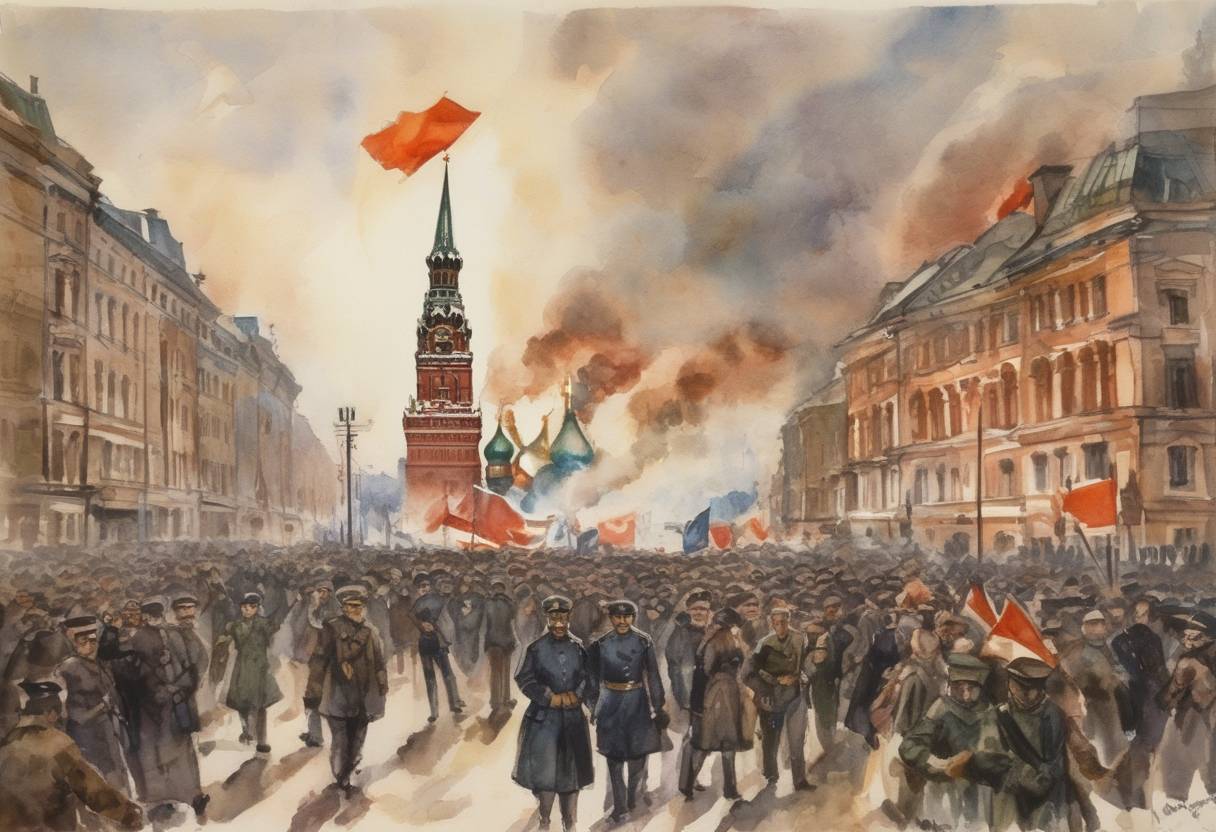
The October Revolution, also known as the Bolshevik Revolution, was a pivotal event in Russian history that took place on November 7, 1917 (October 25 in the Julian calendar, which was in use in Russia at the time). This revolution marked the second major phase of the Russian Revolution of 1917, following the February Revolution, and led to the establishment of a Bolshevik government under the leadership of Vladimir Lenin.
February Revolution: Earlier in 1917, the February Revolution had resulted in the abdication of Tsar Nicholas II and the establishment of a Provisional Government. However, this government struggled to address the pressing issues of war, land reform, and economic instability.
World War I: Russia’s continued involvement in World War I had exacerbated economic hardships and widespread discontent among the population, particularly among soldiers and workers.
Rise of the Bolsheviks: The Bolsheviks, a faction of the Russian Social Democratic Labour Party led by Lenin, gained popularity by advocating for “peace, land, and bread.” They promised to withdraw Russia from the war, redistribute land to peasants, and transfer power to the Soviets (workers’ councils).
Planning and Execution: The Bolsheviks, with the support of the Petrograd Soviet and the Military Revolutionary Committee, planned an armed insurrection. Lenin returned from exile to lead the uprising.
Seizure of Key Locations: On the night of November 6-7, Bolshevik forces began seizing key locations in Petrograd (now St. Petersburg), including government buildings, communication centers, and the Winter Palace, the seat of the Provisional Government.
Storming of the Winter Palace: The Winter Palace was taken with minimal resistance, and members of the Provisional Government were arrested. This marked the effective transfer of power to the Bolsheviks.
Formation of a New Government: The Bolsheviks established the Council of People’s Commissars, with Lenin as its head. This new government immediately began implementing radical reforms, including the withdrawal from World War I through the Treaty of Brest-Litovsk.
Civil War: The revolution led to a civil war between the Bolshevik Red Army and the anti-Bolshevik White forces, lasting until 1922. The Bolsheviks ultimately emerged victorious, solidifying their control over Russia.
Global Impact: The October Revolution had a profound impact worldwide, inspiring communist movements and contributing to the ideological divide of the 20th century, particularly during the Cold War.
The October Revolution was a defining moment in 20th-century history, leading to the creation of the Soviet Union and shaping global politics for decades. Its legacy continues to be studied and debated by historians and political scientists around the world.
Source: www.britannica.com