Scott Carpenter's Orbital Flight on May 24, 1962
1962 · Cape Canaveral, USA
Astronaut Scott Carpenter orbits the Earth three times in the Aurora 7 space capsule, becoming the second American to orbit the Earth.
February 20, 1962
John Glenn became the first American to orbit the Earth, aboard Friendship 7 during NASA's Mercury-Atlas 6 mission.
Cape Canaveral, United States | NASA
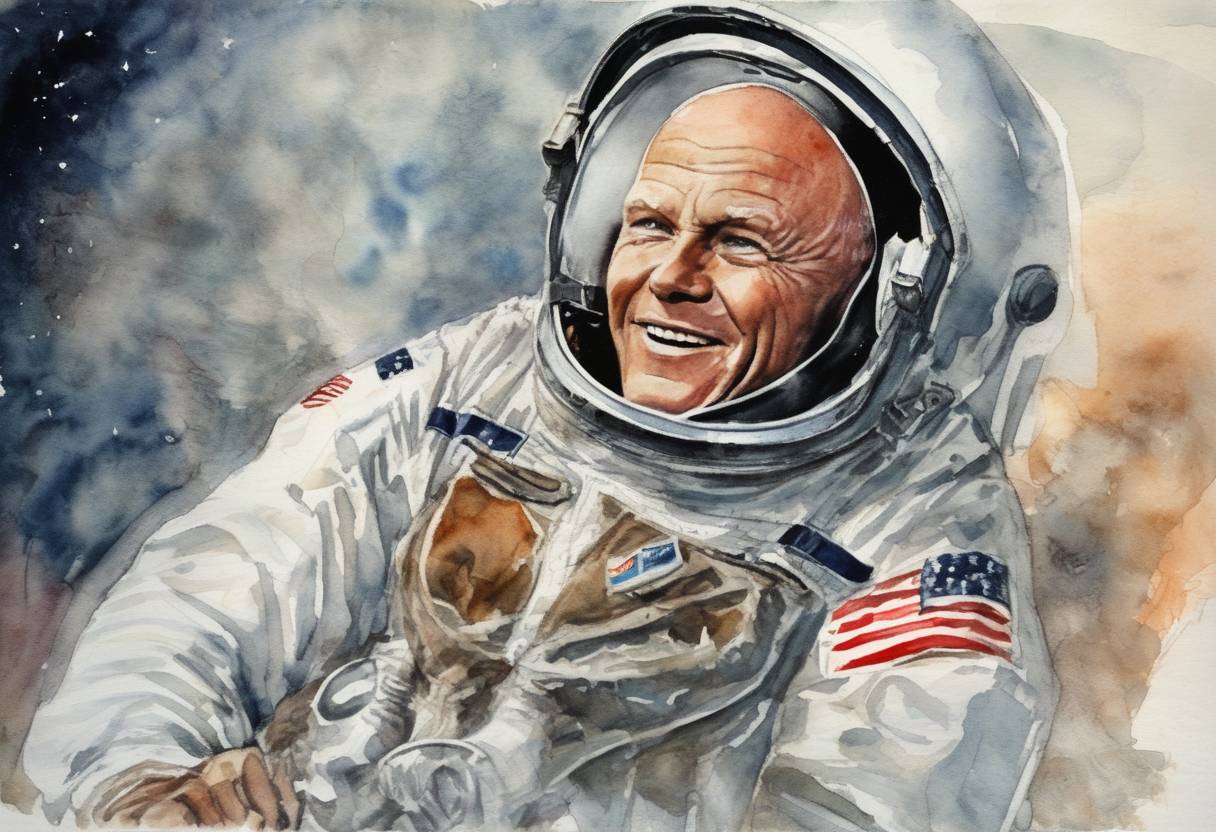
On February 20, 1962, John Glenn became the first American to orbit the Earth, marking a significant milestone in the United States’ space exploration efforts. This historic event took place during NASA’s Mercury-Atlas 6 mission, with Glenn piloting the spacecraft known as Friendship 7.
The early 1960s were a period of intense competition between the United States and the Soviet Union, known as the Space Race. The Soviets had already achieved several firsts, including launching the first artificial satellite, Sputnik, in 1957, and sending the first human, Yuri Gagarin, into orbit in 1961. In response, the United States accelerated its own space program, aiming to demonstrate technological and exploratory prowess.
John Glenn’s successful mission was a pivotal moment in the Space Race, restoring American confidence in its space program and demonstrating the nation’s capability to send humans into orbit. It also paved the way for future manned space missions, including the Apollo program, which would eventually land humans on the Moon.
Glenn became a national hero and an enduring symbol of American ingenuity and perseverance. His flight not only advanced scientific knowledge but also inspired generations to look towards the stars.
John Glenn’s contributions to space exploration continued beyond his Mercury flight. He later served as a U.S. Senator from Ohio and, in 1998, returned to space aboard the Space Shuttle Discovery at the age of 77, becoming the oldest person to fly in space.
The success of the Mercury-Atlas 6 mission remains a testament to the collaborative efforts of scientists, engineers, and astronauts who pushed the boundaries of human exploration.
Source: en.wikipedia.org