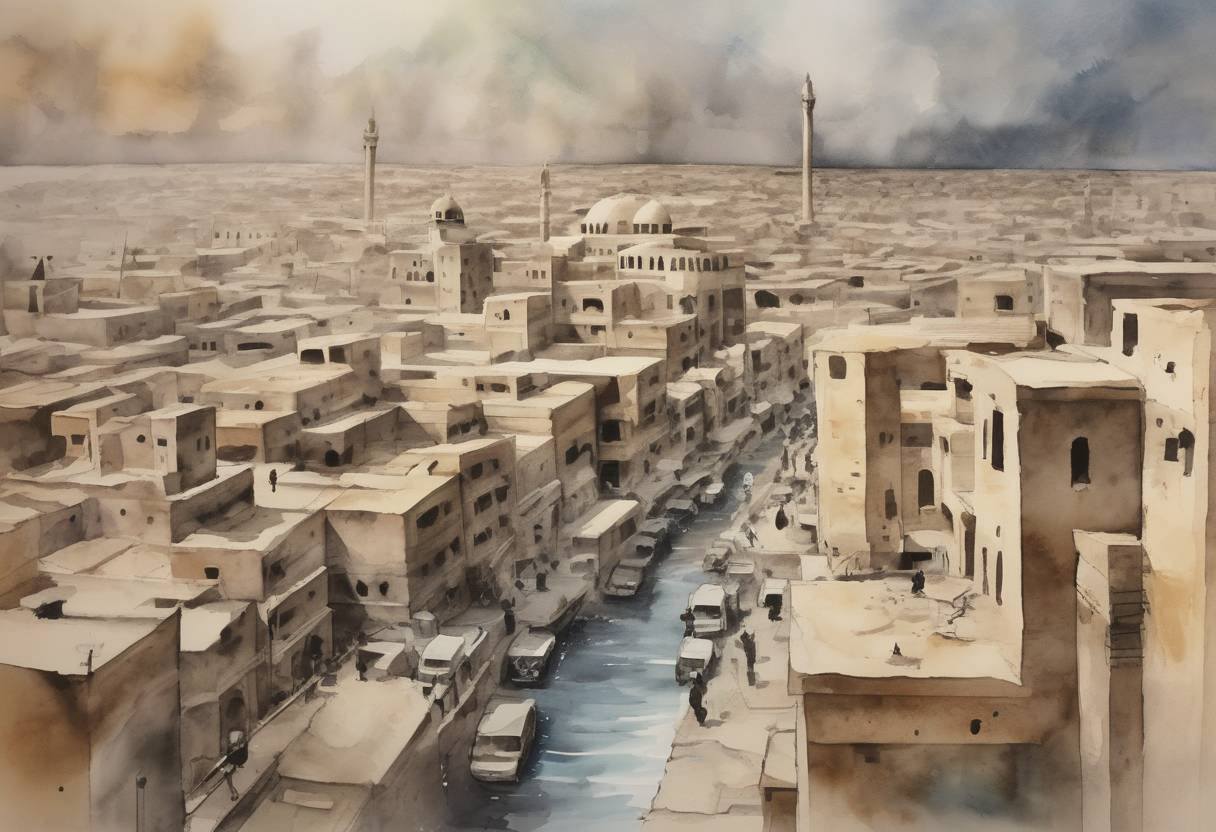
Declaration of the Caliphate by ISIL on June 29, 2014
On June 29, 2014, the Islamic State of Iraq and the Levant (ISIL), also known as ISIS, made a significant and bold declaration that reverberated across the globe. The group announced the establishment of a caliphate, a form of Islamic government led by a caliph, who is considered a political and religious successor to the Prophet Muhammad. This declaration was a pivotal moment in the Syrian Civil War and the broader context of global terrorism.
Context Leading Up to the Declaration
Origins and Growth of ISIL:
- ISIL originated as an offshoot of al-Qaeda in Iraq (AQI), which was active during the Iraq War following the 2003 U.S. invasion.
- The group gained strength and territory amid the chaos of the Syrian Civil War, which began in 2011, exploiting the power vacuum and sectarian tensions in the region.
Territorial Gains:
- By 2014, ISIL had captured significant territories in both Iraq and Syria, including major cities like Mosul in Iraq and Raqqa in Syria, which became its de facto capital.
- The group’s rapid territorial expansion was marked by brutal tactics and a sophisticated propaganda campaign.
The Declaration
- Announcement: On June 29, 2014, ISIL’s spokesperson, Abu Muhammad al-Adnani, announced the establishment of the caliphate. The group declared that it would henceforth be known simply as the “Islamic State.”
- Abu Bakr al-Baghdadi: Abu Bakr al-Baghdadi, the leader of ISIL, was proclaimed the caliph. He was a former detainee at the U.S.-run Camp Bucca in Iraq and had risen through the ranks of the insurgency.
- Call to Muslims: The declaration called on Muslims worldwide to pledge allegiance to al-Baghdadi and support the caliphate, positioning itself as the legitimate authority over the global Muslim community.
Significance and Consequences
Impact on the Syrian Civil War:
- The declaration intensified the conflict in Syria, as ISIL’s presence complicated the dynamics among various rebel groups and the Assad regime.
- It drew international attention and led to increased military interventions by countries like the United States and Russia.
Global Terrorism:
- ISIL’s declaration marked a new phase in global jihadism, with the group attracting thousands of foreign fighters from around the world.
- The caliphate’s existence inspired numerous terrorist attacks globally, as ISIL sought to expand its influence beyond the Middle East.
Coalition Response:
- In response to ISIL’s threat, an international coalition was formed to combat the group, leading to extensive military campaigns in Iraq and Syria.
- By 2019, ISIL had lost most of its territory, and al-Baghdadi was killed in a U.S. raid in October of that year.
Broader Historical Significance
The declaration of the caliphate by ISIL was a watershed moment in the history of modern jihadist movements. It underscored the volatile nature of Middle Eastern geopolitics and highlighted the challenges of addressing non-state actors in global security. The rise and fall of ISIL’s caliphate continue to influence counterterrorism strategies and regional politics in the Middle East.