NASA's Announcement of Liquid Water on Mars - September 28, 2015
2015 · Washington, D.C., United States
NASA announced that liquid water flows intermittently on present-day Mars, a significant discovery in the search for extraterrestrial life.
February 23, 2017
NASA announces the discovery of seven Earth-sized exoplanets orbiting the star TRAPPIST-1, three of which are in the habitable zone.
Washington, D.C., United States | NASA
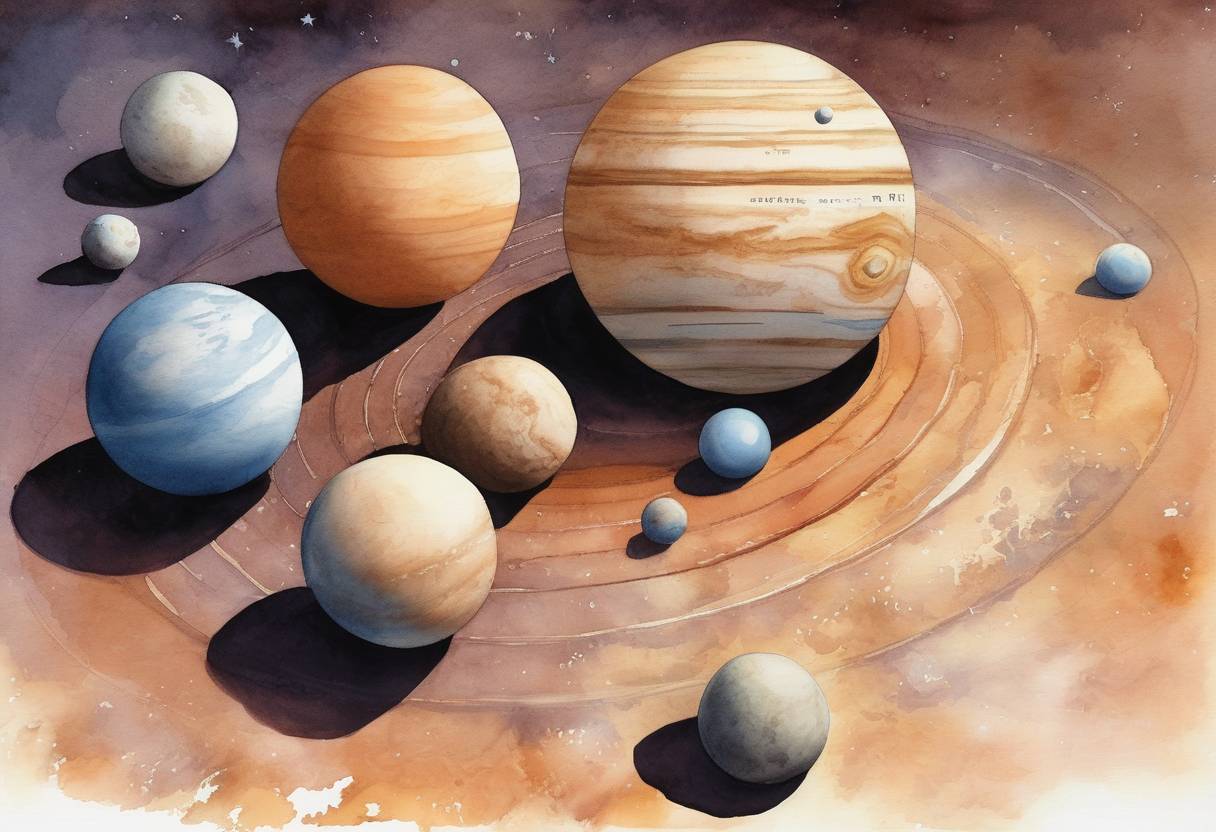
On February 23, 2017, NASA made a groundbreaking announcement regarding the discovery of seven Earth-sized exoplanets orbiting the ultra-cool dwarf star TRAPPIST-1. This discovery was significant for its potential implications in the search for extraterrestrial life and understanding planetary systems beyond our own.
The TRAPPIST-1 star system is located approximately 39 light-years away from Earth in the constellation Aquarius. The star, an ultra-cool dwarf, is much smaller and cooler than our Sun, which allows planets in close orbits to potentially support liquid water.
The discovery was made using the Spitzer Space Telescope, along with ground-based telescopes, and was part of ongoing efforts to identify Earth-like planets in habitable zones—regions around stars where conditions might be right for liquid water to exist.
Seven Earth-sized Planets: The planets, named TRAPPIST-1b through TRAPPIST-1h, are all similar in size to Earth, with some having masses and densities suggesting rocky compositions.
Habitable Zone: Three of these planets, TRAPPIST-1e, TRAPPIST-1f, and TRAPPIST-1g, are located in the star’s habitable zone. This zone is the area around a star where conditions might be right for liquid water to exist on a planet’s surface, a key ingredient for life as we know it.
Orbital Characteristics: The planets have very short orbital periods, ranging from 1.5 to 20 days, due to their proximity to the host star. This proximity is possible because TRAPPIST-1 emits much less heat than the Sun.
The discovery of the TRAPPIST-1 system was a major milestone in exoplanet research for several reasons:
Potential for Life: The presence of multiple Earth-sized planets in the habitable zone increases the possibility of finding life beyond our solar system.
Study of Planetary Atmospheres: The TRAPPIST-1 system provides an excellent opportunity to study the atmospheres of Earth-sized exoplanets, which could yield insights into their potential habitability.
Public Interest: The announcement captured the public’s imagination and highlighted the advancements in space exploration and the search for life beyond Earth.
Following the discovery, TRAPPIST-1 became a focal point for further astronomical studies. Researchers continue to use telescopes like the Hubble Space Telescope and the James Webb Space Telescope to analyze the atmospheres of these planets, searching for signs of water, methane, and other potential biosignatures.
The TRAPPIST-1 discovery remains a cornerstone in the field of exoplanetary science, illustrating the potential for finding Earth-like worlds in the universe and advancing our understanding of planetary systems.
Source: www.nasa.gov