The Suicide of Emperor Nero: End of the Julio-Claudian Dynasty
68 · Rome, Roman Empire
Roman Emperor Nero committed suicide, marking the end of the Julio-Claudian dynasty.
October 13, 0054
Roman Emperor Claudius dies, possibly poisoned by his wife Agrippina, paving the way for Nero to become emperor.
Rome, Roman Empire | Roman Empire
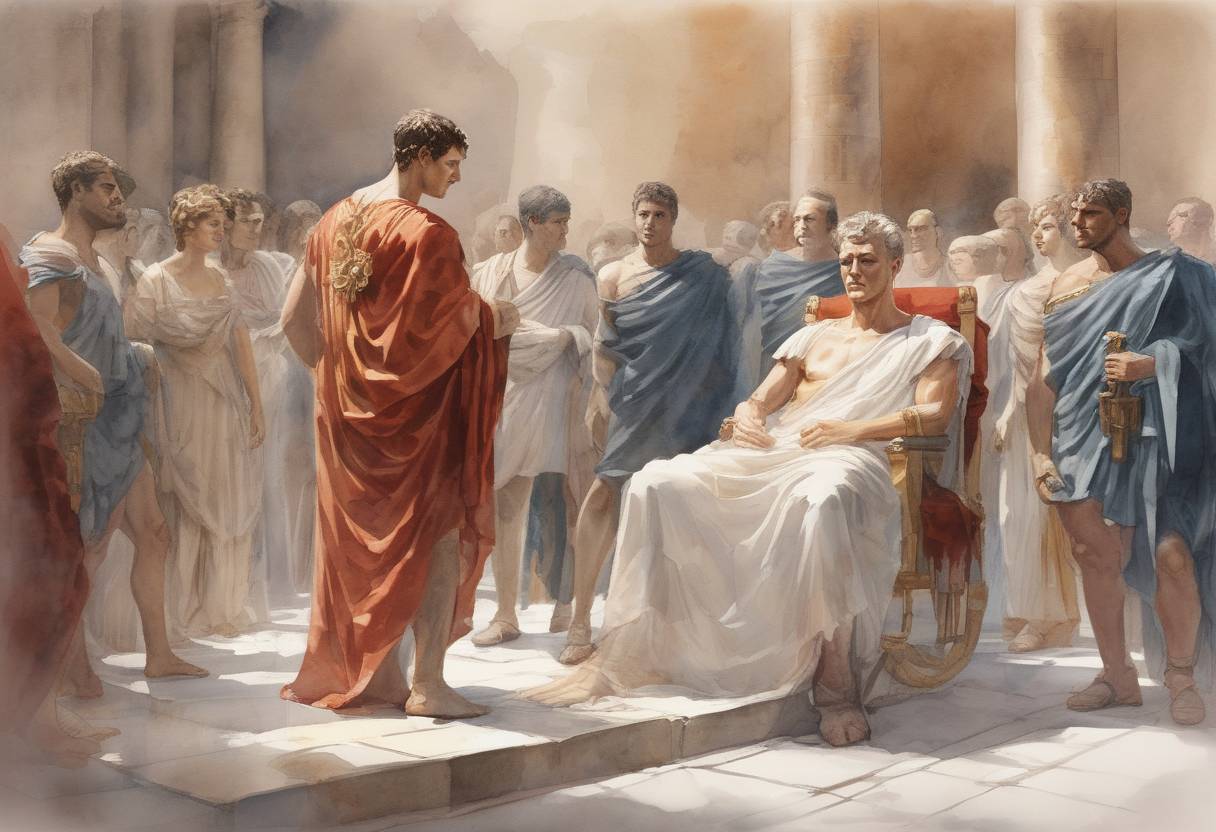
On October 13, 54 AD, Roman Emperor Claudius died under circumstances that have long intrigued historians. His death marked a significant turning point in Roman history, as it paved the way for Nero, his adopted son, to ascend to the throne.
Claudius became emperor in 41 AD after the assassination of his nephew, Caligula. Despite being considered an unlikely candidate due to his physical disabilities and perceived lack of political acumen, Claudius proved to be an effective ruler. His reign was marked by significant administrative reforms, expansion of the Roman Empire, and notable public works, including the construction of new roads and aqueducts.
The exact cause of Claudius’s death remains a subject of debate among historians. Ancient sources, such as Tacitus, Suetonius, and Cassius Dio, suggest that Claudius was poisoned, possibly by his fourth wife, Agrippina the Younger. Agrippina was a formidable political figure and was determined to see her son, Nero, succeed Claudius as emperor.
According to these accounts, Agrippina may have used a poisoned mushroom or a tainted feather used for inducing vomiting to administer the fatal dose. However, the veracity of these claims is difficult to ascertain, as Roman historical accounts often contained elements of rumor and political bias.
Following Claudius’s death, Nero was quickly declared emperor at the age of 16. Agrippina initially wielded considerable influence over Nero’s early reign, but her power waned as Nero grew more independent and eventually orchestrated her assassination in 59 AD.
Nero’s ascension marked the beginning of a tumultuous period in Roman history. His reign is often remembered for its extravagance, artistic patronage, and eventual descent into tyranny, culminating in the Great Fire of Rome in 64 AD and his subsequent downfall.
Claudius’s death and Nero’s rise to power underscore the complex dynamics of Roman imperial succession and the often perilous nature of political life in ancient Rome. The transition also highlights the significant role women could play in the political machinations of the empire, as exemplified by Agrippina’s ambitious maneuvering.
In summary, the death of Claudius on October 13, 54 AD, was a pivotal moment that set the stage for the dramatic and controversial reign of Nero, leaving a lasting impact on the history of the Roman Empire.
Source: www.britannica.com