The Newburgh Address: Defusing a Potential Military Coup
1783 · Newburgh, United States
George Washington delivered his Newburgh Address, defusing a potential military coup by the Continental Army.
September 28, 1781
The Siege of Yorktown begins during the American Revolutionary War, leading to the eventual surrender of British forces.
Yorktown, United States | Continental Army
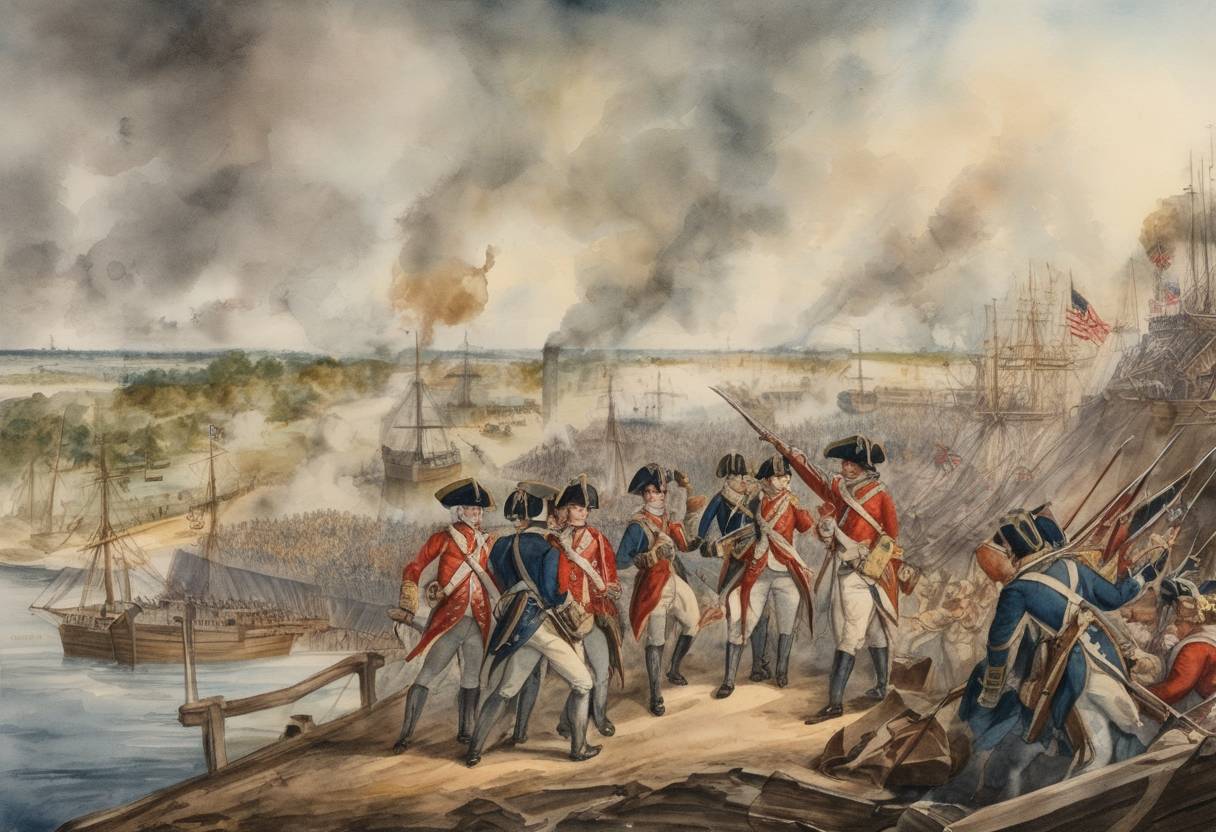
The Siege of Yorktown, a pivotal event in the American Revolutionary War, commenced on September 28, 1781. This military engagement marked the beginning of the end for British rule in the American colonies and set the stage for the eventual independence of the United States.
The American Revolutionary War, which began in 1775, had seen numerous battles and shifting fortunes for both the British and the American forces. By 1781, the war had reached a critical juncture. The British, under General Charles Cornwallis, had established a stronghold in Yorktown, Virginia. Cornwallis’s forces were tasked with maintaining British control in the southern colonies, but they found themselves increasingly isolated.
Meanwhile, the American Continental Army, led by General George Washington, was bolstered by French military support. The French, eager to weaken their British rivals, provided crucial naval and ground forces. The coordination between American and French forces was instrumental in setting the stage for the siege.
Strategic Movements: In the summer of 1781, Washington and French General Jean-Baptiste Donatien de Vimeur, comte de Rochambeau, devised a plan to trap Cornwallis at Yorktown. They executed a deceptive strategy, convincing the British that New York City was their target, while secretly marching their combined forces southward to Virginia.
Naval Superiority: The French fleet, commanded by Admiral François Joseph Paul de Grasse, played a crucial role by defeating the British fleet at the Battle of the Chesapeake in early September. This victory ensured that Cornwallis could not receive reinforcements or evacuate by sea.
On September 28, 1781, the allied American and French forces, numbering approximately 17,000 troops, began the siege of Yorktown. They systematically encircled the British positions, constructing trenches and fortifications to tighten their grip on the town.
Surrender: On October 19, 1781, after enduring weeks of siege and realizing the futility of their situation, General Cornwallis surrendered his forces, numbering around 8,000 troops, to the American and French forces. This surrender effectively ended major military operations in the American Revolutionary War.
Impact on the War: The victory at Yorktown was a decisive blow to British morale and military capability. It prompted the British government to negotiate an end to the conflict, leading to the signing of the Treaty of Paris in 1783, which recognized American independence.
Legacy: The Siege of Yorktown is celebrated as a defining moment in American history. It demonstrated the effectiveness of Franco-American cooperation and underscored the strategic acumen of leaders like Washington and Rochambeau. The victory at Yorktown is often regarded as the turning point that secured American independence.
The Siege of Yorktown remains a testament to the resilience and determination of the American forces and their allies, marking a significant chapter in the struggle for independence.
Source: en.wikipedia.org