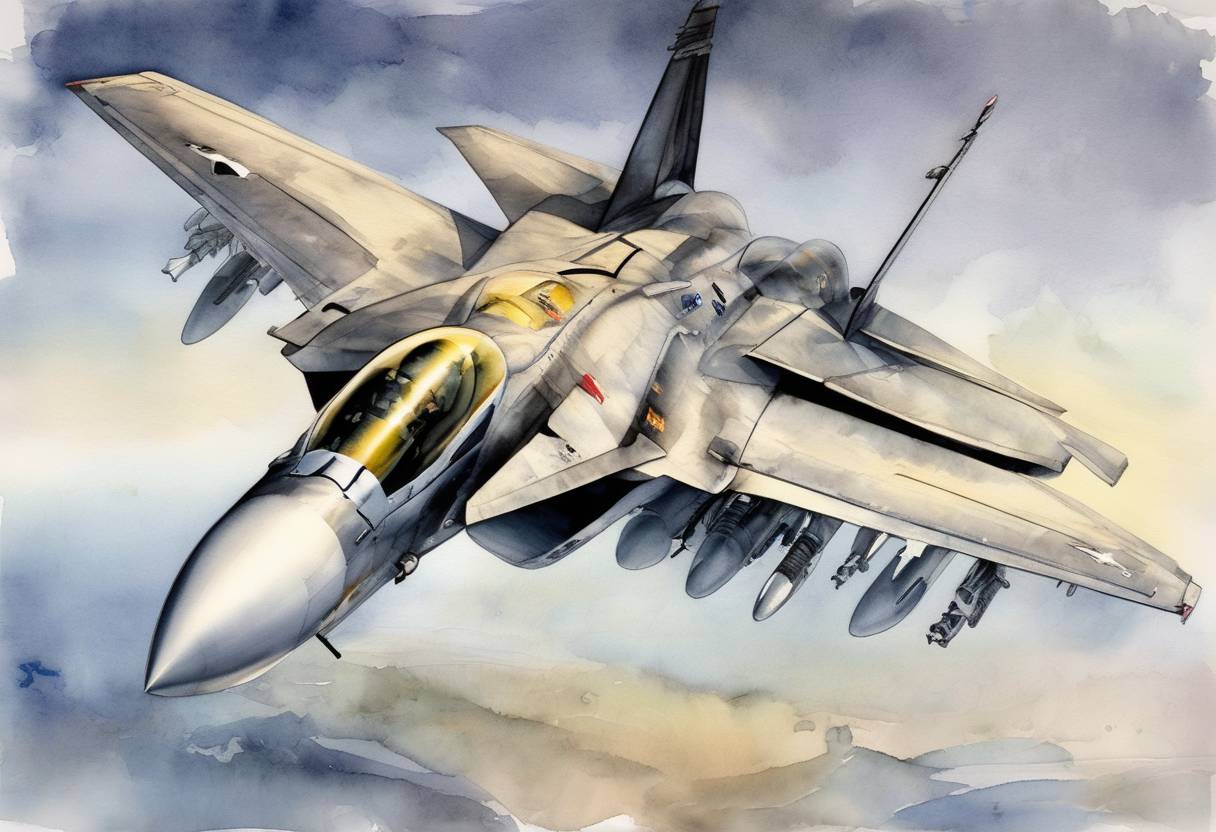
Retirement of the F-14 Tomcat from the U.S. Navy
On September 22, 2006, the United States Navy officially retired the F-14 Tomcat fighter jet, marking the end of an era for a formidable aircraft that had served for 32 years. The F-14 Tomcat was renowned for its role in naval aviation and its distinctive design, which included variable-sweep wings and twin engines.
Background and Development
- Introduction: The F-14 Tomcat was developed by Grumman Aerospace Corporation and first introduced into service in 1974. It was designed as a supersonic, twin-engine, two-seat, variable-sweep wing fighter aircraft.
- Purpose: The aircraft was primarily used for air superiority missions, fleet defense, and reconnaissance. It was equipped with advanced radar and missile systems, making it a formidable opponent in aerial combat.
- Notable Features: The F-14 was known for its AIM-54 Phoenix long-range air-to-air missile system and its AN/AWG-9 radar, which allowed it to track multiple targets simultaneously.
Operational History
- Combat Role: The F-14 saw extensive service during the Cold War, playing a crucial role in maintaining air superiority. It was also actively used in conflicts such as the Gulf War and the Iraq War.
- Cultural Impact: The F-14 gained iconic status in popular culture, most notably through its appearance in the 1986 film “Top Gun,” which showcased its capabilities and contributed to its legendary status.
Retirement
- Reasons for Retirement: The decision to retire the F-14 was influenced by the high maintenance costs and the availability of newer, more advanced aircraft such as the F/A-18E/F Super Hornet, which offered improved technology and operational efficiency.
- Final Flight: The last operational flight of the F-14 took place at Naval Air Station Oceana in Virginia Beach, Virginia. The retirement ceremony was attended by former pilots, naval personnel, and aviation enthusiasts who celebrated the aircraft’s legacy.
Legacy and Significance
- Technological Advancements: The F-14 was a pioneer in integrating advanced avionics and weaponry, setting the standard for future fighter aircraft.
- Historical Impact: Its retirement marked the end of a significant chapter in naval aviation history, as the F-14 had been a symbol of American air power for over three decades.
The F-14 Tomcat remains a celebrated aircraft, remembered for its technological innovations, combat performance, and cultural significance. Its legacy continues to influence modern fighter jet design and naval aviation strategy.