Election of Pelagius I as Pope
556 · Rome, Italy
Pelagius I is elected as the Pope of the Catholic Church, succeeding Pope Vigilius.
November 22, 0498
Pope Symmachus is elected as the 51st pope of the Catholic Church, succeeding Pope Anastasius II. His election was contested, leading to a schism with the election of Antipope Laurentius.
Rome, Italy | Catholic Church
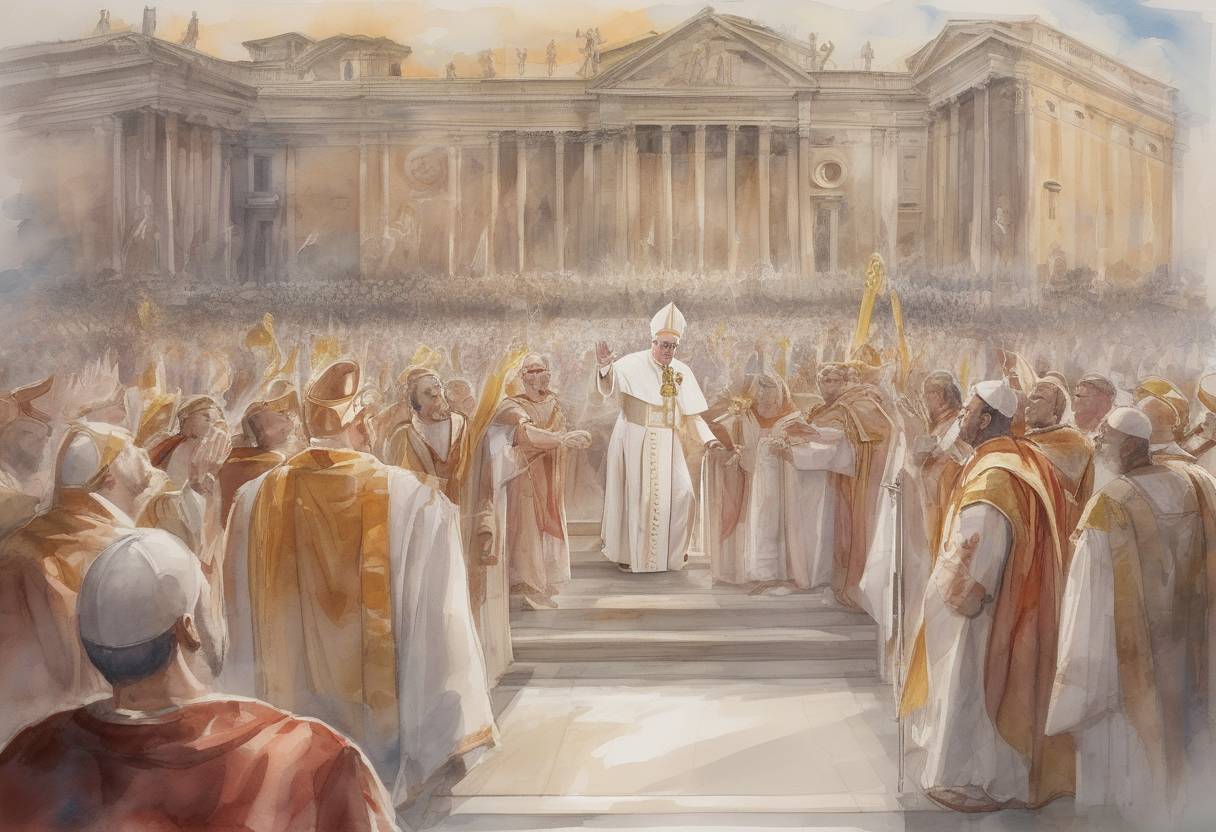
On November 22, 498, Symmachus was elected as the 51st pope of the Catholic Church, succeeding Pope Anastasius II. His election marked the beginning of a significant schism within the Church, known as the Laurentian Schism, due to the simultaneous election of Antipope Laurentius.
The papacy of Anastasius II, who served from 496 to 498, was marked by attempts to reconcile with the Eastern Church, which had been in schism since the Acacian Schism of 484. His efforts, however, were controversial and led to divisions within the Roman clergy. Upon his death, these tensions came to a head during the election of his successor.
The election of Symmachus was held in the Lateran Basilica, where a majority of the Roman clergy supported him. Symmachus was a Sardinian by birth and had served as a deacon in the Church. His election was backed by the Ostrogothic King Theodoric the Great, who ruled over Italy at the time and sought stability in the region.
However, a faction of the clergy, dissatisfied with Symmachus’s election, supported Laurentius, who was elected as an antipope. Laurentius’s supporters were primarily aligned with the Byzantine faction, which favored reconciliation with the Eastern Church.
The schism that ensued was both a religious and political conflict. King Theodoric initially attempted to mediate between the two factions. In 499, a synod was convened in Rome, which confirmed Symmachus as the legitimate pope. Despite this, the schism persisted, with Laurentius maintaining a rival claim to the papacy.
The conflict was characterized by violence and political maneuvering, with both sides seeking support from influential Roman families and external powers. The schism lasted until 506, when Laurentius was finally persuaded to retire to a monastery, effectively ending his claim.
Pope Symmachus’s papacy continued until his death in 514. During his tenure, he worked to strengthen the authority of the papacy and the independence of the Church from secular rulers. The resolution of the schism reinforced the precedent that the papal election should be free from external interference, a principle that would be contested throughout the Middle Ages.
The Laurentian Schism highlighted the complexities of Church politics in the early medieval period, where religious, political, and cultural factors were deeply intertwined. It also underscored the challenges faced by the papacy in maintaining unity within the Church amidst external pressures.
Symmachus’s papacy is remembered for its efforts to consolidate papal authority and navigate the turbulent political landscape of the time, setting the stage for future developments in the relationship between the Church and secular powers.
Source: en.wikipedia.org