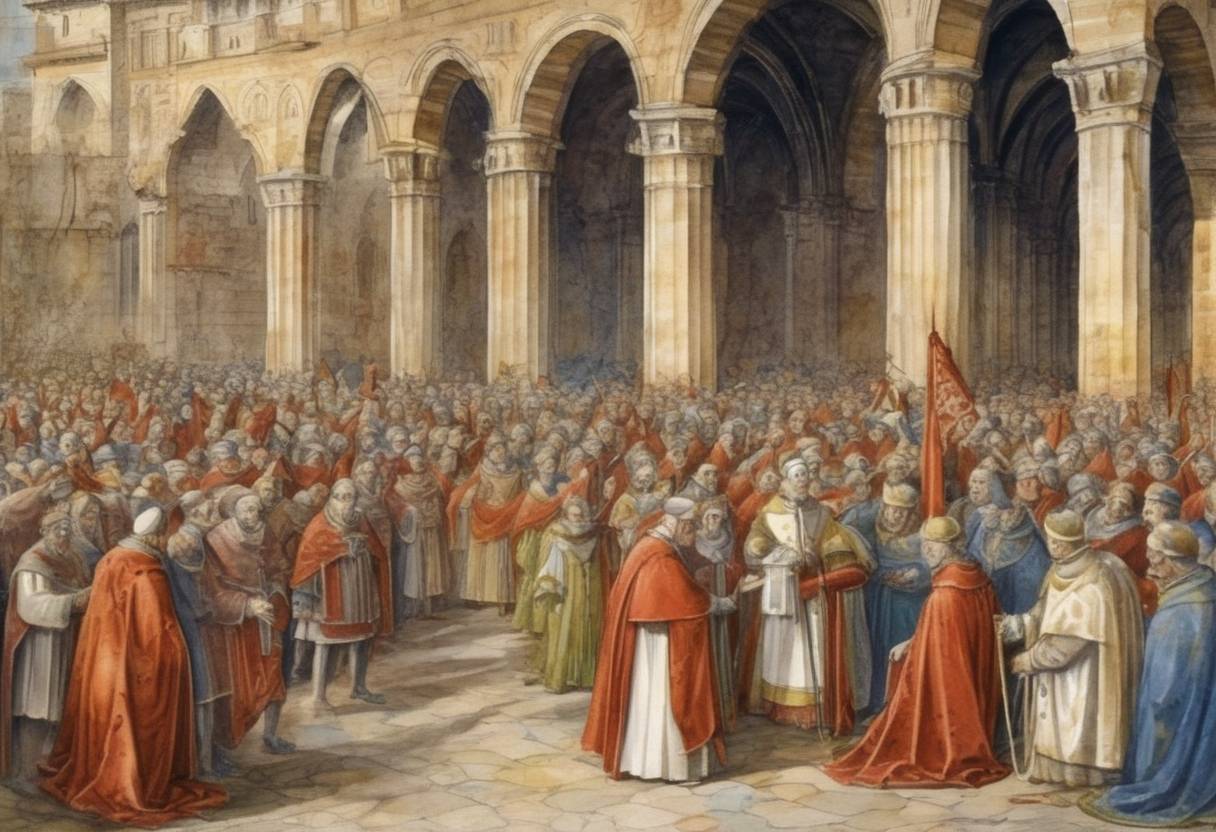
The Return of the Papacy to Rome: January 17, 1377
On January 17, 1377, Pope Gregory XI made a momentous decision to return the papacy from Avignon, France, to Rome, effectively ending the Avignon Papacy. This period, which lasted from 1309 to 1377, saw seven successive popes reside in Avignon rather than Rome, a situation that significantly influenced the political and religious landscape of medieval Europe.
Context and Background
The Avignon Papacy began in 1309 when Pope Clement V, a Frenchman, decided to relocate the papal court to Avignon. This move was largely influenced by the political turmoil in Rome and the desire to escape the factional conflicts that plagued the city. Additionally, the papacy’s close ties with the French crown during this period led to perceptions of undue French influence over the Church.
The Avignon Papacy is often characterized by its administrative reforms and the centralization of church governance. However, it also faced criticism for its perceived opulence and detachment from Rome, the traditional seat of the papacy. The absence of the pope from Rome weakened the city’s political and economic status and led to calls for the papacy’s return.
Key Events Leading to the Return
Pope Gregory XI, elected in 1370, was the last of the Avignon popes. His decision to return to Rome was influenced by several factors:
Pressure from Rome and Italy: There was significant pressure from Roman citizens and Italian leaders who desired the return of the papacy to its traditional seat. The absence of the pope had led to instability and a decline in Rome’s influence.
Catherine of Siena’s Influence: Saint Catherine of Siena, a prominent mystic and religious figure, played a crucial role in persuading Gregory XI to return to Rome. Her letters and personal appeals emphasized the spiritual and symbolic importance of the pope’s presence in Rome.
Political Considerations: The papacy’s presence in Avignon had led to tensions with other European powers, who viewed the papacy as overly aligned with French interests. Returning to Rome was seen as a way to restore the papacy’s neutrality and authority.
The Return to Rome
On January 17, 1377, Pope Gregory XI entered Rome, marking the end of the Avignon Papacy. His return was met with celebration by the Roman populace, who saw it as a restoration of the city’s prestige and spiritual significance.
Aftermath and Consequences
The return of the papacy to Rome had significant implications:
The Western Schism: Gregory XI’s death in 1378 led to the Western Schism, a period of division within the Catholic Church where multiple claimants to the papacy emerged. This schism lasted until 1417 and was a direct consequence of the political and ecclesiastical tensions that had built up during the Avignon Papacy.
Restoration of Rome: The return of the papacy helped restore Rome’s status as a religious and political center. It also initiated a period of rebuilding and revitalization for the city.
Long-term Church Reforms: The challenges faced during the Avignon Papacy and the subsequent schism highlighted the need for reforms within the Church, setting the stage for future changes in church governance and administration.
Pope Gregory XI’s decision to return the papacy to Rome was a pivotal moment in Church history, marking the end of a contentious period and setting the stage for future developments within the Catholic Church.