John Logie Baird's First Public Demonstration of Television
1926 · London, United Kingdom
John Logie Baird gave the first public demonstration of television in his laboratory in London.
July 3, 1928
John Logie Baird demonstrated the first colour television transmission.
London, United Kingdom | Baird Television Development Company
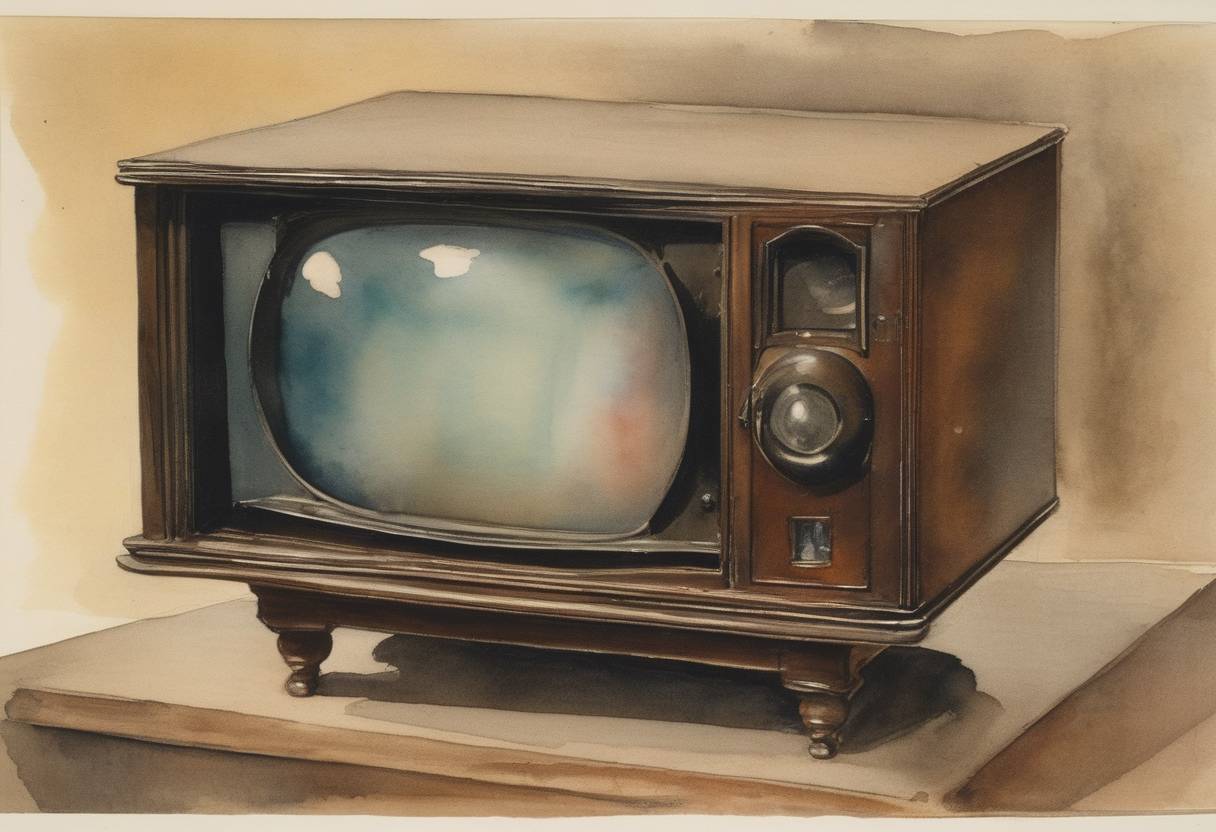
On July 3, 1928, Scottish inventor John Logie Baird achieved a significant milestone in the development of television technology by executing the first successful demonstration of a colour television transmission. This groundbreaking event occurred at his laboratory on 133 Long Acre, London, marking a pivotal moment in televisual history.
John Logie Baird, already renowned for his earlier inventions in television, such as the first demonstration of a working television system in 1925, embarked on the exploration of transmitting colour images. Colour television posed a more challenging venture due to the intricacies involved in capturing and transmitting the full spectrum of colours, beyond the monochrome images of predecessors.
Baird’s demonstration utilized a disc scanning method, which was a mechanical form of television technology. This system relied on a rotating disc alongside a series of filters and lights to produce the colour image. The setup included three spirals of apertures on the disc, and it transmitted images in red, green, and blue—the primary colours of light. By rapidly rotating the disc, the system combined these colours to form a composite image, and thus presented the world’s first colour television transmission.
The demonstration included the broadcast of a colour image of a simple, everyday object, a box of pencils, to illustrate the rich hues achievable through this novel technique. Although the image quality was rudimentary by today’s standards, it demonstrated the potential of colour broadcasting and set the stage for future technological advancements.
This event signaled a remarkable step forward in the evolution of television. Baird’s work paved the way for future developments in colour television, contributing to the proliferation of colour broadcasts that began in earnest in the 1950s and 1960s.
The successful demonstration underscored Baird’s role as a pioneer in television technology and foreshadowed the eventual ubiquitous presence of colour television, fundamentally changing how visual media was consumed worldwide.
Though Baird’s mechanical approach was eventually supplanted by electronic systems, his innovations and experiments were critical in challenging the prevailing technological boundaries of his time. The principles of combining red, green, and blue light remain fundamental to today’s colour display technologies.
John Logie Baird’s early ventures into colour transmission highlighted his visionary insight into the future of broadcasting and left a lasting legacy on both the television industry and visual culture at large.
Source: en.wikipedia.org