Amelia Earhart's Historic Transatlantic Flight
1932 · Derry, Ireland
Amelia Earhart became the first woman to fly solo nonstop across the Atlantic Ocean, landing in Ireland after departing from Newfoundland.
June 15, 1919
John Alcock and Arthur Brown completed the first non-stop transatlantic flight. Their aircraft, a modified First World War Vickers Vimy bomber, took off from St. John's, Newfoundland, and landed in Clifden, Ireland.
Clifden, Ireland | Vickers
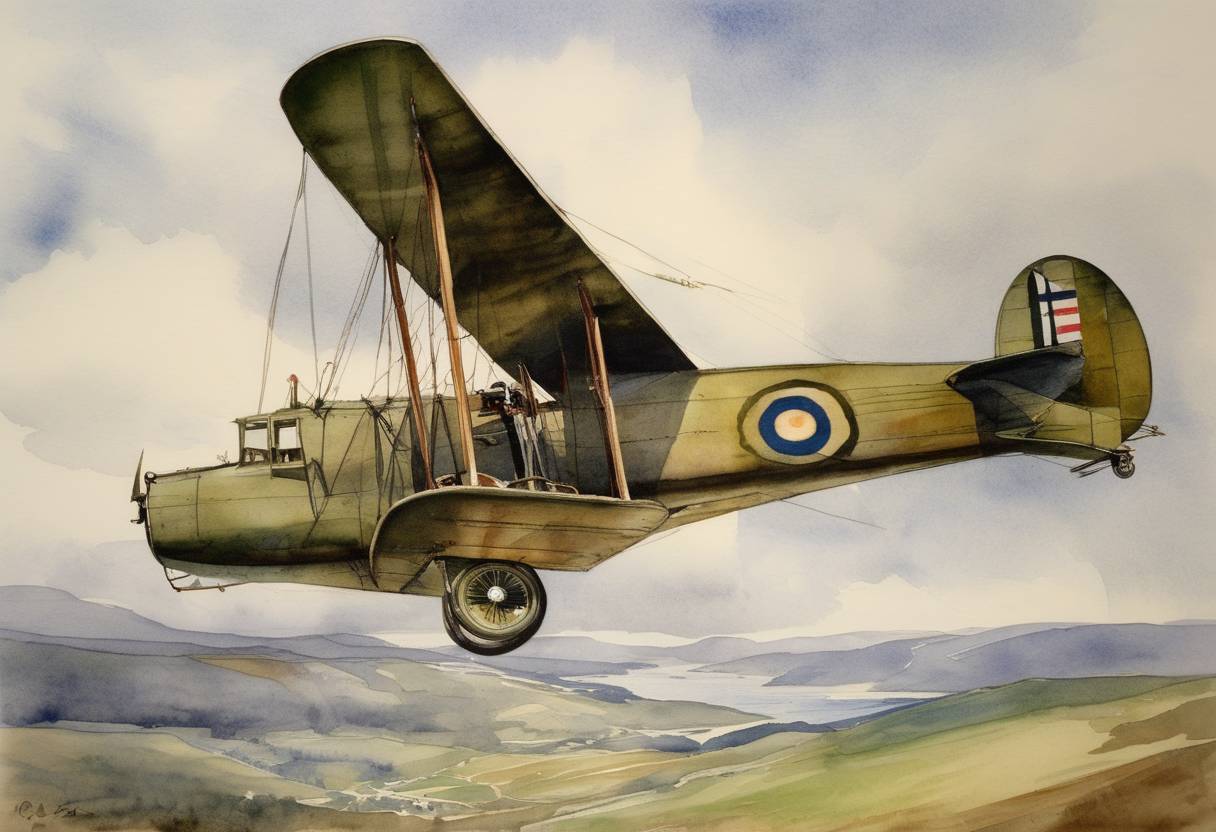
On June 15, 1919, British aviators Captain John Alcock and Lieutenant Arthur Whitten Brown completed the first non-stop transatlantic flight, marking a significant milestone in aviation history. The flight was undertaken in a modified First World War Vickers Vimy bomber, which had been repurposed for this historic journey.
Departure: Alcock and Brown embarked on their daring voyage from Lester’s Field, near St. John’s, Newfoundland, on June 14, 1919. The aircraft took off at 1:45 p.m. local time, loaded with fuel for the transatlantic crossing.
Description of the Aircraft: The Vickers Vimy they piloted was originally designed as a bomber aircraft for use in World War I. For this mission, it was specially adapted to carry additional fuel tanks and requisite modifications to tackle the long journey across the Atlantic Ocean.
Navigation and Challenges: The flight posed numerous challenges. The aviators navigated under extreme weather conditions, including dense fog, ice, and strong winds. Brown, who was responsible for navigation, utilized a sextant and other rudimentary equipment available at the time, often relying on celestial cues when skies were clear.
Arrival: After approximately 16 hours of continuous flight, Alcock and Brown landed in a bog near Clifden, County Galway, Ireland, at 8:40 a.m. local time on June 15, 1919. The successful landing marked the end of a 1,890-mile (3,040-kilometer) journey.
Aftermath: The completion of their ambitious flight was celebrated globally as a monumental achievement in aviation. The two aviators were awarded the prestigious Daily Mail prize of £10,000, offered for the first non-stop crossing of the Atlantic by aeroplane. They were also knighted by King George V for their pioneering efforts.
The successful transatlantic flight paved the way for future advancements in air travel, demonstrating the potential for long-distance flight across oceans. This achievement underscored the possibility of connecting distant parts of the world through aviation and inspired subsequent innovations in aircraft design and international air travel routes.
Alcock and Brown’s pioneering journey continues to be remembered as a testament to human ingenuity and the spirit of exploration.
Source: www.britannica.com