The Annexation of California: July 7, 1846
1846 · Monterey, United States
The United States annexes California during the Mexican-American War when Commodore John D. Sloat declares California a part of the United States.
July 13, 1854
The American Civil War hero and future Medal of Honor recipient, Captain Gwinn Harris Heap, led a US Navy survey expedition from the Pacific Mail Steamship Company San Francisco to Panama.
San Francisco, United States | US Navy
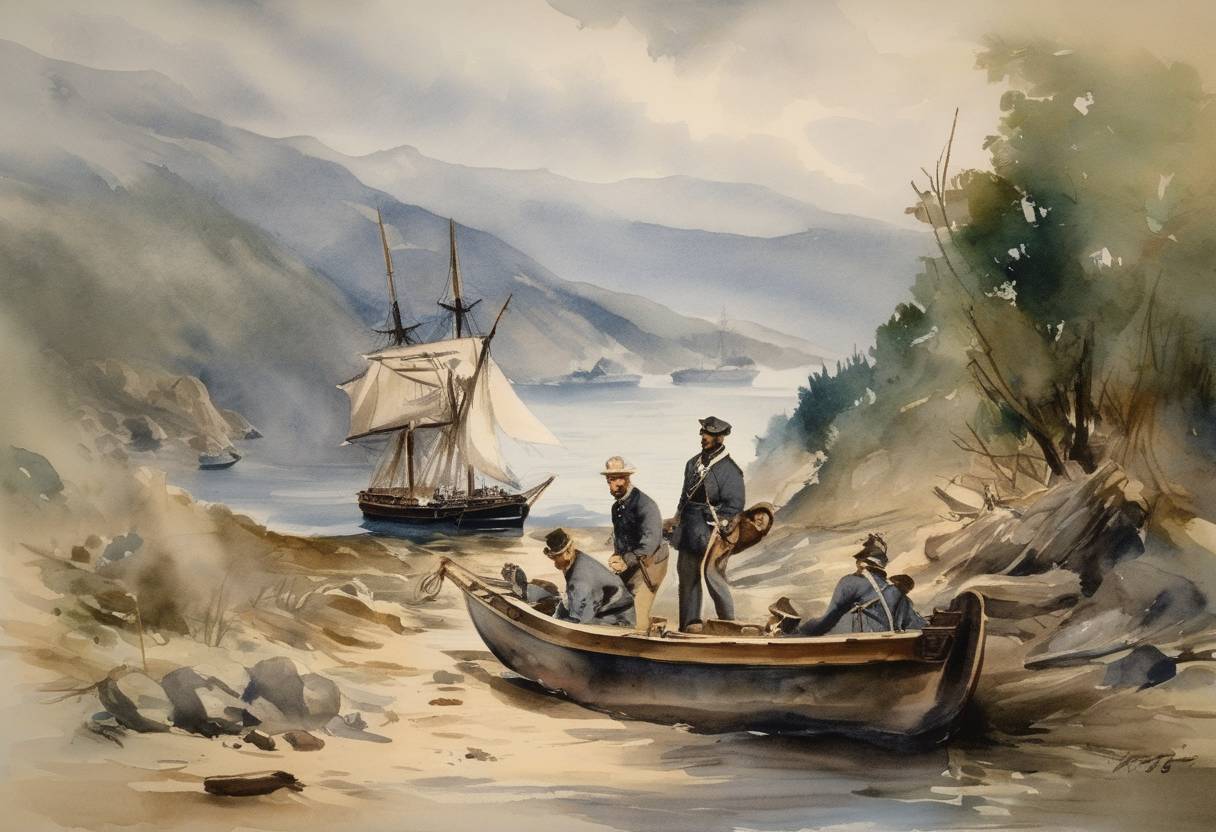
On July 13, 1854, Captain Gwinn Harris Heap led a significant United States survey expedition that marked a critical moment in maritime exploration and helped lay groundwork influencing future military and commercial endeavors. Heap, known for his diverse exploits including those in the American Civil War, embarked on this chapter of his career under challenging but promising circumstances.
The mid-19th century was a period of dynamic change and exploration for the United States, particularly concerning efforts to establish more efficient routes for trade and military travel. The Pacific Mail Steamship Company, a pivotal player in intercontinental trade, sought to optimize passage across the Central American isthmus in Panama, a region critical before the canal era for linking the Atlantic and Pacific Oceans.
Heap’s mission involved the comprehensive survey of potential shipping routes and docking facilities stretching from San Francisco to Panama. This was crucial to understanding navigational challenges, identifying potential improvements, and reinforcing U.S. interests in maritime strategy and trade dominance.
Captain Gwinn Harris Heap was appointed for his adept navigational skills and military prowess. These qualities made him an excellent choice to helm such an ambitious project, foreshadowing his later heroics in the Civil War where he would earn a Medal of Honor.
Heap’s survey expedition contributed rich data influencing the operational strategies of the Pacific Mail Steamship Company. This effort predated the construction of the Panama Canal and served to fine-tune the logistical capabilities of early intercontinental trade routes. It underscored the strategic importance of the Panama region, further embedding it in American geopolitical and economic interests leading into the 20th century.
Heap’s work on this expedition exemplifies the blend of exploration and military readiness that defined U.S. naval operations in this era. The findings from this survey would not only bolster commercial shipping efficiencies but also enhance strategic military planning during the Civil War and beyond.
This expedition stands as a testament to Heap’s expertise and foresight, attributes that would later garner recognition during wartime. The survey was a foundational exercise in the broader narrative of U.S. expansion and influence, underscoring a commitment to developing infrastructure vital for burgeoning trade and military mobility.
In summary, Captain Gwinn Harris Heap’s leadership on July 13, 1854, marked a pivotal moment in maritime exploration, carving pathways for future developments in both commerce and military endeavors across the strategic Panama isthmus.
Source: www.history.navy.mil