The All Saints' Flood of November 2, 1570
1570 · Funen, Denmark
A tsunami devastated the island of Funen in Denmark, resulting in significant loss of life and property.
November 1, 1570
The All Saints' Flood devastated parts of the Netherlands, England, and Germany, leading to significant loss of life and property.
Various Cities, Netherlands, England, Germany
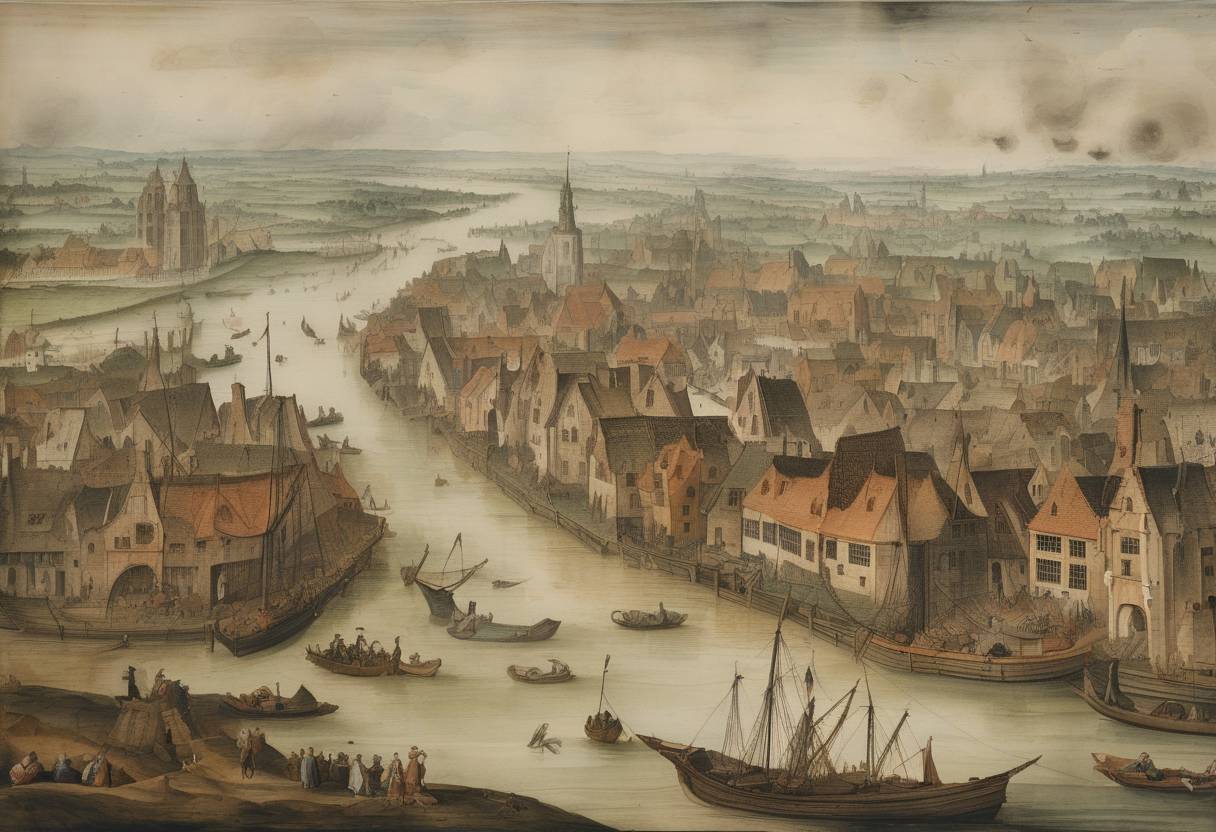
On November 1, 1570, the All Saints’ Flood struck parts of the Netherlands, England, and Germany, marking one of the most catastrophic natural disasters in European history. The flood resulted from a massive storm surge driven by a severe northwesterly storm, which coincided with high tides associated with the coastal areas of the North Sea.
The storm surge overwhelmed existing defenses such as dikes and flooded vast agricultural lands and settlements. The low-lying regions of the Netherlands were particularly vulnerable, experiencing the most severe impact. Thousands of people lost their lives, and many more were displaced due to the deluge. In some accounts, it’s estimated that upwards of 20,000 lives were lost across the affected regions.
In the Netherlands, provinces such as Zeeland, Holland, and Friesland suffered the most. The floodwaters breached dikes, submerged farmland, and destroyed entire communities. Numerous towns and villages were inundated, leading to immense human and economic losses. The aftermath of the flood highlighted the need for improved water management and flood defenses in the region, eventually leading to advancements in Dutch hydraulic engineering and dyke construction.
In England and Germany, coastal regions witnessed similar devastation. In England, extensive damage occurred in eastern areas, with communities near the coast facing the brunt of the water’s force. Similarly, certain German coastal territories experienced significant flooding, although the loss of life was reportedly not as high as in the Netherlands.
The All Saints’ Flood of 1570 underscored the vulnerability of early modern European societies to natural disasters. It prompted innovations in water management and flood defense systems, particularly in the Netherlands, where authorities embarked on redesigning and reinforcing dikes and canals to prevent future catastrophes.
This flood left an indelible mark on the physical and political landscape, influencing policies that prioritized flood prevention and control, which carried profound implications for the region’s socio-economic development.
The calamity of 1570 served as a catalyst for technological and infrastructural advancements in water management that have continued to define Dutch expertise in the field. Moreover, it demonstrated the profound impact of natural forces on the shaping of human societies and underscored the importance of resilience in the face of climatic adversities.
Source: www.newscientist.com