Discovery of the Antarctic Continent - January 28, 1820
1820 · Antarctica, Antarctica
The Antarctic continent was first discovered by the Russian expedition led by Fabian Gottlieb von Bellingshausen and Mikhail Lazarev on the ships Vostok and Mirny.
January 4, 1854
The McDonald Islands are discovered by Captain William McDonald aboard the Samarang.
near McDonald Islands, Antarctica | British exploration
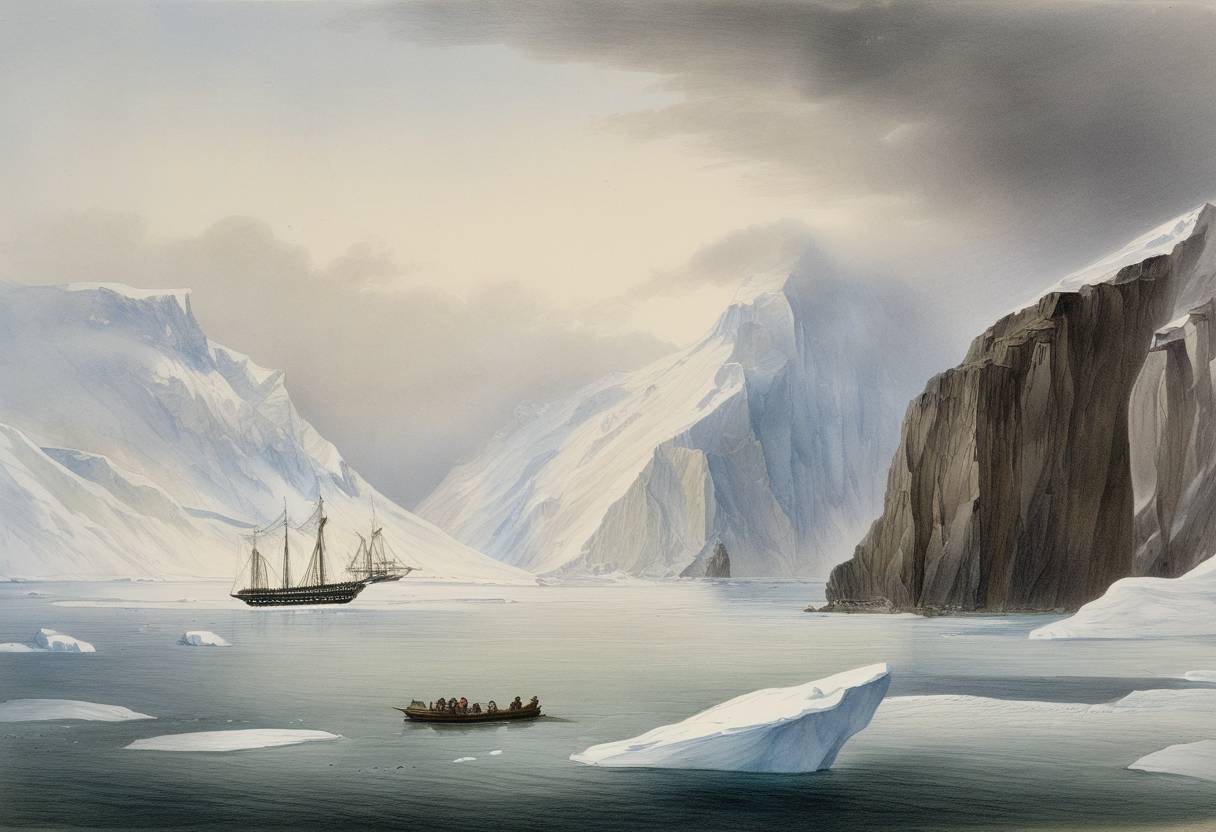
On January 4, 1854, Captain William McDonald, aboard the ship Samarang, made a significant contribution to the cartography of the Southern Ocean with the discovery of the McDonald Islands. This group of small, uninhabited islands is located in the southern Indian Ocean, approximately 44 kilometers west of Heard Island.
William McDonald was a seafarer navigating the treacherous and isolated waters of the Southern Ocean, an area known for its harsh climatic conditions and previously uncharted territories. During the 19th century, this region held particular interest for explorers in search of new lands and valuable resources such as seal oil and whale blubber.
The significant aspect of McDonald’s find was not only the islands themselves but the geological features they presented, which offered valuable insight into the volcanic activity in the region. Let’s explore the details of his discovery:
Location: The McDonald Islands, together with Heard Island, now form part of the Australian external territory of Heard Island and McDonald Islands. They are situated at 53°02′20″S 72°36′04″E.
Geological Features: The islands are volcanic, characterized by steep, jagged ridges and cliffs. Over time, volcanic activity has altered their shape, most notably in the late 20th century, but initial observations would have revealed steep, rugged terrain, confirming their volcanic origin.
The discovery of the McDonald Islands added to the mapping and understanding of sub-Antarctic ecosystems. These islands remain some of the most remote on earth, with difficult access accentuated by their harsh weather conditions, which Captain McDonald and his crew would have contended with during their exploration.
Though Captain McDonald’s initial discovery was the first recorded encounter with these islands, subsequent visits have been rare due to their isolation and harsh environment. The islands were not visited again until the 20th century, when geological surveys were conducted to further understand the volcanic activity.
Today, the Heard Island and McDonald Islands territory is recognized as a UNESCO World Heritage site, valued for its unique natural environment that provides insights into natural processes in the absence of human interference.
Source: www.coolantarctica.com