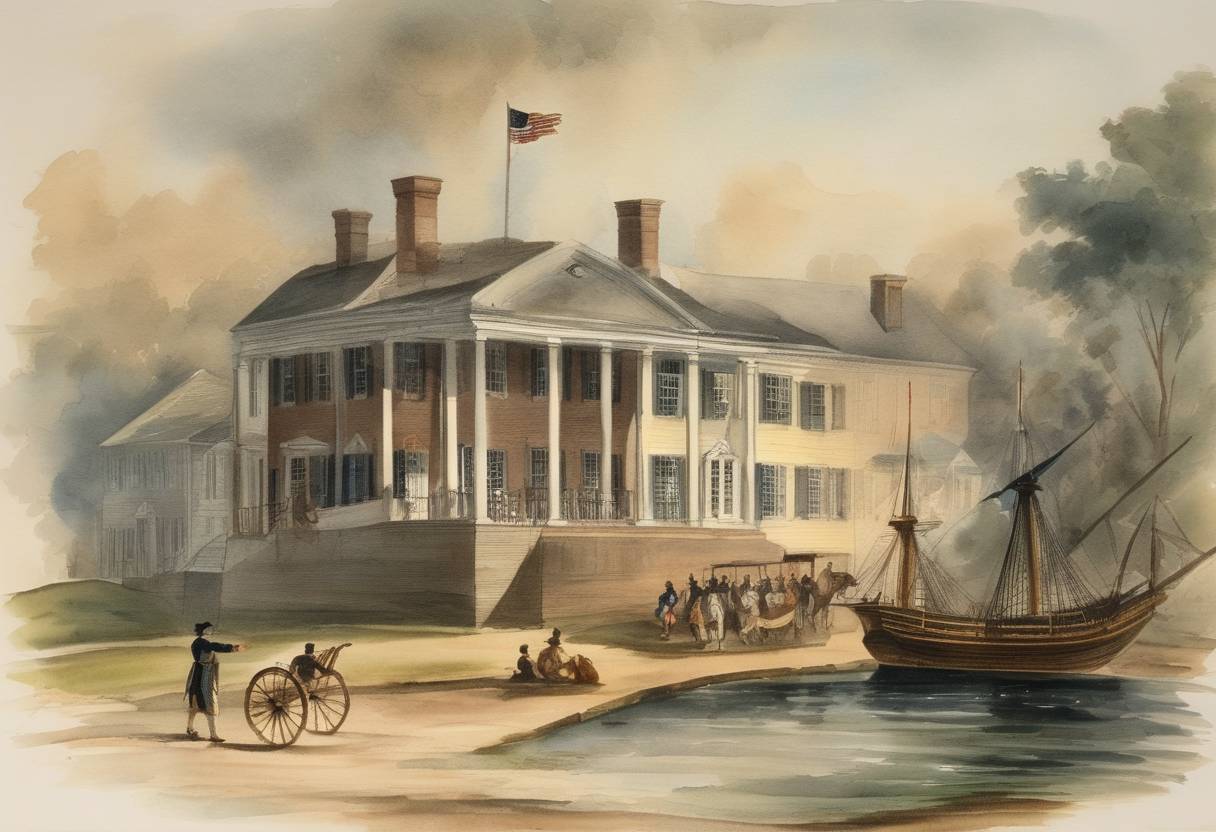
Maryland Ratifies the United States Constitution
On April 28, 1788, Maryland became the seventh state to ratify the United States Constitution, marking a crucial step towards the establishment of the new federal government. This event took place against a backdrop of intense national debate concerning the balance of power between state and federal authorities and the protection of individual liberties.
Context
Following the conclusion of the American Revolutionary War, the Articles of Confederation proved inadequate in addressing the challenges faced by the new nation. Issues such as interstate commerce disputes, national defense, and foreign relations underscored the need for a more robust federal framework. In response, the Constitutional Convention was held in Philadelphia in 1787, resulting in the drafting of the United States Constitution.
Ratification Process
The proposed Constitution required ratification by at least nine of the thirteen states to become the law of the land. After its completion, the Constitution was submitted to the states for ratification. Each state held its own convention to debate and either approve or reject the document.
Maryland’s Decision
Maryland’s ratifying convention convened in Annapolis and commenced intense debates over the new Constitution’s provisions. Key issues included the distribution of power between the federal and state governments and the absence of a bill of rights, which was a point of contention for Anti-Federalists.
Despite these debates, the Federalists, who supported the new Constitution, gained the upper hand through effective advocacy of the document’s potential to ensure stability and prosperity. John Eager Howard, a notable Federalist figure, played a pivotal role in persuading the convention of the benefits of ratification.
The Vote
On April 28, 1788, the Maryland convention voted decisively, with a final count of 63 in favor and 11 against, in support of ratifying the United States Constitution. By becoming the seventh state to do so, Maryland added significant momentum toward the formation of the federal government under the new constitutional framework.
Aftermath and Significance
Maryland’s ratification was a critical step in the constitutional ratification process, showcasing the growing acceptance of the Constitution. The state’s decision further influenced subsequent debates in other states and contributed to the eventual ratification success.
The ratification by Maryland, along with its predecessors, laid the groundwork for the Constitution’s enactment on March 4, 1789, creating a new political system that balanced power and ensured a degree of cohesion among the states.
Maryland’s contribution continues to be celebrated as a pivotal moment in American history, shaping the governance of the United States and setting a precedent for subsequent constitutional frameworks around the world.