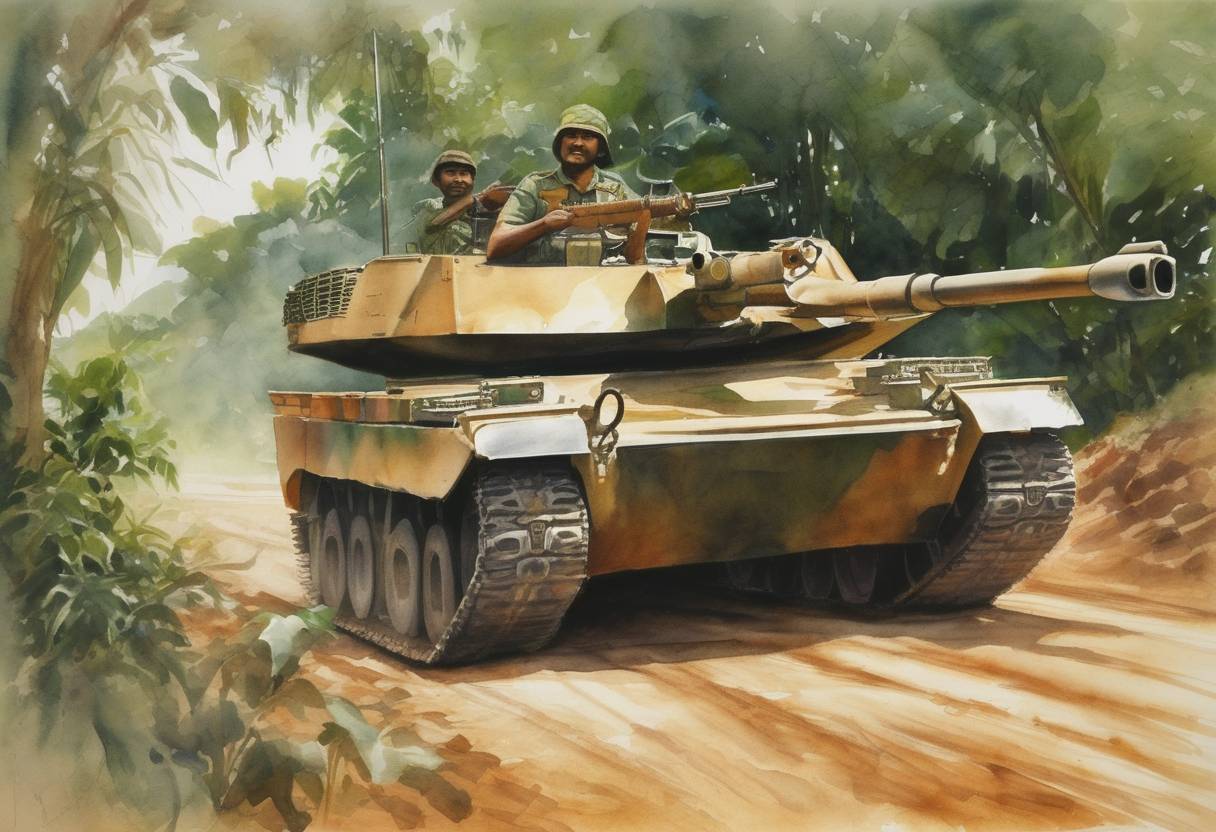
Capture of Mullaitivu by Sri Lankan Government Forces
On April 5, 2009, the Sri Lankan government declared the capture of Mullaitivu, marking a significant military achievement in the Sri Lankan Civil War, particularly against the Liberation Tigers of Tamil Eelam (LTTE). This operation was a critical phase of the final military campaign initiated by the Sri Lankan government to end the insurgency that had persisted for over two decades.
Background
The Sri Lankan Civil War, chiefly fought between the government forces and the LTTE, began in 1983 due to ethnic tensions and the LTTE’s demand for an independent Tamil state. The war was characterized by periods of intense conflict and temporary ceasefires. The LTTE, known for its guerrilla tactics and suicide bombings, once controlled vast areas in the Northern and Eastern provinces of Sri Lanka.
Significance of Mullaitivu
Mullaitivu had been in the hands of the LTTE since 1996 and served as a strategic stronghold due to its remote location and thick jungle terrain. The area was a pivotal base for the LTTE’s operations, including military training, logistics, and planning. Its loss was a major blow to the LTTE’s organizational capabilities and morale.
Leading Up to the Capture
The Sri Lankan military launched its final offensive against the LTTE in 2008, gradually recapturing territory in the Northern Province. By April 2009, the government had confined the LTTE to a small strip of land on the northeastern coast. Intensive military operations were conducted, involving ground troops, artillery, and air support, aimed at overcoming the LTTE defenses.
Aftermath and Broader Context
The fall of Mullaitivu hastened the end of the Sri Lankan Civil War, which concluded with the government’s declaration of victory in May 2009. The defeat of the LTTE marked an end to the armed struggle for an independent Tamil state but also ushered in a period of reconstruction and focus on reconciliation amid allegations of human rights violations during the conflict’s final stages.
The capture of Mullaitivu and the enduring impact of the war continue to shape Sri Lanka’s political and social landscape, with ongoing discussions around ethnic relations, reconciliation efforts, and the human rights record of the conflict.