John Philip Sousa Appointed Leader of the United States Marine Band
1880 · Washington, D.C., United States
John Philip Sousa was appointed the leader of the United States Marine Band, which he led to national prominence.
November 26, 1898
John Philip Sousa's 'The Stars and Stripes Forever' is performed for the first time in public.
Philadelphia, United States | John Philip Sousa Band
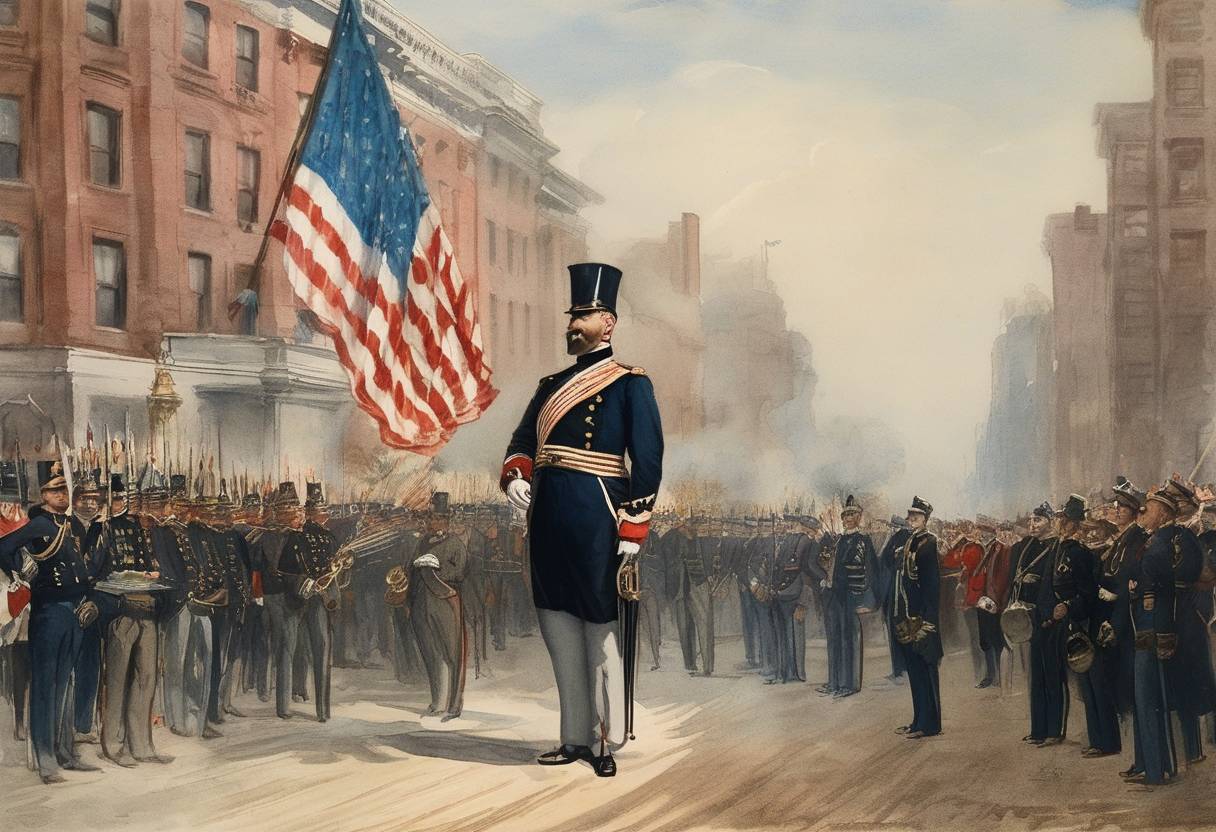
On November 26, 1898, John Philip Sousa’s iconic march, “The Stars and Stripes Forever,” was performed for the first time before a public audience. This debut took place in Willow Grove Park, near Philadelphia, Pennsylvania, where Sousa was conducting his own band.
John Philip Sousa, often referred to as “The March King,” had a profound impact on American military and patriotic music. “The Stars and Stripes Forever” stands as one of his most distinguished compositions. The inspiration for this stirring piece struck Sousa while he was on vacation with his wife in Europe during the summer of 1896. As Sousa recalled, it was during their return to the United States aboard the steamer Teutonic that the entire composition played out in his mind.
Completing the work upon his return, Sousa composed the march in late 1896, dedicating it to his friend, David Blakely. It was first published in 1897 and quickly garnered acclaim for its rousing melody and vigorous tempo. The march embodies the spirit and pride of the United States, highlighting Sousa’s exceptional skill in blending robust brass and woodwind sections.
“The Stars and Stripes Forever” is indelibly associated with patriotic celebrations in the United States, often performed during national holidays such as Independence Day and Memorial Day. Its high energy and iconic piccolo solo have made it a staple of military and civilian bands across the nation.
In 1987, decades after its composition, “The Stars and Stripes Forever” was designated as the National March of the United States, solidifying its place in the cultural and historical fabric of the country.
Beyond its initial performance and continued popularity in patriotic events and band repertoires, Sousa’s march remains a testament to the enduring appeal of American patriotic music. Its first public performance in 1898 marked the beginning of a legacy that celebrates American ideals and pride, securing Sousa’s reputation as one of the most significant figures in the history of American band music.
Source: www.loc.gov