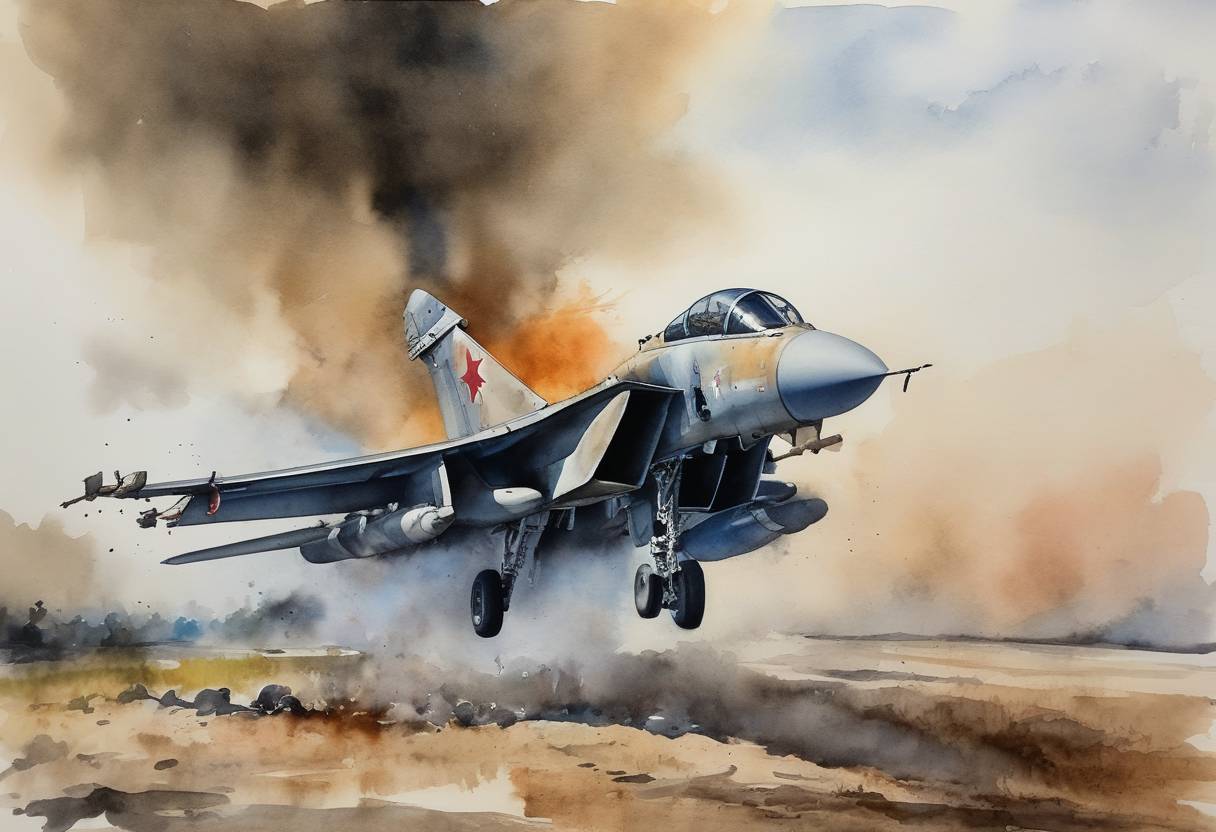
Incident of Russian Sukhoi Su-24 Downed by Turkey
Overview
On November 24, 2015, tensions between Turkey and Russia escalated significantly when the Turkish Air Force shot down a Russian Sukhoi Su-24 fighter jet. The incident occurred near the Turkey-Syria border, contributing to a serious diplomatic crisis between the two nations.
Context
In the period leading up to the event, the conflict in Syria saw increased international involvement, with both Turkey and Russia playing significant roles. Russia had been conducting military operations in Syria to support the government of Bashar al-Assad, while Turkey was involved in efforts to counteract both Assad’s government and the threat posed by the Islamic State.
Russian aircraft operating in the region had been accused multiple times by Turkey of violating its airspace. Previous incursions had been met with Turkish diplomatic protests, culminating in a warning from Turkey that it would not tolerate any more airspace violations.
The Incident
On the morning of November 24, Turkish authorities claimed that a Russian Su-24 had violated its airspace in the border region with Syria, despite multiple warnings. The Turkish military stated that it issued ten warnings over five minutes but received no response from the Russian pilot. Subsequently, a Turkish F-16 fighter jet fired upon the Russian aircraft, which resulted in the Su-24 being shot down.
Both Russian and Turkish versions of the event differed, with Russia denying any violation of Turkish airspace and claiming the aircraft had been operating solely within Syrian territory. The downing led to one Russian pilot being killed by ground fire after ejecting and a second rescued in a subsequent operation.
Consequences
The incident immediately sparked a diplomatic crisis. Russia responded with strong rhetoric, labeling the downing as a “stab in the back” by Turkey. Russia then imposed a series of economic sanctions against Turkey, affecting sectors such as tourism, agriculture, and construction.
In addition to economic repercussions, military tensions increased as Russia deployed advanced S-400 surface-to-air missile systems to its Syrian base, enhancing its defensive measures and changing the strategic calculations in the region.
Historical Significance
The downing of the Russian Su-24 marked one of the most serious encounters between a NATO member and Russia in recent years. It highlighted the complex and multi-faceted nature of the Syrian conflict, involving various international powers with competing agendas.
The incident served as a catalyst for a series of diplomatic negotiations, ultimately leading to a careful de-escalation of tensions between Turkey and Russia. Over the subsequent months, both countries worked towards mending relations, recognizing the broader geopolitical implications of their conflict.
Aftermath
By the latter half of 2016, diplomatic relations were restored, culminating in a meeting between Turkish President Recep Tayyip Erdoğan and Russian President Vladimir Putin. This reconciliation paved the way for future cooperation between Turkey and Russia on various regional issues, including joint initiatives in Syria.
The incident remains a significant example of the delicate balance required in international relations and the potential for rapid escalation into wider conflicts when communication and diplomacy fail.