"My Fair Lady" Broadway Premiere
1956 · New York City, United States
The musical 'My Fair Lady' premiered on Broadway at the Mark Hellinger Theatre.
November 16, 1959
The Sound of Music, a musical by Richard Rodgers and Oscar Hammerstein II, opened on Broadway at the Lunt-Fontanne Theatre.
New York City, United States | Broadway
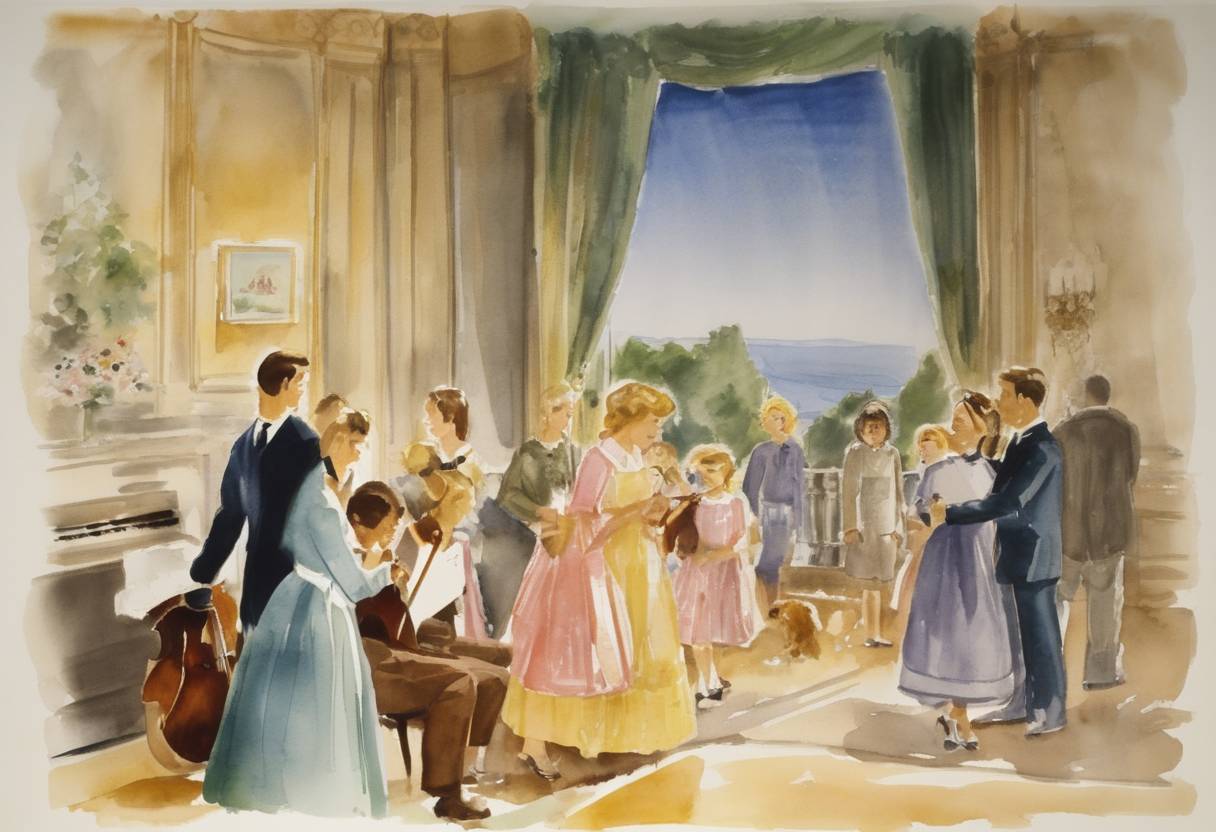
On November 16, 1959, the iconic musical The Sound of Music made its debut on Broadway at the Lunt-Fontanne Theatre. This production was the collaborative masterpiece of Richard Rodgers (music) and Oscar Hammerstein II (lyrics), marking their last musical partnership due to Hammerstein’s death the following year.
The musical is based on the memoir The Story of the Trapp Family Singers by Maria von Trapp, which recounts her experiences with the Austrian von Trapp family. The adaptation process involved playwrights Howard Lindsay and Russel Crouse, who crafted the book for the musical while integrating the compelling narrative and themes from the memoir.
Set in Austria during the late 1930s, the musical tells the story of Maria, a young postulant at Nonnberg Abbey, who becomes the governess for the seven children of the widowed naval officer Captain Georg von Trapp. Through her warmth and music, she brings joy and love back to the family amidst the backdrop of Nazi encroachment.
The original Broadway production featured Mary Martin as Maria and Theodore Bikel as Captain von Trapp. Directed by Vincent J. Donehue, with choreography by Joe Layton, the production was praised for its well-crafted staging and poignant musical numbers, including classics like “My Favorite Things,” “Do-Re-Mi,” and “Edelweiss.”
The Sound of Music was critically acclaimed upon its opening, with The New York Times praising the performances and the endearing nature of the music and story. The show received several awards, including the Tony Award for Best Musical.
Its success on Broadway paved the way for numerous revivals and adaptations, most notably the 1965 film version starring Julie Andrews, which became one of the most beloved and commercially successful musicals in cinema history.
Regarded as a classic of American musical theater, The Sound of Music continues to be celebrated for its uplifting themes, memorable score, and its cultural impact, leaving a lasting legacy on both stage and screen. Its universal appeal and historical context provide a poignant snapshot of a world on the brink of change, resonating with audiences for decades.
Source: en.wikipedia.org