Coronation of Henry IV of England
1399 · London, England
Henry IV of England's coronation took place at Westminster Abbey.
November 16, 1272
Henry III of England died, and his son Edward I, who was on his way back from the Ninth Crusade, succeeded him as the King of England. Edward would be formally recognized as king upon his return to England in 1274.
London, England | Monarchy of England
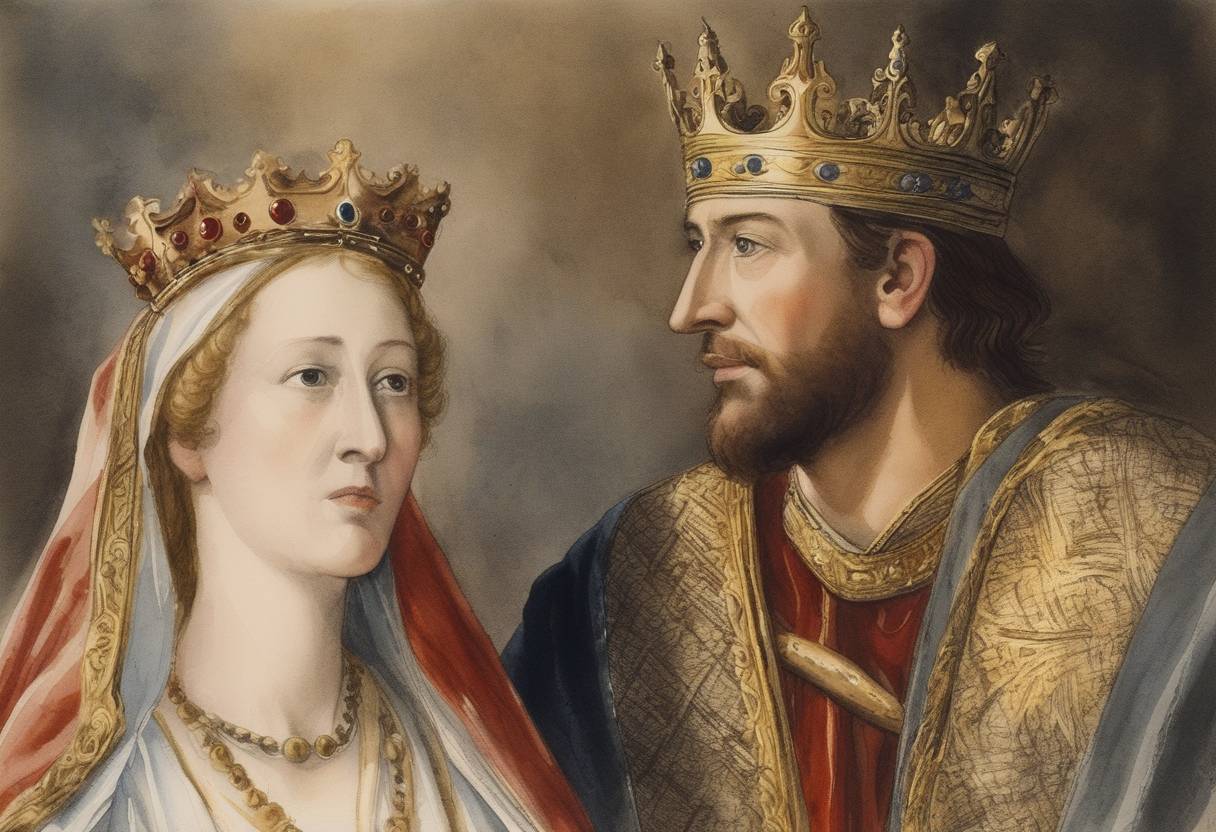
On November 16, 1272, Henry III of England passed away at the age of 65. His death marked the end of a long reign that began in 1216 following the death of his father, King John. Henry III’s rule was characterized by efforts to restore royal authority in the wake of his father’s controversial reign and the ongoing conflicts with the barons over royal power, which eventually culminated in the Second Barons’ War.
Henry III inherited the throne as a child, and his early years were dominated by regency and the ongoing tensions between the monarchy and the nobles. As he matured, Henry sought to assert his control through strategic marriages and international alliances, working to secure England’s continental possessions, although with mixed results.
Henry’s reign was notably marked by internal strife, including the Barons’ Wars. The provisions of Oxford and Westminster in the 1250s saw an attempt by the baron’s faction to curb the king’s power and establish a council-controlled government. The conflict escalated into armed confrontation, resulting in the Battle of Lewes in 1264 where Henry was captured. However, Henry’s son, Edward, played a pivotal role in defeating the rebel forces at the Battle of Evesham in 1265, effectively restoring his father’s rule.
At the time of Henry’s death, his son Edward was returning from participating in the Ninth Crusade, a military campaign aimed at capturing the Holy Land, launched in a series of expeditions by Christian forces from Europe. Despite his absence, Edward was proclaimed king without contest. The transition was smooth due to the effective rule he had already demonstrated during his father’s reign. Edward returned to England in 1274, where he was formally crowned as Edward I, a king known for his role in consolidating English power through legal reforms and military campaigns, including efforts to subdue the Welsh and Scottish territories.
Edward’s succession without opposition and his subsequent successful policies symbolize the beginning of a more centralized and authoritative English monarchy. His reign also marked the development of the English Parliament with the Model Parliament of 1295, setting precedents in governance that would influence English political structures profoundly.
Henry III’s death and Edward I’s accession represent a critical transition in medieval English history that would shape the kingdom’s trajectory through the latter part of the 13th century, laying foundational changes for future generations.
Source: en.wikipedia.org