The Battle of Sedan: September 1, 1870
1870 · Sedan, France
The Battle of Sedan begins during the Franco-Prussian War, leading to the capture of Emperor Napoleon III and the fall of the Second French Empire.
July 12, 1870
The Franco-Prussian War commenced with Napoleon III of France declaring war on Prussia.
Paris, France | French Government
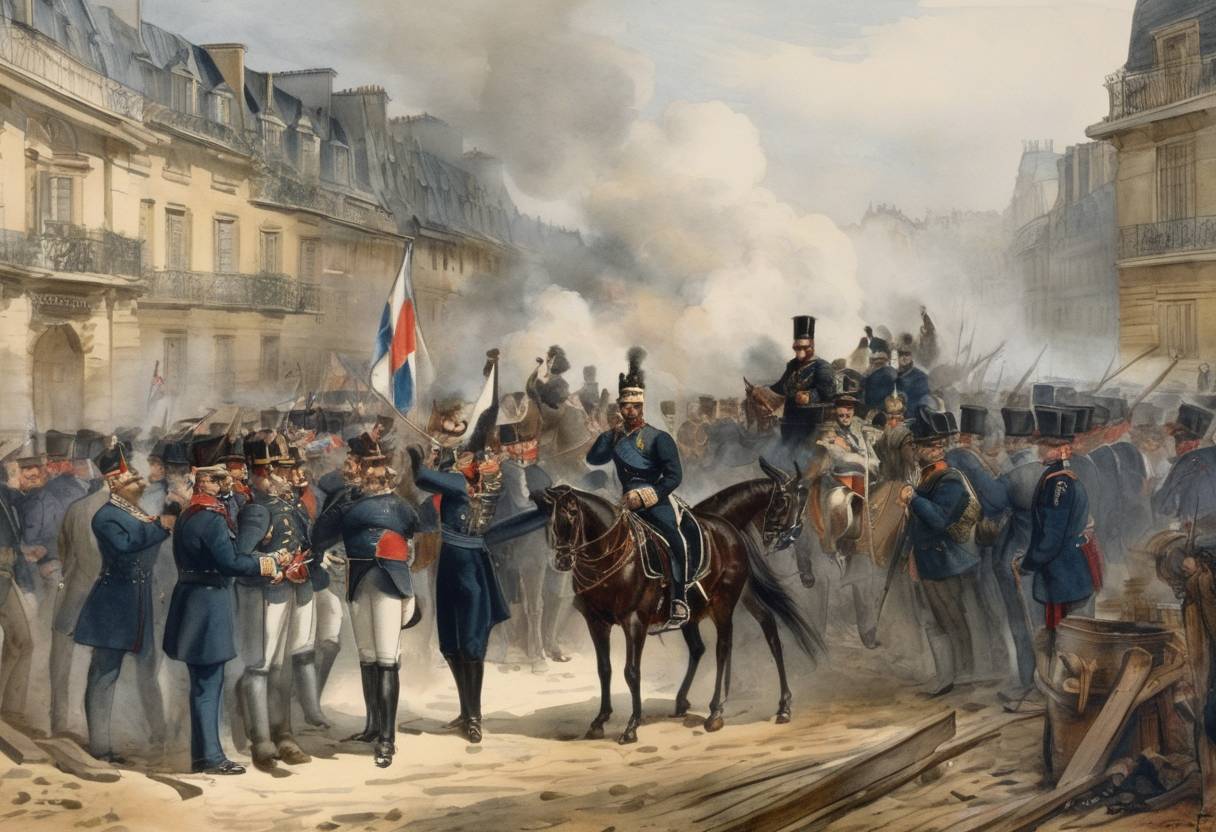
The Franco-Prussian War, a pivotal conflict in European history, officially commenced on July 19, 1870, when Napoleon III declared war on Prussia. Although the date you mentioned, July 12, 1870, is not correct for the declaration, it is important to trace the series of events leading to this critical juncture.
In the years leading up to the war, tensions had escalated between France and Prussia. Otto von Bismarck, the Prussian Chancellor, sought to unify the numerous German states under Prussian leadership, threatening the balance of power in Europe. France, under Emperor Napoleon III, was alarmed at the prospect of a strong, unified Germany on its eastern border.
The immediate cause of war was the Ems Dispatch, a communication from King Wilhelm I of Prussia regarding a diplomatic incident involving the Spanish throne. Bismarck edited this dispatch to make it seem as though the French ambassador had been insulted, inflaming public opinion in both countries.
On July 19, 1870, after diplomatic efforts failed, France formally declared war on Prussia. This decision was influenced by nationalistic fervor, political pressures within France, and a desire to restore French prestige. Napoleon III and his advisors misjudged the political and military landscape, mistakenly believing that France could swiftly defeat Prussia.
The conflict rapidly shifted in favor of the Prussians, whose strategic leadership, superior mobilization, and use of railways facilitated rapid troop movements. Major battles included the Battle of Sedan, where Napoleon III himself was captured on September 1, 1870, leading to the fall of the Second French Empire and the establishment of the Third Republic.
The war led to the unification of Germany, which was completed with the proclamation of the German Empire in January 1871 in the Hall of Mirrors at the Palace of Versailles. France suffered territorial losses, including the cession of Alsace and parts of Lorraine to Germany and was forced to pay a significant war indemnity.
The defeat and subsequent treaties reshaped the political landscape of Europe. The war created longstanding animosity between France and Germany, setting the stage for future conflicts, notably World War I. The rise of Germany altered the European balance of power, ushering in a new era of military and industrial rivalry.
The Franco-Prussian War significantly impacted France internally, leading to a period of political instability and social change under the Third Republic.
In conclusion, the war marked a transformative period in 19th-century Europe, with repercussions that carried well into the 20th century.
Source: www.britannica.com