The First Draft Lottery Since World War II: December 1, 1969
1969 · Washington, D.C., United States
The first draft lottery in the United States since World War II was held, as part of the conscription process for the Vietnam War.
November 27, 1965
The Pentagon announces a policy of not including draft quotas for married men without children in the Vietnam War draft.
Washington D.C., United States | United States Department of Defense
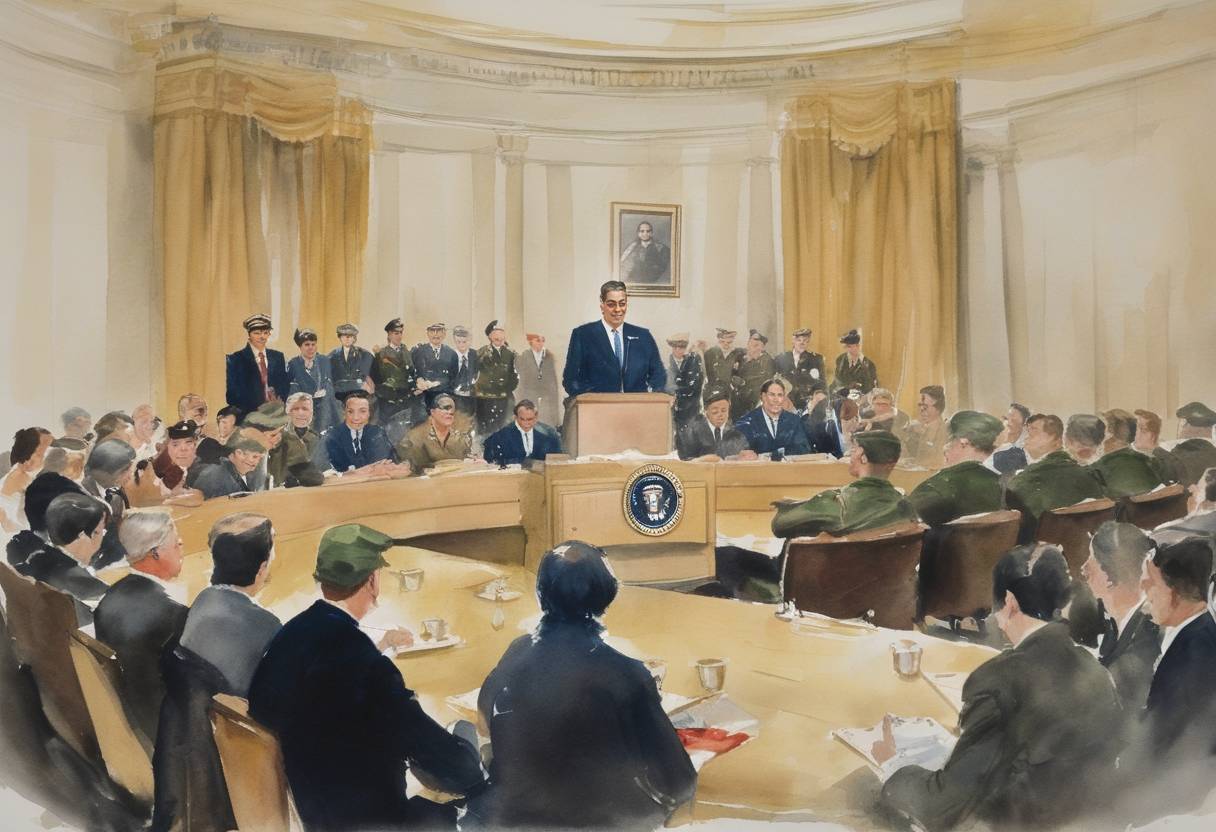
On November 27, 1965, the United States Department of Defense, known as the Pentagon, announced a pivotal policy change in its draft strategy during the ongoing Vietnam War. This policy specifically addressed the criteria for drafting individuals into military service by excluding married men without children from draft quotas.
By late 1965, the United States had significantly escalated its military involvement in the Vietnam War, a conflict aimed at preventing the spread of communism in Southeast Asia. As the need for more soldiers grew, the draft system, administered under the Universal Military Training and Service Act, became a primary method for military conscription.
Initially, the draft was implemented on a local basis, with draft boards across the country determining eligibility based on a range of criteria. During this time, the increasing demands for troops led the government to consider expanding the pool of individuals subject to the draft. However, public sentiment and the political climate demanded careful consideration and calibration in determining which groups would be called to service.
The Pentagon’s announcement on November 27 was a response to various pressures and was seen as a move to balance the growing need for manpower with political and social considerations. This policy clarified that married men without children would not be immediately included in the draft quotas.
The decision aimed to preserve some level of predictability and stability for recently married individuals who were beginning their family lives. It was a compromise designed to assuage public concern while still enabling the military to meet its personnel requirements.
The exclusion of married men without children from the draft quotas was part of broader strategic decisions during a period marked by fierce debate and protest against the Vietnam War. The draft system itself became increasingly controversial as opposition to the war grew, especially among younger Americans who were directly affected by conscription.
The policy underscored the complexities of balancing military needs with social and political pressures. Decisions like these contributed to the evolving narrative of the Vietnam War at home, influencing public opinion and setting the stage for further changes in military policy, including the eventual move towards an all-volunteer force.
In hindsight, the announcement is seen as reflective of the dynamic interplay between military policy considerations and domestic socio-political contexts during a contentious period in American history.
Source: www.nytimes.com