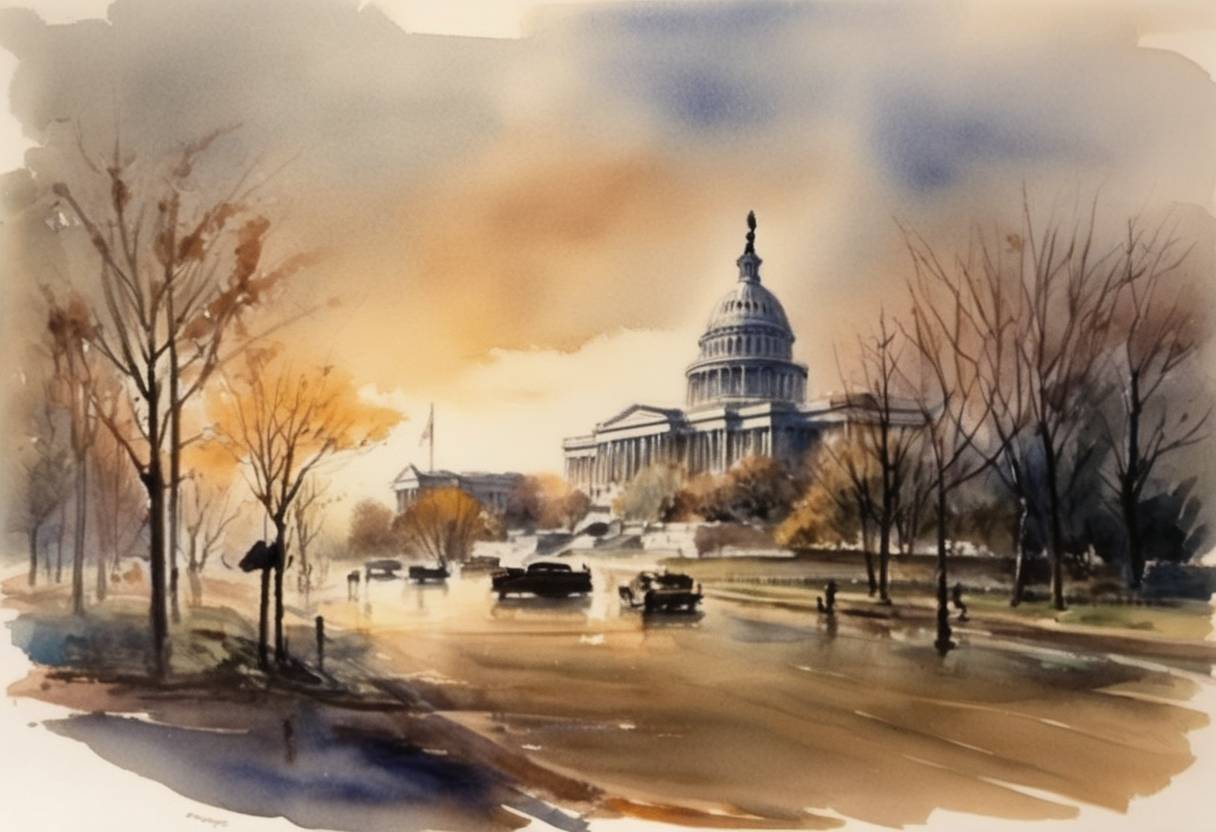
President Truman’s Declaration of a State of Emergency: December 1, 1950
On December 1, 1950, amidst escalating tensions during the Korean War, President Harry S. Truman declared a national state of emergency in the United States. This move was a response to the rapidly deteriorating situation on the Korean Peninsula and the perceived threat posed by global Communist expansion, as the Cold War intensified.
Context
The Korean War began on June 25, 1950, when North Korean forces, supported by the Soviet Union and China, invaded South Korea. The United Nations, with the United States providing the majority of military support, quickly intervened on behalf of South Korea. Despite initial successes by UN and US forces in advancing into North Korea, the tide shifted dramatically in late November 1950 when Chinese forces entered the conflict, launching a major offensive that pushed UN forces into retreat.
The Declaration
Faced with these developments, Truman’s declaration on December 1, 1950, emphasized the gravity of the situation not only in Korea but also the potential threat to global peace and the security of the United States. The declaration aimed to prepare the nation for the possibility of further military engagements and to bolster defense production.
Key Measures:
- Mobilization of Resources: The proclamation allowed for increased production of military supplies and the reallocation of resources necessary to support the war effort.
- Military Readiness: It included directives to ensure that the armed forces were adequately equipped and prepared for potential escalations.
- Civil Defense: The declaration underscored the importance of civil defense measures to protect American cities from the threat of enemy attacks.
Historical Significance
Truman’s declaration highlighted the precarious nature of the Cold War era, reflecting the fears of Communist expansion and the complex geopolitical dynamics of the time. It marked a significant expansion of executive powers in response to international conflicts and set a precedent for future military and foreign policy decisions during the Cold War.
Aftermath
The state of emergency would continue to influence U.S. domestic and foreign policy for years, as the country navigated the challenges of the Cold War. The Korean War, characterized by intense fighting and significant loss of life, continued until an armistice in 1953, yet the peninsula remains divided to this day.
Truman’s decision to declare a state of emergency underscored the critical intersection of national security and global politics, shaping the United States’ strategic posture in the mid-20th century.