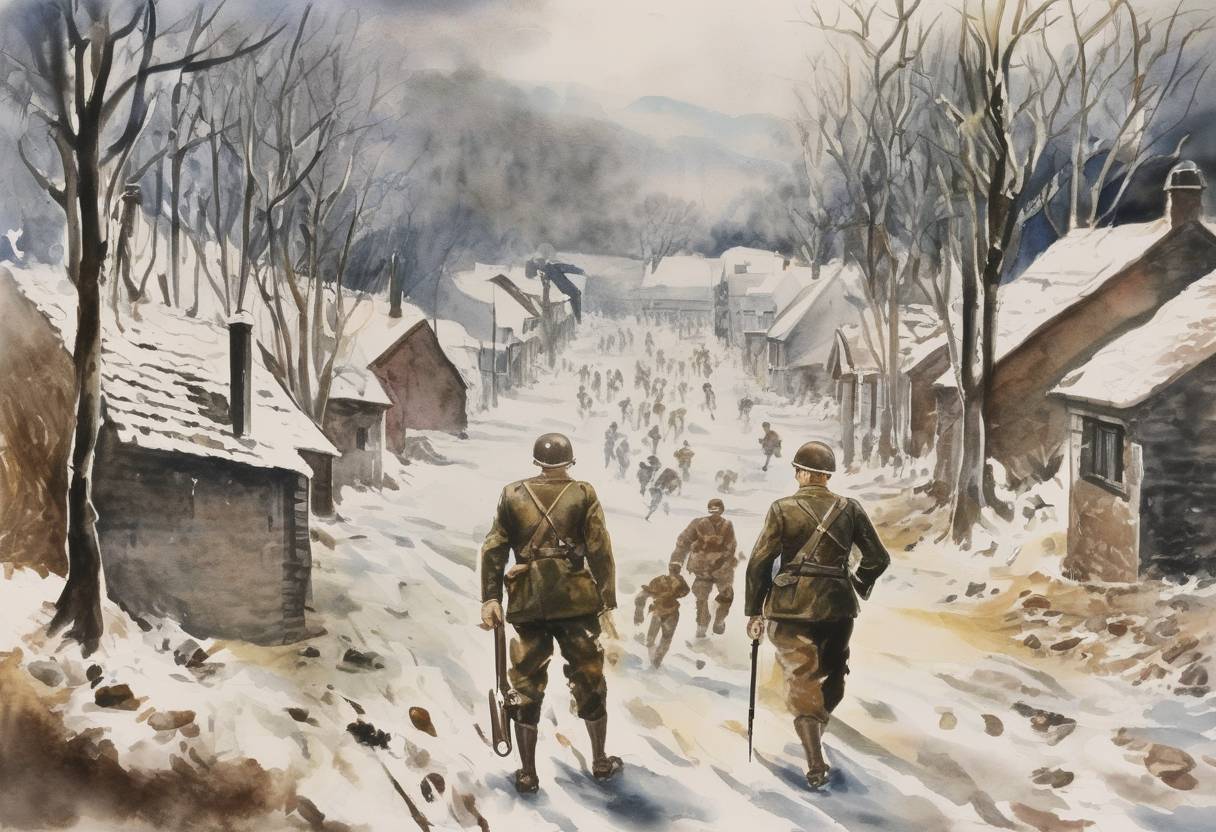
The Malmedy Massacre: December 17, 1944
The Malmedy Massacre stands as one of the most infamous atrocities committed during World War II, occurring amidst the chaos of the Battle of the Bulge. This tragic event unfolded on December 17, 1944, near the Belgian town of Malmedy.
Context and Background
The Battle of the Bulge, launched on December 16, 1944, was Adolf Hitler’s last major offensive on the Western Front. The goal was to split the Allied forces, capture the vital Belgian port of Antwerp, and encircle and destroy four Allied armies. The German forces, under the command of Field Marshal Gerd von Rundstedt, included the 1st SS Panzer Division, led by SS Lieutenant Colonel Joachim Peiper.
The Massacre
On December 17, a convoy of American soldiers from Battery B of the 285th Field Artillery Observation Battalion encountered Peiper’s advancing Kampfgruppe near the crossroads at Baugnez, close to Malmedy. After a brief skirmish, the American troops, heavily outnumbered and outgunned, surrendered to the Germans.
The captured American soldiers were assembled in a field. For reasons that remain unclear, the German troops opened fire on the unarmed prisoners. In the ensuing chaos, approximately 84 American soldiers were killed. Some were shot outright, while others were executed as they attempted to flee.
Aftermath and Historical Significance
The news of the massacre spread rapidly among Allied forces, fueling anger and a determination to resist the German offensive. The incident became a rallying point for American troops, who were now fighting with the knowledge of the brutal treatment of their comrades.
In the post-war period, the Malmedy Massacre was a focal point during the Dachau Trials, where several members of Peiper’s unit were prosecuted for war crimes. Joachim Peiper and other officers were sentenced to death, though many sentences were later commuted to life imprisonment or lesser terms.
The Malmedy Massacre remains a stark reminder of the brutal realities of war and the importance of adhering to the rules of warfare, even amidst the chaos of battle. It underscores the broader historical narrative of World War II, where acts of inhumanity were met with demands for justice and accountability.