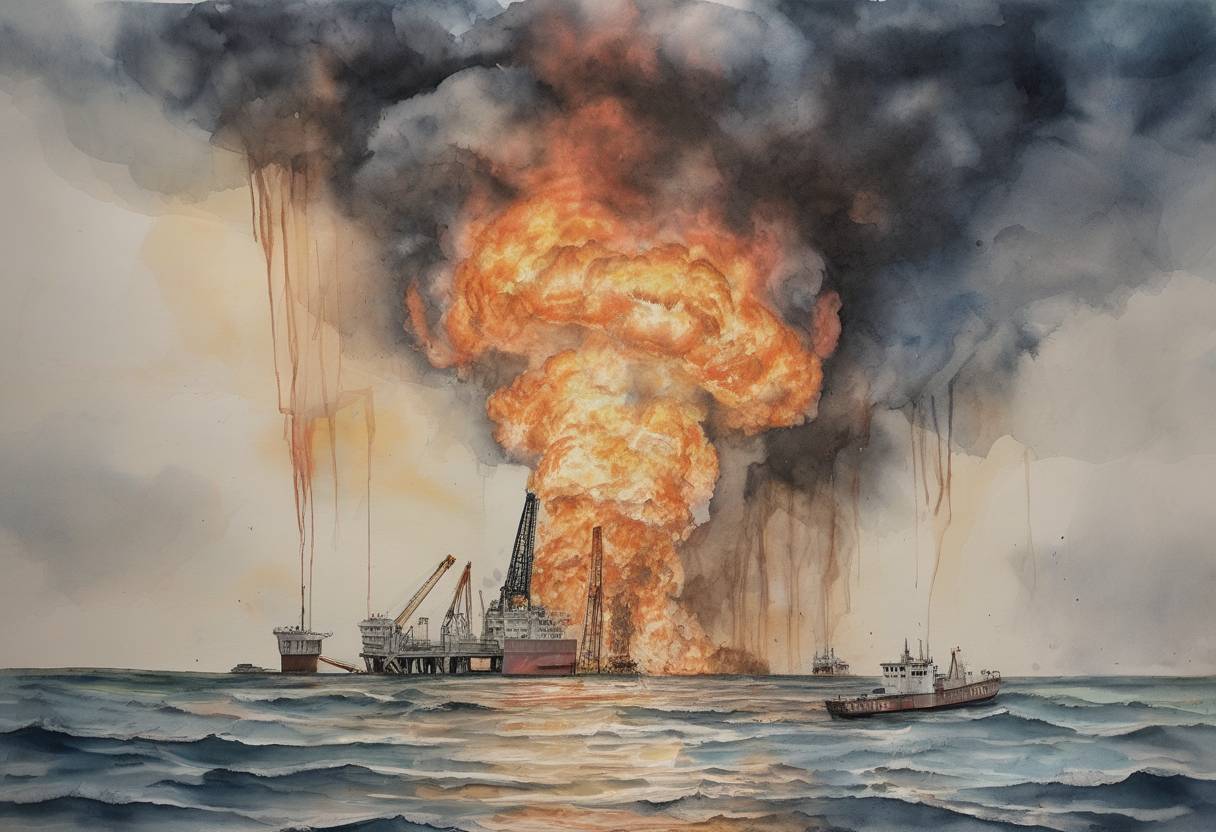
The Deepwater Horizon Oil Spill: A Detailed Account
Background
The Deepwater Horizon oil spill, also known as the BP oil spill, is considered one of the largest environmental disasters in U.S. history. It began on April 20, 2010, when the Deepwater Horizon oil rig, operated by Transocean and owned by BP, experienced a catastrophic blowout while drilling an exploratory well in the Macondo Prospect, located in the Gulf of Mexico.
Key Events Leading Up to the Spill
- April 20, 2010: A blowout preventer failed, leading to a massive explosion on the Deepwater Horizon rig. The explosion resulted in the tragic loss of 11 crew members and the sinking of the rig two days later.
- April 22, 2010: The rig sank, and oil began to leak from the wellhead on the ocean floor, approximately 5,000 feet below the surface.
- Oil Leakage: An estimated 4.9 million barrels of oil spilled into the Gulf over 87 days, affecting marine and wildlife habitats, as well as the fishing and tourism industries along the Gulf Coast.
- Response Efforts: BP and the U.S. government initiated multiple efforts to contain and stop the spill, including the use of dispersants, controlled burns, and the construction of containment domes.
The ‘Bottom Kill’ Operation
- July 15, 2010: BP successfully capped the well, temporarily halting the flow of oil.
- September 19, 2010: The well was officially declared “effectively dead” after a successful “bottom kill” operation. This involved pumping heavy drilling mud and cement into the well from below, permanently sealing it.
Broader Historical Significance
- Environmental Impact: The spill had devastating effects on the Gulf’s ecosystem, with long-term consequences for marine life and coastal environments.
- Economic Impact: The disaster severely impacted the Gulf Coast economy, particularly the fishing and tourism industries.
- Regulatory Changes: The spill prompted significant changes in U.S. offshore drilling regulations, including stricter safety standards and oversight.
Aftermath and Consequences
- Legal and Financial Repercussions: BP faced extensive legal challenges and financial penalties, including a $20 billion compensation fund for those affected by the spill.
- Public and Political Response: The spill led to widespread public outrage and increased scrutiny of oil industry practices and government oversight.
The Deepwater Horizon oil spill remains a pivotal event in environmental history, highlighting the risks associated with deepwater drilling and the need for rigorous safety measures to prevent future disasters.