The Panic of 1873: A Catalyst for Economic Depression
1873 · New York City, United States
The Panic of 1873 begins, triggering a severe international economic depression in both Europe and the United States.
September 24, 1869
The financial panic known as Black Friday occurred in the United States when the price of gold plummeted after a failed attempt by Jay Gould and James Fisk to corner the gold market.
New York City, United States | Wall Street
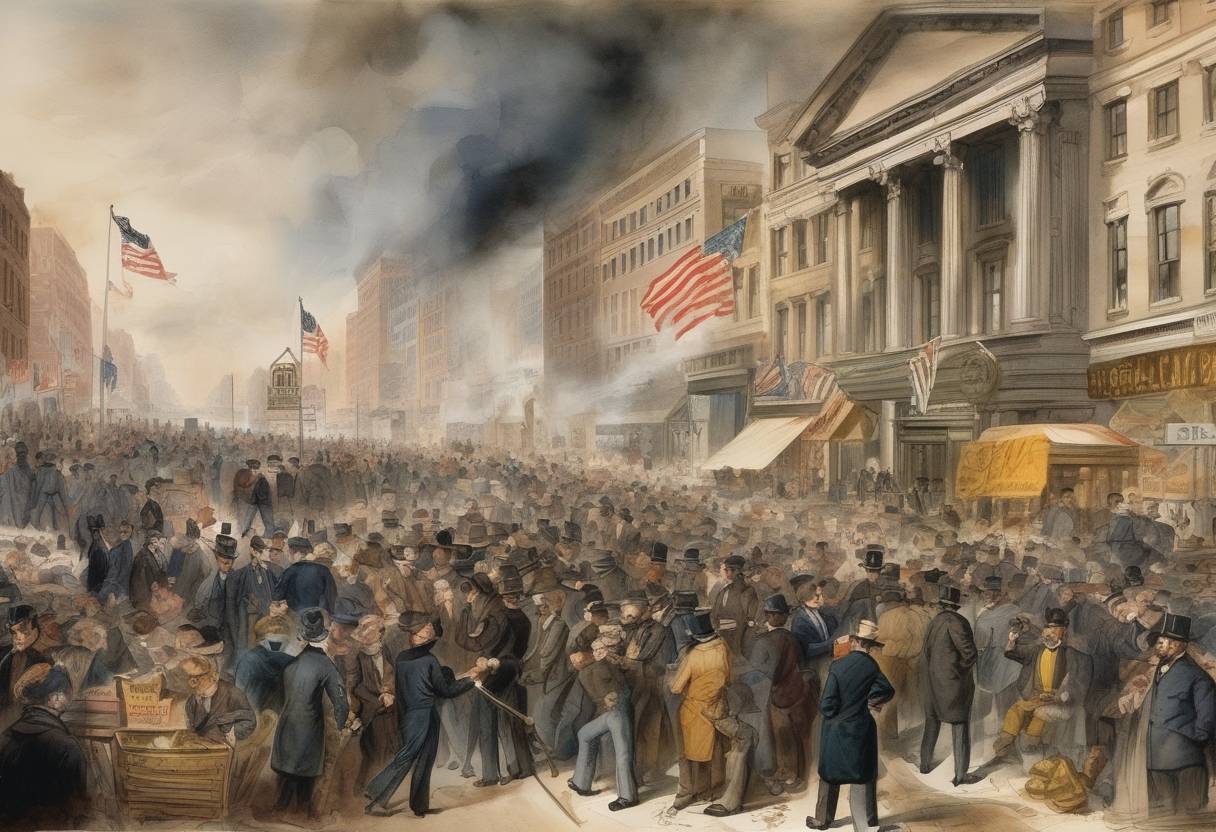
On September 24, 1869, the United States experienced a financial panic known as “Black Friday,” a direct result of a failed attempt by financiers Jay Gould and James Fisk to corner the gold market. This event had significant repercussions on the U.S. economy and highlighted the vulnerabilities of financial markets to manipulation.
In the years following the Civil War, the United States was in a period of economic expansion and reconstruction. The federal government, under President Ulysses S. Grant, was working to stabilize the economy, which included managing the national debt and the currency supply. Gold played a critical role in this economic environment, as it was used to back the U.S. dollar and was central to international trade.
Jay Gould and James Fisk, two prominent and unscrupulous financiers, devised a plan to manipulate the gold market. Their strategy was to buy large quantities of gold, driving up its price, and then sell it at a significant profit. To ensure the success of their scheme, they sought to influence government policy by convincing officials not to release government gold reserves, which would keep the market supply low and prices high.
Gould and Fisk managed to involve Abel Corbin, President Grant’s brother-in-law, in their plan, hoping his connections would help sway the administration. Their lobbying efforts initially seemed successful, as the government refrained from selling gold, causing prices to rise sharply.
On September 24, 1869, known as Black Friday, the price of gold reached unprecedented levels. However, President Grant, realizing the manipulation and its potential to destabilize the economy, ordered the release of $4 million in government gold into the market. This sudden influx caused the price of gold to plummet, leading to a market crash.
The rapid decline in gold prices triggered a panic on Wall Street. Investors who had bought gold at inflated prices faced massive losses, and the stock market experienced significant turmoil. The ripple effects were felt throughout the economy, affecting businesses and banks.
The Black Friday panic exposed the susceptibility of financial markets to manipulation and the need for regulatory oversight. It led to increased scrutiny of Wall Street practices and highlighted the importance of government intervention in stabilizing the economy.
For Gould and Fisk, the immediate aftermath was damaging, though they managed to escape severe legal consequences. Their reputations, however, were tarnished, and the event underscored the risks associated with speculative ventures.
In the broader context, Black Friday served as a catalyst for future financial reforms and contributed to the ongoing debate about the role of government in economic affairs. It remains a cautionary tale about the dangers of market manipulation and the impact of financial crises on the economy.
Source: www.britannica.com